
Netflix is bringing one of American literature’s most celebrated novels to the screen with East of Eden, a limited series created by Zoe Kazan. Starring Florence Pugh and Hoon Lee, the adaptation revisits John Steinbeck’s sweeping story of family conflict, moral responsibility, inherited trauma, and the struggle between fate and free will. With a talented ensemble cast, striking period visuals, and a renewed focus on two of the novel’s most fascinating characters, the series attempts to give a familiar literary classic a fresh perspective for modern audiences.
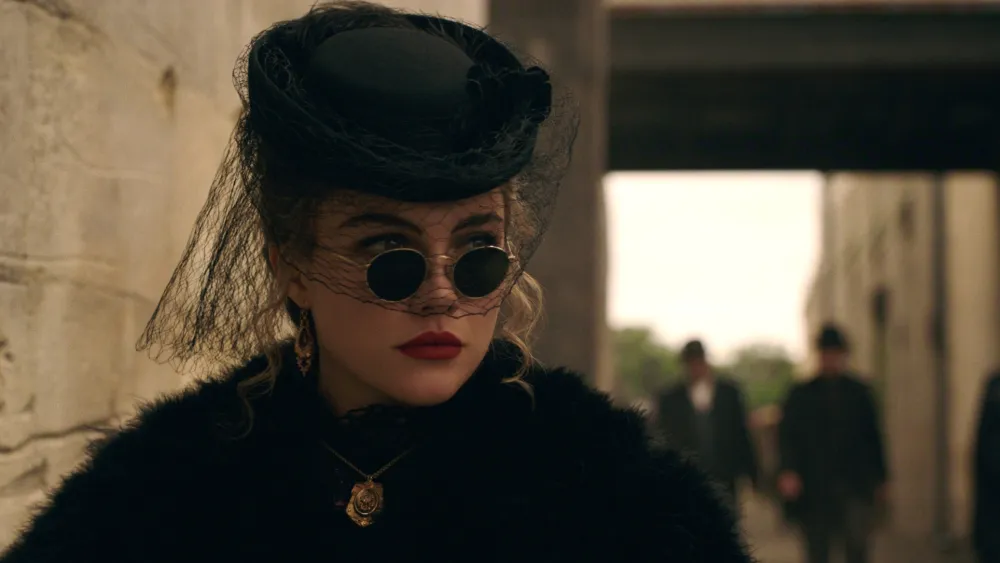
Rather than beginning with the landscape that introduces Steinbeck’s original novel, the Netflix adaptation opens with Cathy Ames, played by Pugh. Cathy is one of the story’s most disturbing figures, a woman whose intelligence, ruthlessness, and resistance to social expectations make her difficult to understand and impossible to ignore.
Her introduction establishes the series’ central creative decision: although the adaptation remains closely connected to Steinbeck’s narrative, it shifts the audience’s attention toward characters whose experiences reveal different sides of the novel’s central themes.
Alongside Cathy, the series gives Lee, the Chinese American cook played by Hoon Lee, a more developed storyline. Through these two characters, East of Eden explores questions about personal identity, social prejudice, family relationships, and whether people are destined to repeat the mistakes of previous generations.
The result is an ambitious adaptation that combines powerful performances with an expansive production. Although its seven episodes occasionally feel compressed, Florence Pugh and Hoon Lee provide compelling reasons to revisit Steinbeck’s enduring tale.
Florence Pugh Takes on One of Literature’s Most Complicated Characters
Florence Pugh’s portrayal of Cathy Ames is one of the series’ greatest strengths. The actress, who earned an Academy Award nomination for her performance in Greta Gerwig’s Little Women, has demonstrated an ability to bring emotional complexity to characters who resist easy interpretation. In East of Eden, she takes on a role that demands both psychological intensity and considerable range.
Cathy is not a conventional villain. She is intelligent, calculating, and fiercely protective of her independence. She views restrictions on her freedom as threats and responds to perceived attempts to control her with a determination that can become frightening.
Pugh’s performance captures these qualities without making Cathy entirely predictable. Her expressions, movements, and changes in demeanor reveal a character who constantly evaluates the people around her, looking for opportunities to protect herself or gain the upper hand.
The series introduces Cathy as a teenager who arrives at the Connecticut home of half-brothers Adam and Charles Trask, badly injured and covered in bruises. Her arrival immediately changes the emotional balance of a family already struggling with its own divisions.
Christopher Abbott plays Adam Trask, while Mike Faist portrays his brother Charles. Their relationship has been shaped by the expectations of their father, Cyrus Trask, played by Tracy Letts.
Cyrus attempts to direct his sons toward the lives he believes they should lead. Adam is pushed toward becoming a soldier, while Charles is associated with farming, despite the fact that neither brother necessarily fits the future their father imagines for him.
The resulting conflict establishes an important foundation for the series. The Trask family is already carrying emotional wounds before Cathy enters their lives, and those wounds will influence the next generation.
Cathy quickly recognizes the differences between the brothers. Adam’s trusting nature makes him easier to influence, while Charles is more suspicious and perceptive. Cathy appears to recognize something familiar in Charles, even as she understands that he could become an obstacle to her plans.
Pugh handles these early episodes with remarkable control. Cathy’s vulnerability is visible, but so is her capacity for manipulation. The audience is left to consider whether the character is responding to the dangers around her or revealing a nature that has always existed beneath the surface.
Cathy Ames: Born a Monster or Made by Her Experiences?
One of the most interesting questions raised by East of Eden concerns the origins of Cathy’s behavior.
Steinbeck’s novel famously examines the possibility that certain individuals possess an innate capacity for evil. The Netflix adaptation initially embraces this idea by presenting Cathy as someone who seems fundamentally resistant to ordinary emotional and social expectations.
Her actions suggest that she regards relationships as arrangements that can be abandoned when they become inconvenient. Marriage, in particular, represents a form of confinement that she has little interest in accepting.
When Cathy compares marriage to a poorly tied knot that can simply be slipped out of, her attitude becomes clear. She refuses to accept that traditional expectations should determine the course of her life.
Her decision to leave her newborn twins behind demonstrates the extreme lengths to which she is willing to go to escape a future she does not want. It is a deeply troubling act, but it also reveals the limitations of the world in which she lives.
Cathy’s circumstances offer her few socially accepted routes to independence. Her choices are not presented as morally uncomplicated, yet the series encourages viewers to consider how much freedom women could realistically exercise during the period.
As the story progresses, however, creator Zoe Kazan places greater emphasis on a formative experience from Cathy’s childhood. This development offers additional context for her behavior, suggesting that the person she becomes may have been shaped by suffering as well as temperament.
The shift adds emotional depth to Cathy’s history, but it also changes the character’s original impact. A figure who initially seems frightening because she operates according to her own unchanging nature becomes easier to interpret through the experiences that helped shape her.
That choice may divide viewers. Some may welcome the additional psychological context, while others may prefer the more mysterious and unsettling figure introduced in the opening episodes.
Nevertheless, Pugh gives Cathy a distinctive presence throughout the series. Even when the writing attempts to explain her behavior, the actress preserves enough ambiguity to prevent the character from becoming entirely predictable.
Hoon Lee Gives Lee a Richer and More Personal Story
While Cathy receives considerable attention, Hoon Lee’s portrayal of Lee provides the series with another compelling center.
In Steinbeck’s story, Lee is a Chinese American cook who occupies an essential position within the Trask household. He is intelligent, thoughtful, and deeply interested in questions of philosophy, morality, and human nature. Yet he also lives in a society where racism frequently forces him to conceal aspects of his identity.
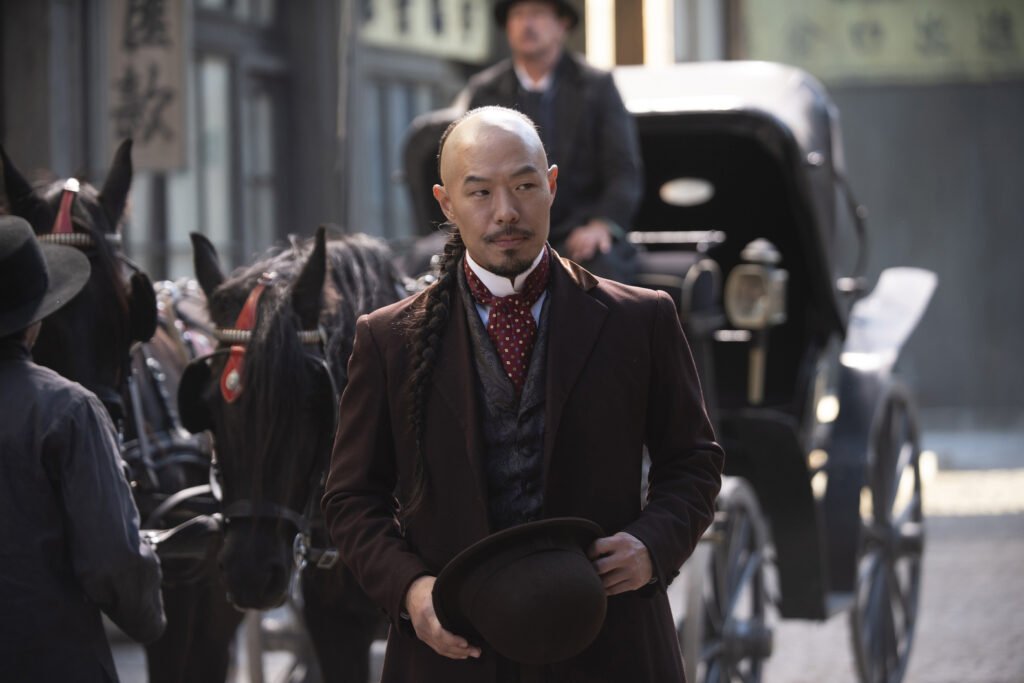
The adaptation expands his role, giving him more personal history and allowing his decisions to influence the story in more substantial ways.
Lee was born in America to parents who worked on the railroad. Around people who hold racist expectations about Chinese immigrants, he adopts a heavily accented form of speech that matches the stereotype they anticipate. In private, however, he demonstrates a sophisticated understanding of literature, religion, and philosophy.
This contrast reveals the exhausting compromises that marginalized people may make to navigate an unfair society. Lee understands that revealing his intelligence does not guarantee that others will respect him. Sometimes, appearing to conform to their assumptions becomes a way to protect himself.
His conversations with Samuel Hamilton, played by Ciarán Hinds, introduce another dimension of the character. Samuel provides warmth and companionship, while their discussions allow Lee to explore ideas that connect directly to the novel’s larger moral questions.
Hoon Lee’s performance is quieter than Pugh’s, but its restraint becomes one of the series’ most effective qualities. He portrays a man who has learned to observe carefully, think deeply, and choose his battles.
Rather than simply serving as a supporting figure in another family’s drama, Lee becomes an individual whose perspective helps the audience understand the events unfolding around him.
The Meaning of “Timshel” and the Power of Free Will
The Hebrew word timshel lies at the heart of East of Eden. Often translated as “thou mayest,” the word expresses the possibility of choice rather than an unavoidable command or predetermined destiny.
This distinction is essential to the novel’s exploration of the biblical story of Cain and Abel, which is echoed through the relationships between the Trask brothers and, later, their children.
The question is whether people must repeat the mistakes of their parents or whether they possess the ability to choose a different path.
The Netflix adaptation uses Lee to explore this theme. His interest in the Bible and his philosophical discussions provide a framework for understanding the series’ central conflict between inherited behavior and individual responsibility.
The Trask family appears trapped in a cycle of rivalry, disappointment, and emotional suffering. Cyrus influences Adam and Charles, whose relationship establishes the conditions that will affect their own children. As the story moves between generations, the audience sees how unresolved conflicts can become part of a family’s inheritance.
Lee, however, represents a different possibility. Although he is shaped by racism and the expectations imposed on him by society, he continues to make decisions about his own identity and place in the world.
The expanded storyline gives him more agency, allowing his choices to matter independently of the Trask family’s conflicts.
This emphasis strengthens the series’ interpretation of Steinbeck’s work. Family history may influence a person’s future, but it does not necessarily determine it.
The concept also gives the adaptation contemporary relevance. Questions about inherited trauma, social expectations, prejudice, and personal responsibility remain important well beyond the historical setting of the story.
A Complex Family Drama Spanning Generations
The Trask family remains the foundation of the narrative, but the series’ seven-episode structure creates challenges in developing every character equally.
Adam and Charles have a complicated relationship shaped by their father’s expectations. Their rivalry reflects the way parental favoritism and emotional neglect can create divisions that persist long after childhood.
Cathy’s arrival intensifies these existing tensions. Her relationship with Adam leads to marriage, while Charles remains an important presence in the emotional history of the family.
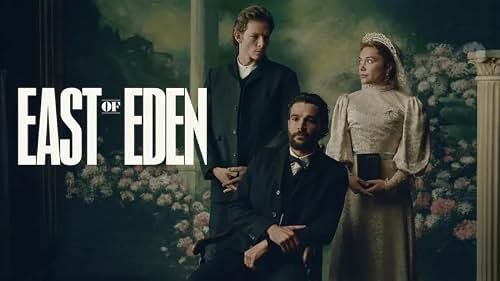
Eventually, Adam and Cathy have twin sons, Cal and Aaron, played by Joseph Zada and Joe Anders in their teenage years. Their lives become another stage on which the family’s unresolved conflicts are repeated.
However, the limited series does not always give the younger characters enough time to develop beyond their connections to the previous generation.
Similarly, Charles becomes less prominent as the story progresses. His early importance to Cathy and the Trask family is clear, but his reduced presence limits the opportunity to explore the character’s perspective in greater detail.
Mike Faist brings an intriguing quality to Charles, yet viewers may wish the series had spent more time establishing the character before moving toward later developments.
The seven-episode format contributes to this problem. Kazan initially envisioned an eight-episode version, but the completed adaptation contains seven installments. As a result, certain transitions feel compressed, particularly when the story moves across long periods of time.
The ambition is understandable. Steinbeck’s novel covers multiple generations and explores themes that require room to develop. Condensing such a sprawling narrative into a limited television series inevitably means that some characters and relationships receive less attention than others.
Even so, the adaptation finds its strongest moments when it slows down and allows its characters to reveal themselves through conversation, observation, and personal decisions.
A Visually Beautiful Period Production
Beyond its performances, East of Eden benefits from impressive production design and cinematography.
The original novel is closely associated with California’s Salinas Valley, a landscape that helps establish the story’s relationship with agriculture, family history, and the passage of time.
The Netflix production was filmed in New Zealand rather than California. Although the location differs from the novel’s original setting, cinematographer Stuart Dryburgh captures the beauty of the landscape through expansive views, rolling hills, and warm, sunlit imagery.
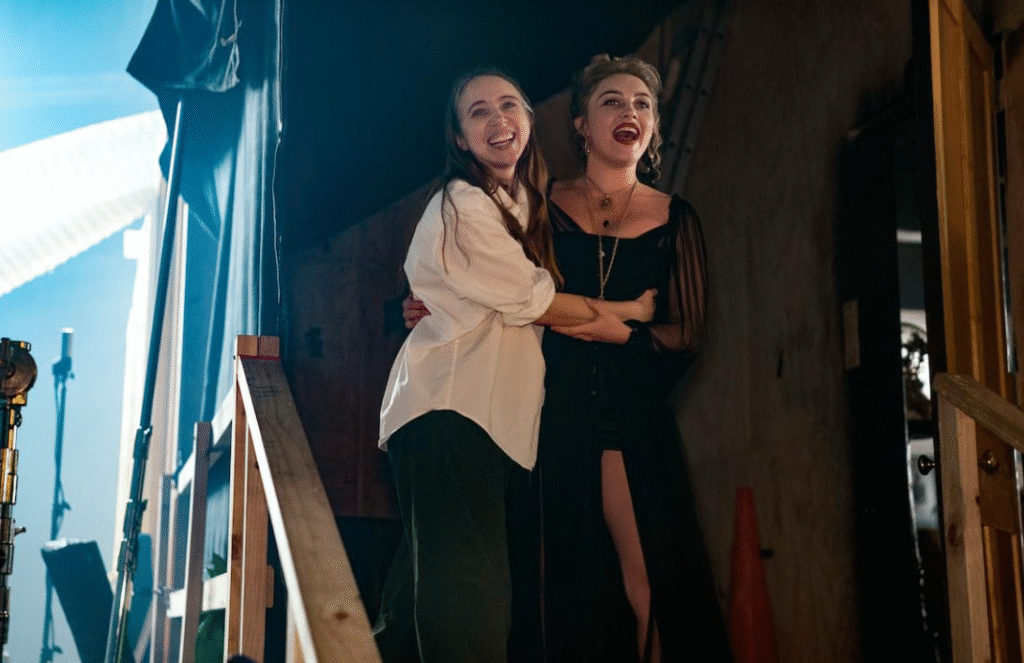
The visuals create a convincing period atmosphere while giving the series a distinctive aesthetic. The natural environment is not merely decorative; it reinforces the contrast between the characters’ internal struggles and the vastness of the world around them.
Production designer Grant Major and costume designer Kirsty Cameron also contribute to the show’s historical texture. Their work helps establish the social expectations, domestic environments, and visual details of the period.
Laura Karpman’s score adds another layer to the emotional atmosphere, supporting the story’s shifts between family intimacy, psychological tension, and tragedy.
Directors Garth Davis and Laure de Clermont-Tonnerre help shape the series into a visually ambitious drama. The overall production has the scale and seriousness expected of a major literary adaptation.
Although the New Zealand landscapes cannot entirely reproduce the geographical identity of the Salinas Valley, the cinematography makes effective use of the locations available.
How the Series Compares With the 1955 Film
East of Eden has previously been adapted for the screen, most famously in Elia Kazan’s 1955 film starring James Dean.
The earlier movie focused on the final portion of Steinbeck’s multigenerational narrative, particularly the relationship between Cal Trask and his father. Its place in film history has helped make it the best-known screen interpretation of the novel.
The Netflix series takes a broader approach by adapting the story across generations. It has more time to explore the family’s origins, Cathy’s role in the narrative, and Lee’s importance to the household.
There is also a personal connection between the two adaptations. Zoe Kazan, who created the Netflix series, is the granddaughter of Elia Kazan, the director of the 1955 film.
Despite that connection, the new version establishes its own identity by changing the emphasis of the narrative and bringing previously underexplored perspectives closer to the center.
The expanded format allows for a more comprehensive look at the novel, although the compressed seven-episode structure means that the series cannot fully develop every storyline.
Rather than replacing the earlier adaptation, the Netflix version offers a different interpretation of the same literary material.
Final Verdict: A Worthwhile Adaptation Led by Two Powerful Performances
East of Eden is an ambitious attempt to bring John Steinbeck’s classic novel to a contemporary television audience. Its exploration of family conflict, free will, prejudice, and inherited suffering remains relevant, while its focus on Cathy Ames and Lee offers a fresh way to approach the story.
Florence Pugh gives Cathy a commanding presence, capturing the character’s intelligence, ruthlessness, vulnerability, and resistance to control. Although the series’ efforts to explain Cathy’s behavior sometimes reduce the mystery surrounding her, Pugh continues to make her compelling.
Hoon Lee provides an equally important performance through a quieter but deeply affecting portrayal of Lee. His character’s expanded storyline brings greater attention to the themes of identity, social exclusion, and personal choice.
The series is not without weaknesses. Some supporting characters are underdeveloped, the passage of time occasionally feels awkward, and the seven-episode structure leaves certain relationships without enough room to grow.
Nevertheless, the production’s visual richness, strong ensemble, and thoughtful engagement with Steinbeck’s central ideas make it a worthwhile adaptation.
Ultimately, East of Eden is most successful when it trusts its characters and allows their choices to carry emotional weight. Its greatest achievement is not simply retelling a familiar literary story, but reminding viewers why questions about family, morality, and free will continue to matter.
For viewers interested in prestige television, literary adaptations, and character-driven dramas, the series offers plenty to appreciate. Pugh and Lee, in particular, make this version of East of Eden memorable.