
Tom Cruise has spent more than four decades establishing himself as one of Hollywood’s most recognizable and commercially successful stars. From high-octane action franchises to challenging dramatic performances, the actor has built a career that few of his contemporaries can match. However, his latest film, Digger, has delivered an unexpected setback, raising questions about whether his long-awaited competitive Academy Award for acting remains within reach.
Directed by acclaimed filmmaker Alejandro González Iñárritu, Digger was positioned as a major creative gamble for Cruise. The high-concept satire features the actor in a dramatically different role: a powerful oil tycoon whose activities are connected to a global catastrophe. With extensive prosthetics, an exaggerated Texas accent, and a larger-than-life personality, Cruise transforms himself into a character far removed from the action heroes audiences have come to expect.
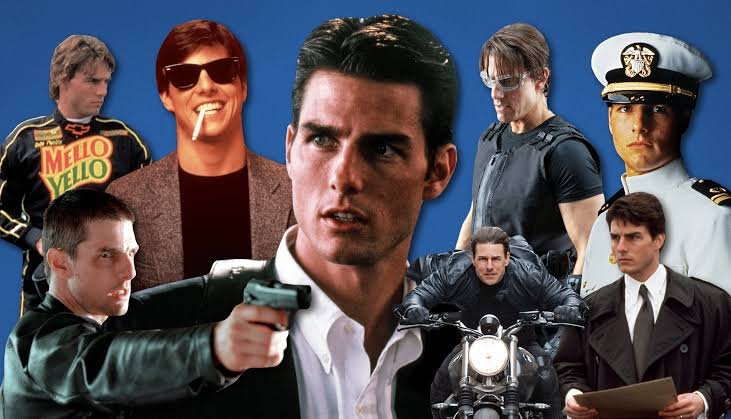
Before the film’s release, anticipation was building around the possibility that this unusual performance could finally bring Cruise the acting Oscar that has eluded him throughout his career. A promotional video released in June helped fuel that excitement by celebrating his most memorable performances before introducing audiences to his new character.
But the film’s disappointing opening weekend changed the conversation. With reported domestic opening-weekend ticket sales of just $8 million against a production budget of approximately $125 million, Digger faced an uphill battle at the box office. Its commercial performance also complicated the awards narrative surrounding Cruise, turning what had appeared to be a promising Oscar campaign into a much less certain prospect.
Digger Introduced a Very Different Tom Cruise
The first major glimpse of Digger arrived with an unusual promotional sequence designed to remind audiences of Cruise’s extraordinary career.
The approximately two-and-a-half-minute video featured highlights from his previous films, showcasing the charisma, intensity, and versatility that have made him a global movie star. The montage built toward a line from a Mission: Impossible film: “Everything you’ve done has come to this.”
The video then introduced Cruise as Digger Rockwell, a flamboyant oil billionaire whose appearance and mannerisms were dramatically different from the actor’s familiar screen persona.
Hidden beneath elaborate prosthetics, Cruise delivered his dialogue with a pronounced Texas drawl and adopted the mannerisms of an extravagant businessman. One memorable moment featured the character firing a finger gun, reinforcing the exaggerated, satirical tone of the performance.
The promotional strategy generated considerable excitement online. Some viewers interpreted the career-spanning montage as a signal that Cruise was preparing for the defining performance of his career.
The possibility of an Oscar nomination quickly became part of the conversation. After years of performing demanding stunts and delivering major commercial successes, many fans hoped the actor would finally receive recognition from the Academy for his work in front of the camera.
However, the film’s subsequent commercial performance failed to match those expectations.
A Disappointing Box Office Opening Changes the Conversation
Despite its ambitious concept and the involvement of an acclaimed director, Digger reportedly earned only $8 million during its opening weekend in more than 3,300 domestic theaters.
The result was particularly disappointing for a production said to have cost approximately $125 million. Although a film’s financial performance depends on more than its opening weekend, such a modest debut places considerable pressure on a production to attract additional audiences in the weeks that follow.
The release also generated headlines describing the movie as a box-office bomb, drawing comparisons with The Mummy, Cruise’s 2017 attempt to launch a new cinematic franchise.
For an actor whose recent career has been closely associated with theatrical success, the reception marked a notable change in circumstances.
Cruise has become synonymous with large-scale entertainment, particularly through the Mission: Impossible franchise and Top Gun: Maverick. His films have often relied on spectacle, practical stunts, and a theatrical experience designed to persuade audiences to leave their homes and visit cinemas.
Digger, however, presented a different proposition. Rather than delivering a straightforward action adventure, it offered audiences a contemporary satire involving corporate power, environmental catastrophe, and the consequences of aggressive resource extraction.
That creative difference may have contributed to the challenge of finding a broad audience. A film can attract attention because of its unusual premise without necessarily convincing moviegoers to purchase tickets.
The disappointing opening also created a difficult situation for the awards campaign. Commercial success does not guarantee Oscar recognition, but a film struggling to attract audiences can face additional obstacles when studios and industry voters are deciding which performances deserve attention.
Why Tom Cruise’s Oscar Campaign Was So Important
Cruise’s pursuit of a competitive acting Oscar represents one of the most prominent unfinished chapters in his Hollywood career.
Despite his remarkable achievements, he has never won an Academy Award for an acting performance. He has received three acting nominations, each recognizing a different side of his abilities.
His first nomination came for Born on the Fourth of July in 1989. Directed by Oliver Stone, the film featured Cruise as Ron Kovic, a Vietnam War veteran whose experiences transformed his life and political outlook.
The demanding performance demonstrated that Cruise could move beyond the charismatic young characters that initially brought him attention. He portrayed a man struggling with physical disability, disillusionment, and the psychological consequences of war.
Cruise later received a Best Actor nomination for Jerry Maguire in 1996. As a sports agent who experiences a professional and personal crisis, he combined comedy, emotional vulnerability, and the determination to rebuild his life.
His third acting nomination came for Magnolia in 1999, in which he played Frank T. J. Mackey, a provocative motivational speaker whose aggressive public persona concealed deeper emotional wounds.
The role was particularly significant because it demonstrated Cruise’s willingness to portray an abrasive and deeply troubled character rather than rely on the qualities associated with his most commercially successful films.
Cruise also received a Best Picture nomination as a producer of Top Gun: Maverick. That recognition highlighted his contribution to a film that became an important theatrical success, although it did not provide the individual acting award he has continued to pursue.
His only Oscar win to date has been an honorary Academy Award recognizing his career and contributions to cinema. While that distinction represents a major achievement, it differs from winning a competitive acting category.
For an actor who has consistently demonstrated his commitment to filmmaking, the absence of a competitive acting Oscar remains a notable feature of his professional story.

From Eyes Wide Shut to Collateral: Cruise’s Dramatic Range
Although Cruise is frequently associated with action films, his career includes a substantial collection of performances that demonstrate his dramatic range.
In The Color of Money, directed by Martin Scorsese, Cruise appeared alongside Paul Newman, playing a talented young pool player whose confidence and ambition attract the attention of a veteran hustler.
The film allowed Cruise to share the screen with one of the most respected actors of his generation while exploring themes of talent, mentorship, competition, and ambition.
He also appeared in Rain Man, starring Dustin Hoffman. The film became a major success and gave Cruise an opportunity to work within a character-driven story about family relationships and personal transformation.
Later, Cruise took on a very different role in Stanley Kubrick’s Eyes Wide Shut. The psychologically complex film examined marriage, desire, jealousy, and secrecy, moving far away from the straightforward storytelling of a conventional action blockbuster.
Cruise also demonstrated a willingness to make fun of his own screen image. His appearance in Tropic Thunder, complete with a bald cap and an exaggerated physical transformation, delivered a broad comic performance that surprised viewers familiar with his more serious roles.
In Michael Mann’s Collateral, Cruise played a professional hitman whose cold, controlled personality created a striking contrast with the actor’s usual heroic characters.
These performances illustrate why some industry observers believe Cruise deserves greater recognition for his acting. His career has not been limited to one genre, even if his most visible recent work has emphasized spectacular action sequences.
Hollywood marketing veteran Dennis Rice, who previously worked with Cruise during the actor’s involvement with United Artists, has argued that Cruise’s commercial success can sometimes overshadow his dramatic achievements.
The distinction raises an important question about how the industry evaluates actors who move between blockbuster entertainment and more unconventional projects.
Why Digger Was a Risky Creative Choice
Director Alejandro González Iñárritu is known for ambitious films that frequently explore difficult subjects through unconventional storytelling.
With Digger, the filmmaker combined satire, environmental concerns, and a deliberately exaggerated central character. Cruise’s oil tycoon becomes the focal point of a story connected to a global catastrophe caused by drilling.
The film’s approach reportedly combines dark comedy with a serious message about the climate crisis. That combination can be difficult to balance, particularly when audiences expect entertainment from a major theatrical release.
Film critic Amy Nicholson described the project as an especially risky choice, noting that pointed contemporary climate-change satire can struggle to find an audience during the year it is released.
The subject matter presents a challenge for filmmakers because it asks viewers to engage with an urgent real-world issue while also responding to a stylized fictional narrative.
A satirical film may appeal strongly to some viewers while alienating others who find its tone uncomfortable, its message too direct, or its approach too unconventional.
Cruise’s transformation into an oil billionaire also created expectations that differed from those surrounding his action roles. Rather than presenting him as a familiar hero confronting a clearly defined villain, the film places him in a morally complicated position within a story about environmental destruction.
The film’s major plot twist created another challenge for publicity. Its studio, Warner Bros., reportedly worked to keep the development secret, limiting how much of the story could be discussed in advance without spoiling the experience.
For a movie depending on surprise and unconventional storytelling, maintaining secrecy may protect the audience experience. However, it can also make it harder for promotional campaigns to explain why the film deserves attention.
Warner Bros. Responds to Mixed Reviews
Following the release of negative reviews, Warner Bros. adopted a promotional strategy that highlighted the sharply divided critical response.
The campaign juxtaposed contrasting descriptions of the film, including words such as “magnificent” and “insufferable,” before inviting audiences to “Decide for yourself.”
The approach acknowledged the disagreement surrounding the movie rather than attempting to present a universally positive critical consensus.
Such a strategy can be useful for films that generate strong reactions. A polarized response may encourage curious moviegoers to decide whether the material suits their tastes, especially when a production is difficult to summarize through a conventional trailer.
However, the effectiveness of that strategy ultimately depends on whether audiences are willing to buy tickets.
The film has attracted supporters who believe its unusual approach deserves recognition. Among the celebrities who have praised it are Jane Fonda and Mandy Patinkin.
Anne Hathaway, who is set to reunite with Cruise in the upcoming sequel to Days of Thunder, also expressed enthusiasm for the film. She described it as brilliant in a post on Letterboxd and gave it a five-star rating.
Celebrity endorsements do not guarantee commercial success or awards recognition, but they can help keep a film in the public conversation after a difficult opening.
They may also influence how industry observers interpret a polarizing release. A film that initially appears to have stumbled commercially can still develop a passionate following, especially if its creative ambitions become a central part of the discussion.
The Competition for Best Actor Is Already Intense
Cruise’s Oscar prospects face another challenge: the strength of the competition in the Best Actor category.
The reported contenders include Matt Damon for The Odyssey, which premiered during the summer, along with John Malkovich for Wild Horse Nine and Andrew Scott for Elsinore.
Awards races can change considerably as more films are released, reviews circulate, and industry voters begin evaluating performances. A difficult opening weekend does not automatically eliminate an actor from consideration, just as a strong box office result does not guarantee a nomination.
Nevertheless, Cruise’s campaign may now require a stronger argument based on the performance itself, the film’s artistic qualities, and the support it receives from critics and industry professionals.
The unusual nature of his character could work in his favor if voters respond to the physical transformation and the risks involved in playing such an exaggerated figure.
On the other hand, if the film remains commercially unsuccessful and divisive among critics, maintaining momentum could prove difficult.
The awards calendar also creates a limited window for campaigning. According to the information provided, Oscar nominations voting closes on January 15, giving supporters a defined period in which to argue for Cruise’s inclusion.
Until nominations are announced, however, any prediction about the final outcome remains uncertain.
Tom Cruise’s Legacy Extends Beyond an Oscar
Even if Digger ultimately fails to secure a Best Actor nomination, Cruise’s standing in Hollywood is unlikely to depend on a single awards season.
His contribution to theatrical filmmaking has been especially visible in recent years. Top Gun: Maverick became a major commercial success and demonstrated the continuing appeal of large-scale movies designed for cinema audiences.
Cruise’s willingness to undertake physically demanding stunts has also become a defining part of his public image. Across the Mission: Impossible films, he has repeatedly placed himself at the center of elaborate action sequences, reinforcing his reputation for commitment to the theatrical experience.
His career has also extended beyond performing. As a producer, he has helped develop projects that combine commercial entertainment with a strong emphasis on cinematic scale.
These achievements help explain why he is often described as one of the last major traditional movie stars: a performer whose name alone can attract international attention and whose work is closely associated with the theatrical business.
An Academy Award would add another milestone to that legacy, but it would not define the entirety of his accomplishments.
The story of Digger may ultimately become another example of the uncertainty that accompanies ambitious filmmaking. A star can take a creative risk, a director can pursue an unconventional idea, and a studio can invest heavily in a production without receiving the commercial or awards response it anticipated.
For Cruise, the film’s disappointing opening has made the path to a competitive acting Oscar more complicated. Yet his supporters still have time to make their case, and his history of taking on challenging roles gives them plenty to discuss.
Whether Digger becomes a misunderstood artistic experiment or a missed opportunity remains to be seen. What is clear is that Cruise’s Oscar journey continues to be one of the most closely watched stories in Hollywood—a reminder that even a performer with decades of success cannot control every twist in the awards race.