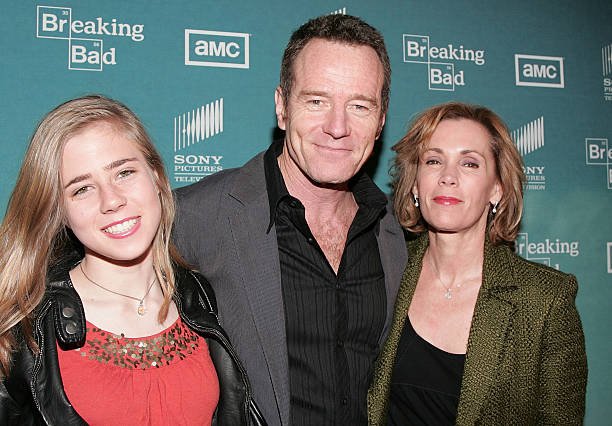
Bryan Cranston may be one of television’s most recognizable actors, but when it comes to parenting, he says his priorities have always been simple: he wants his daughter to find happiness by pursuing something she genuinely loves.
The award-winning actor recently opened up about his daughter, Taylor Dearden, who has followed in his footsteps and established herself as an actress in her own right. Best known for playing Dr. Melissa King in the medical drama The Pitt, Taylor has attracted attention for her performance and earned an Emmy nomination in 2026.
However, Cranston says he would have been equally proud of his daughter if she had chosen an entirely different profession. Whether she wanted to become an actor, pursue an academic career, or study insects as an entomologist, his response would have remained the same: he would encourage her to follow her interests and build a life that makes her happy.
In an exclusive interview, Cranston explained that parents should not expect their children to pursue careers simply to satisfy family expectations. Instead, he believes children should be free to discover their own ambitions and make choices based on their individual interests.
His comments offer a glimpse into the family philosophy behind Taylor’s journey into acting. Although growing up with a successful Hollywood father could have created expectations about her future, Cranston says he never wanted his daughter to feel obligated to follow his professional path.
Bryan Cranston’s Message to His Daughter: Choose Your Own Path
For Cranston, supporting his daughter has never meant deciding what career she should pursue.
During the interview, the actor explained that he would have welcomed almost any professional direction Taylor chose, even one completely unrelated to the entertainment industry.
He offered a simple example: if his daughter had decided that she loved insects and wanted to become an entomologist, he would have been happy for her and encouraged her to continue studying them.
The example illustrated his broader approach to parenting. Rather than measuring success through fame, money, or professional recognition, Cranston believes a parent’s role is to help a child discover what makes life meaningful.
He explained that happiness is what parents ultimately want for their children. From his perspective, the profession itself matters less than whether the child genuinely enjoys the work and feels motivated to pursue it.
Cranston also shared the advice he gave Taylor as she considered her future. He wanted her to understand that she should never feel compelled to choose a career to please him.
His message was that she needed to find her own source of happiness and pursue it for herself.
That distinction is especially meaningful in a family connected to Hollywood, where a famous parent’s career can sometimes create expectations for the next generation. Children of successful performers may encounter assumptions that they will automatically enter the same profession or that their choices will be judged against their parents’ achievements.
Cranston’s approach suggests that he wanted Taylor to avoid that pressure.
Rather than asking her to continue the family tradition, he encouraged her to discover her own interests and develop her abilities independently.
Who Is Taylor Dearden?
Taylor Dearden is the daughter of Bryan Cranston and his wife, Robin Dearden. Born in Los Angeles in February 1993, she grew up in a family with strong connections to the entertainment industry.
Although her father’s name is associated with some of television’s most celebrated performances, Taylor has gradually developed her own identity as an actress.
She studied theater at the University of Southern California, graduating in 2015. Her academic background gave her an opportunity to develop her understanding of performance before continuing into professional work in film and television.
Her career has included appearances in several productions, with one of her early major television roles coming in MTV’s Sweet/Vicious. The series explored serious subjects through the story of college students who take action against sexual assault on their campus.
The project offered Taylor an opportunity to participate in a television production with a distinctive subject and tone.
She also has a personal connection to her father’s work. Her first on-screen appearance came in an episode of Breaking Bad, the acclaimed drama in which Cranston played Walter White.
The episode, titled “No Más,” aired in 2010 and was directed by Cranston himself.
Although appearing in her father’s series was an early part of Taylor’s screen journey, her later projects have helped establish her as a performer with her own career.
Her work on The Pitt has become particularly important in bringing her performances to a wider audience.
Taylor Dearden’s Breakthrough Role in The Pitt
Taylor’s career reached a new stage when she joined the medical drama The Pitt as a series regular in 2025.
In the show, she portrays Dr. Melissa King, a neurodivergent medical professional working in a demanding hospital environment.
The role requires her to participate in a fast-paced medical drama in which characters must respond to difficult situations, communicate complex information, and navigate the emotional pressures of healthcare.
Medical television can be challenging for actors because the dialogue often contains complicated terminology and requires performances to feel convincing under intense circumstances.
Cranston has spoken admiringly about the demands of the series, noting how difficult it can be to deliver long, technical medical terms naturally while maintaining the pace of a scene.
His comments demonstrate that he recognizes the effort required to perform in such a production.
The show’s demanding environment also provides opportunities for actors to explore their characters through both professional interactions and personal moments. For Taylor, playing Dr. Melissa King means contributing to a story that combines medical emergencies with the relationships and challenges experienced by hospital staff.
Her performance earned her an Emmy nomination in 2026, marking an important milestone in her career.
The recognition is particularly notable because Taylor has been building her professional reputation through her own work, rather than simply appearing as the daughter of a famous actor.
Although her family background has attracted public interest, the attention surrounding The Pitt has increasingly focused on her performance and the role she brings to the screen.

Bryan Cranston Believes His Daughter Has Surpassed Him at Her Age
Cranston has previously expressed how impressed he is by Taylor’s acting abilities.
In an earlier interview, he praised the subtlety she brings to her performances, explaining that some of the techniques she had developed in her twenties took him years to learn.
He said he genuinely believed Taylor was further along in her acting ability at her age than he had been at the same stage of his own career.
The comment reflects more than a father’s pride. Cranston has spent decades working in television, film, and theater, gaining experience across a wide variety of roles.
His career included years of smaller parts and less prominent television work before he became a household name.
He recalled that, even in his thirties, he was still working hard to establish himself and appearing in television productions he considered less impressive.
That history gives his praise for Taylor a particular perspective. He understands how difficult it can be for performers to develop their craft, find suitable roles, and build lasting careers.
Cranston’s comments also suggest that he does not view his daughter’s success as a competition between generations.
Instead, he appears genuinely pleased that she is developing her skills and finding opportunities to demonstrate them.
For a parent who has experienced the challenges of the entertainment industry firsthand, seeing a child become a capable performer can be a source of enormous satisfaction.
His willingness to praise Taylor publicly also highlights the respect he has for her work as an individual artist.
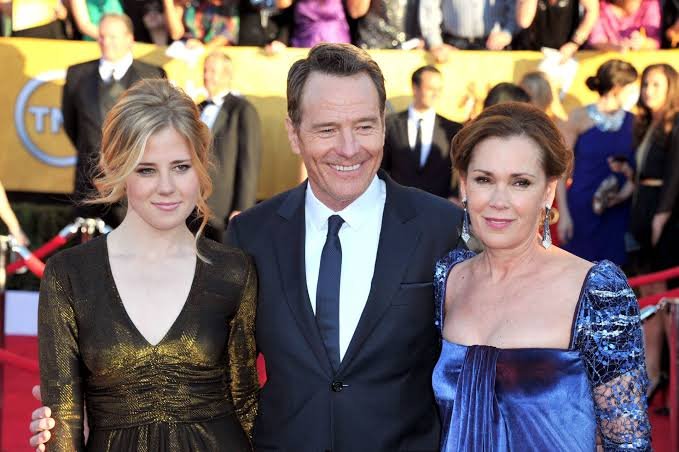
Why Acting in The Pitt Is Such a Challenge
Cranston has emphasized that The Pitt is a difficult show to perform in, particularly because of the technical demands of its medical dialogue.
Actors in medical dramas frequently need to deliver complex terminology while appearing confident and natural. They must also respond to the emotional urgency of the scenes, where a patient’s condition or a medical decision can change the direction of the story.
According to Cranston, the long medical terms can be especially difficult to deliver quickly and clearly.
His observation comes from decades of experience in productions with demanding scripts and tight schedules.
He has explained that even his best-known television projects were challenging to make. He specifically mentioned Breaking Bad and Malcolm in the Middle, noting that both productions required sustained effort and constant work to complete scenes within their schedules.
Although the shows differed considerably in tone, each required performers and production teams to manage a demanding workload.
In Breaking Bad, Cranston played Walter White, a chemistry teacher whose life changes dramatically after a cancer diagnosis leads him into the illegal drug trade. The series became known for its intense storytelling, complex characters, and emotionally demanding performances.
By contrast, Malcolm in the Middle was a family sitcom built around fast-paced comedy and chaotic domestic situations.
Despite their differences, Cranston said both productions were difficult to shoot. He described the pressure of trying to accomplish as much as possible before reaching the end of a production schedule.
His comments offer insight into why he respects the work Taylor is doing on The Pitt. He understands that performing in a successful television series involves much more than memorizing lines or appearing on camera.
It requires preparation, concentration, technical skill, and the ability to deliver consistent performances under pressure.
A Hollywood Family With a Long Acting Tradition
Taylor’s career also places her within a family with several generations of connections to acting.
Bryan Cranston and Robin Dearden have both worked in the entertainment industry, giving Taylor a background in which film and television were familiar parts of family life.
Robin Dearden is an actress who has maintained a lower public profile than her husband, but she has her own history in the profession.
For Taylor, growing up in this environment may have offered an early understanding of the work involved in acting. At the same time, Cranston’s comments make clear that the family did not consider an acting career compulsory.
His example of an imaginary future entomologist illustrates that the family’s professional history was not intended to limit Taylor’s options.
A family can share an interest in a particular profession without expecting every generation to continue it.
Cranston’s attitude reflects that distinction. He may appreciate the craft of acting and feel proud that his daughter has chosen to pursue it, but he has repeatedly emphasized that her happiness should remain the priority.
This is a useful perspective in an industry where family connections often become a central part of public discussion.
Taylor’s career may attract additional attention because of her father’s fame, but her performances and professional decisions remain her own.
Parenting, Independence, and the Meaning of Success
Cranston’s comments also connect to a broader conversation about how parents can support their children’s ambitions without imposing their own expectations.
Parents naturally want their children to succeed, but success can mean different things to different people.
For one person, it may involve becoming a doctor, scientist, artist, or business owner. For another, it may mean working in a profession that offers stability, personal fulfillment, or the opportunity to contribute to a community.
Cranston’s example of an entomologist captures this idea in a straightforward way. A child who genuinely loves studying insects should be encouraged to explore that interest rather than being pressured to choose a more prestigious or familiar career.
His message to Taylor was that she should pursue a path because it mattered to her, not because she believed it would make her father happy.
That advice places personal motivation at the center of professional development.
People who choose work that genuinely interests them may find it easier to remain curious, develop their skills, and persevere when challenges arise. Passion alone does not guarantee success, but it can provide a meaningful reason to keep learning and improving.
For aspiring actors, that motivation is especially important. The entertainment industry can involve rejection, uncertain employment, intense competition, and long periods of waiting for opportunities.
A career chosen primarily to satisfy a parent could become difficult to sustain under those conditions.
By encouraging Taylor to make her own decisions, Cranston appears to have wanted her to develop an independent relationship with her work.
Her growing success on The Pitt suggests that acting has become a meaningful professional pursuit for her.
Bryan Cranston’s Legacy and Taylor Dearden’s Future
Cranston’s career has included some of the most memorable television performances of recent decades. His work on Breaking Bad brought him international recognition, while Malcolm in the Middle introduced him to audiences through a very different kind of character.
He has also appeared in numerous films and stage productions, demonstrating his versatility across different forms of entertainment.
Taylor is now developing her own professional identity through roles that allow her to explore different characters and storytelling styles.
Her work on The Pitt has provided a major opportunity to showcase her abilities, and her 2026 Emmy nomination represents a significant achievement.
Cranston’s response to her progress reveals a father who is proud of what his daughter has accomplished while remaining conscious that her future belongs to her.
He has not suggested that she needs to replicate his career or achieve the same milestones. Instead, his comments emphasize the importance of finding work that brings genuine satisfaction.
That approach may be particularly valuable in a family where professional achievements can attract considerable public attention.
Taylor will inevitably be compared with her father by some viewers, but Cranston’s own words suggest that he is more interested in her happiness and artistic development than in any comparison between their careers.
His belief that she has already developed certain acting skills earlier than he did is an expression of admiration rather than competition.
As Taylor continues her work on The Pitt and explores future opportunities, she has the benefit of a father who understands the demands of the profession while encouraging her to make independent choices.
Ultimately, Cranston’s message extends beyond Hollywood. Children do not need to follow their parents’ footsteps to make them proud. They need the freedom to discover their own interests, the encouragement to pursue them seriously, and the confidence to define success on their own terms.
For Bryan Cranston, whether his daughter becomes an award-winning actress or chooses an entirely different profession, the most important outcome remains the same: that she finds a path that makes her happy.