A new cross-cultural film project is bringing together established Hong Kong performers and international creative talent. The Grand Tribute, an upcoming Chinese opera drama directed by Sri Kishore, has expanded its supporting cast as production continues in Hong Kong. The film stars veteran performers Law Kar-ying and Paw Hee-ching in an emotional story about love, family, artistic legacy, and the power of a final performance.
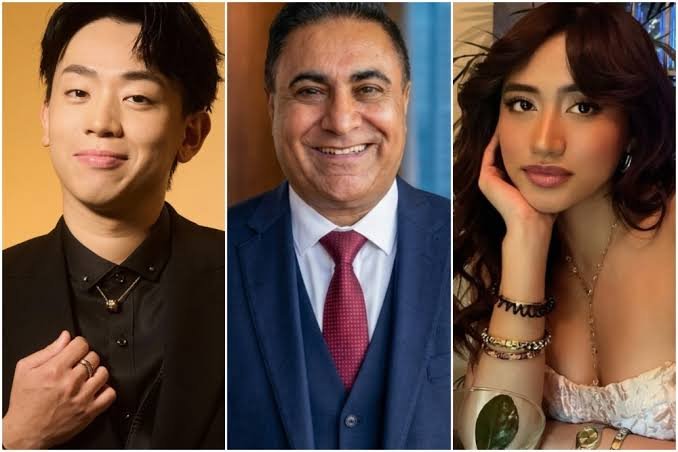
The latest casting announcement introduces Sham Kaki, QBobo, Virginia Lau, Ahstisham Ahmad, and Jayan Yvette C. Marquez to the ensemble. Their involvement adds new dimensions to a production that combines the traditions of Chinese opera with elements of Indian music.
At the heart of the story is an elderly Cantonese opera performer who decides to stage one final show for his terminally ill wife. Rather than treating the performance as simply another appearance on stage, he sees it as a personal farewell and an expression of the love they have shared throughout their lives.
The project brings together an experienced lead cast, returning collaborators from Sri Kishore’s earlier film My Indian Boyfriend, and a production team working to combine different cultural and musical traditions within a single cinematic story.
With the entire film being shot on location in Hong Kong, the city also plays a central role in the production’s identity. The announcement was made on the sidelines of the Busan International Film Festival’s Asian Contents & Film Market, bringing attention to a project that connects Hong Kong’s performing arts heritage with Indian creative influences.
A Moving Story About Love, Loss, and a Final Performance
The Grand Tribute centres on a Cantonese opera performer in his seventies who wants to stage one final show as a loving gesture for his terminally ill wife.
The premise places a long-standing artistic tradition at the centre of an intimate human story. For the protagonist, the final performance represents more than an opportunity to demonstrate his talent. It becomes a way to express emotions that may be difficult to communicate through ordinary conversation.
The story also explores the relationship between an artist’s professional life and personal relationships. A performer who has spent decades entertaining audiences may find that his most meaningful performance is not necessarily the one that receives the greatest applause, but the one created for someone whose opinion matters most.
In this case, the elderly performer wants to give his wife a final tribute through the art form that has shaped his life.
The emotional premise creates opportunities to explore love, ageing, memory, illness, and the importance of shared experiences. It also raises questions about how traditions are preserved and what an artist leaves behind when a career approaches its conclusion.
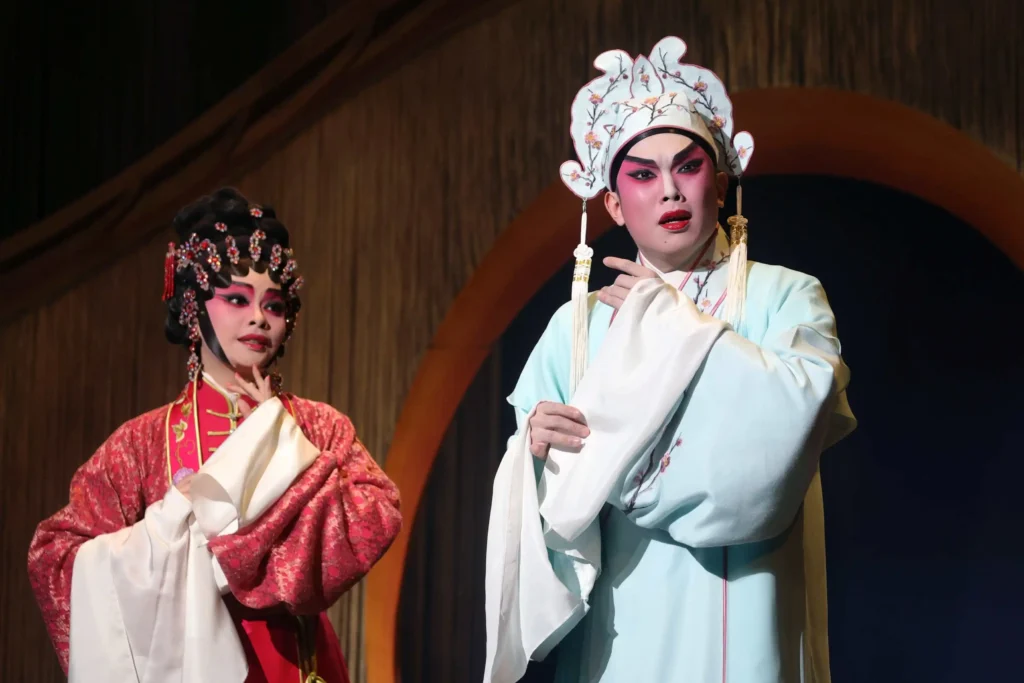
Cantonese opera provides a particularly meaningful backdrop for this narrative. As a performance tradition combining music, singing, movement, acting, and elaborate stage presentation, it offers a rich artistic language through which the characters’ emotions can be expressed.
The film’s central relationship is therefore closely connected to the art form itself. The protagonist’s decision to perform one last time gives the story a clear emotional purpose, while the presence of two respected Hong Kong performers lends additional significance to the project.
Although further plot details have not been disclosed in the supplied announcement, the premise suggests a character-driven drama built around the intersection of personal devotion and artistic identity.
Law Kar-ying and Paw Hee-ching Lead the Cast
The casting of Law Kar-ying and Paw Hee-ching gives The Grand Tribute an experienced pair of performers for its central relationship.
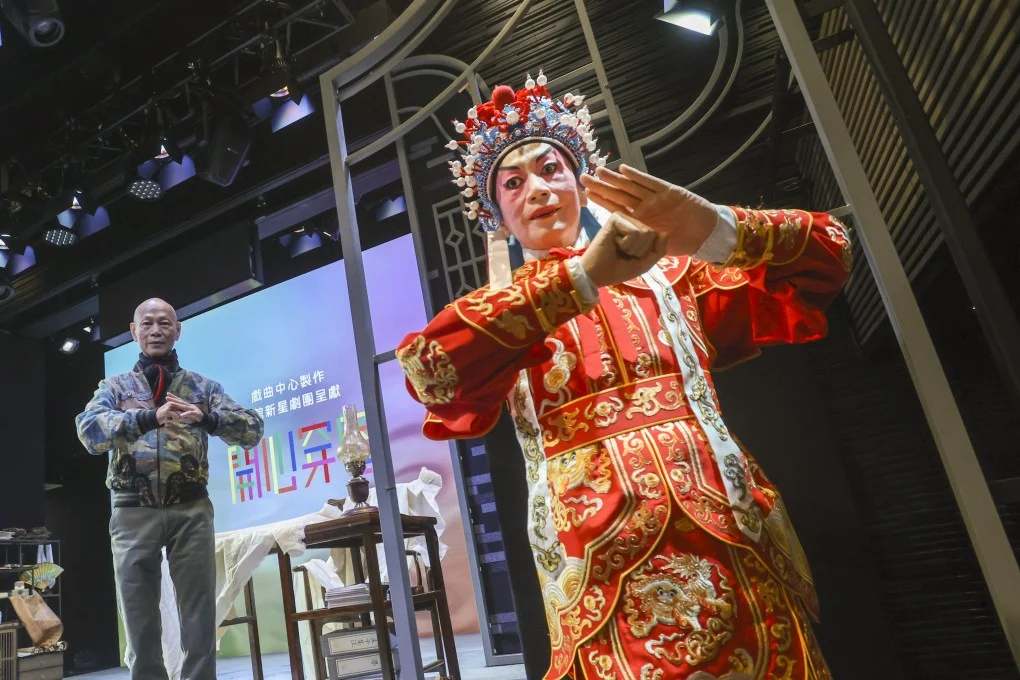
Law Kar-ying is an accomplished Cantonese opera performer in real life, making his involvement especially relevant to a story about an ageing artist preparing for a final performance.
His professional background provides a direct connection to the traditions portrayed in the film. Performing artists who have spent years mastering an established art form often develop an understanding of its physical, musical, and emotional demands that extends beyond the experience of an ordinary screen performer.
That background could help bring authenticity to a character whose life is closely connected to Cantonese opera.
The role also places Law at the centre of a story about the meaning of performance during the later stages of life. Rather than focusing exclusively on fame or professional achievement, the film’s premise connects the protagonist’s artistic legacy to the people he loves.
Paw Hee-ching joins Law in the film’s central relationship. Her casting provides an important emotional counterpart to the elderly performer, whose decision to stage the final show is motivated by his love for his wife.
The relationship between the two characters is expected to form the heart of the drama. The wife’s illness gives the performance a sense of urgency, transforming the planned show into an intimate farewell.
By placing two established Hong Kong performers in these roles, the production brings together screen experience and a story rooted in the city’s cultural traditions.
Their involvement may also help the film connect with audiences familiar with Hong Kong cinema and Cantonese opera, while introducing these traditions to viewers encountering them for the first time.
Sham Kaki and QBobo Reunite With Sri Kishore
The expanded supporting cast includes Sham Kaki and QBobo, both of whom previously collaborated with Sri Kishore on My Indian Boyfriend.
Their return establishes a creative connection between the director’s earlier work and his new production.
Sham Kaki has built a career through a series of well-received performances, according to the supplied production information. His addition strengthens the supporting ensemble as the film brings together performers from different backgrounds.
QBobo also returns to work with the director. The actor has been credited as the first local Indian actor to establish a lasting career in the industry, giving his involvement a particular place within the production’s broader cultural context.
Their experience working with Sri Kishore on an earlier project may provide familiarity with his approach to filmmaking and collaboration.
Returning creative partnerships can be valuable during production, particularly when a film combines several cultural influences and involves performers with different professional backgrounds.
However, the announcement has not disclosed the precise characters Sham Kaki and QBobo will portray in The Grand Tribute. Their roles and the extent of their involvement in the story remain details to be revealed through future production updates.
For now, their casting highlights the director’s decision to bring familiar collaborators into a new cinematic environment.
Virginia Lau, Ahstisham Ahmad, and Jayan Yvette C. Marquez Join the Ensemble
The latest additions also include Virginia Lau, Ahstisham Ahmad, and Jayan Yvette C. Marquez.
Lau, who was born in Hong Kong, brings a local connection to the ensemble. Her background complements a film that is being shot entirely in the city and draws on a distinctly Hong Kong cultural tradition.
Her inclusion also reflects the production’s effort to assemble a cast connected to the place where the story is being made.
Ahstisham Ahmad and Jayan Yvette C. Marquez complete the newly announced group of supporting performers. Their participation expands the ensemble and contributes to the production’s multicultural character.
The film’s combination of Hong Kong veterans and performers connected to Indian cinema reflects Sri Kishore’s interest in bringing different cultural experiences into a shared story.
The supporting cast may play an important role in developing the world surrounding the central couple. Stories about an ageing artist and a final performance can benefit from a wider ensemble that reflects the personal and professional relationships accumulated over a lifetime.
Nevertheless, the production has not yet released detailed descriptions of the new cast members’ characters. Until further information becomes available, their contributions are best understood as part of the film’s expanding ensemble rather than assigned to specific roles.
Sri Kishore Brings Together Familiar Creative Collaborators
Behind the camera, The Grand Tribute reunites several members of the creative team associated with My Indian Boyfriend.
Cinematographer Kunj Gutka returns to work with Sri Kishore, while music director Shravan Bharadwaj also joins the project again.
Their involvement gives the new production continuity with the director’s earlier film.
Cinematography will be particularly important for a story that connects personal emotions with the visual world of Cantonese opera. The way the film captures performers, rehearsal spaces, costumes, and performance environments can help communicate the protagonist’s relationship with his art.
Visual storytelling may also be essential to presenting the contrast between the character’s life on stage and his private experiences with his wife.
For a narrative built around a final performance, the camera’s treatment of the stage could become an important part of the film’s emotional language.
Music will have an equally significant role. The production is described as a Chinese opera drama, but Bharadwaj is composing Indian-style musical numbers for the score.
This combination creates an opportunity to place two distinct musical traditions alongside one another without necessarily treating them as interchangeable.
Cantonese opera has its own vocal conventions, instrumentation, performance styles, and cultural history. Indian music encompasses a wide variety of regional traditions and musical approaches.
Bringing these influences together requires creative decisions about how the music supports the story and how different sounds can coexist within the same cinematic experience.
The production’s approach suggests that music will be more than background accompaniment. It is an important part of the film’s identity and its attempt to connect cultural traditions through a shared emotional narrative.
Vamsi Raavi and Eric Low Strengthen the Production Team
The production has also brought Vamsi Raavi on board as editor, while Eric Low has joined to lead the local production unit.
Both appointments add further experience to the team working on the Hong Kong shoot.
Editing will be particularly important in shaping the relationship between the film’s personal drama and its musical performances.
A story about a final stage appearance may move between rehearsals, private conversations, memories, and the performance itself. The editor’s work will help determine how these elements are connected and how the emotional tension develops.
The pacing of a film centred on ageing, illness, and a farewell can be just as important as its dialogue. A carefully timed pause, a reaction shot, or a transition between a private moment and a musical performance may help communicate feelings that the characters cannot easily express in words.
Meanwhile, Eric Low’s role leading the local production unit supports the practical demands of filming in Hong Kong.
Location-based productions require coordination among cast members, crew, locations, equipment, and local services. Keeping these elements aligned is especially important when a project is shooting throughout a city rather than relying entirely on studio sets.
The production team must also balance the artistic needs of the film with the logistical requirements of completing the shoot.
With the entire production based in Hong Kong, local coordination will be central to keeping filming on schedule and making effective use of the city’s locations.
Hong Kong Becomes an Integral Part of the Film
The decision to shoot the entire film on location in Hong Kong gives The Grand Tribute a strong geographical connection to its subject.
Hong Kong has a long history of Cantonese-language entertainment and is closely associated with film, television, music, and stage performance.
For a film about a Cantonese opera performer, shooting in the city provides an opportunity to situate the story within the cultural environment connected to the art form.
Location filming can also give a production a sense of place that is difficult to reproduce through artificial backgrounds alone.
The city’s streets, buildings, performance spaces, and everyday environments may contribute to the atmosphere of the story, depending on which locations are used in the finished film.
The production announcement does not specify all the filming locations, so details about particular theatres or landmarks should not be assumed. However, the commitment to shooting the entire film in Hong Kong establishes the city as a central part of the production process.
The local setting also complements the presence of Hong Kong veterans Law Kar-ying and Paw Hee-ching, whose participation anchors the film in the region’s performing arts culture.
A Cultural Fusion of Chinese Opera and Indian Music
One of the most distinctive elements of The Grand Tribute is its combination of a Chinese opera drama with Indian-style music numbers.
The project brings together a Cantonese opera performer at the centre of the narrative and an Indian music director contributing to the film’s score.
This combination provides an opportunity to explore how artistic traditions can communicate emotions across cultural boundaries.
Music often plays an important role in stories about love, grief, memory, and personal sacrifice. Different traditions may approach musical expression in different ways, but they can share the ability to communicate feelings that dialogue alone cannot fully convey.
In The Grand Tribute, the central character’s relationship with Cantonese opera is tied to his identity and his decision to create one final performance for his wife.
The addition of Indian-style musical elements introduces another dimension to the film’s sound and cultural identity.
The creative challenge will be to make these influences feel connected to the story rather than simply placing them alongside one another.
A successful musical approach could help the film establish its own identity while respecting the traditions that inform it.
The announcement does not detail the specific musical styles, instruments, or numbers that will appear in the finished film. More information about the score may emerge as production progresses.
For now, the involvement of Shravan Bharadwaj and the stated musical direction are among the project’s most distinctive features.
Production Details and Announcement at Busan
The Grand Tribute is being produced by Sri Kishore Film Productions Limited.
Sri Kishore and Dai Ming Tsui serve as producers, while Nasrul Ekram is the line producer. The production team is currently filming in Hong Kong, with the entire movie scheduled to be shot on location in the city.
The latest casting news was unveiled on the sidelines of the Busan International Film Festival’s Asian Contents & Film Market.
The market brings industry professionals together to discuss film and television projects, production opportunities, distribution, and international collaboration.
Announcing the expanded cast in that setting places The Grand Tribute within a broader industry environment where projects seek attention from potential partners and audiences across different territories.
The film’s combination of Hong Kong performers, Indian creative influences, and a cross-cultural production team gives it an identity that extends beyond a conventional drama about an elderly artist.
However, the production announcement does not provide a confirmed release date, distributor, or complete synopsis. Those details should be awaited rather than assumed.
Why The Grand Tribute Is Worth Watching
The Grand Tribute brings together several elements that could appeal to audiences interested in character-driven cinema and culturally distinctive storytelling.
Its central premise is built around an emotional situation: an ageing performer wants to give his terminally ill wife one final show. The story connects a lifelong artistic practice with the deeply personal desire to express love before an important chapter comes to an end.
The casting of Law Kar-ying is particularly meaningful because of his real-life experience as a Cantonese opera performer. Paw Hee-ching’s involvement gives the central relationship an experienced screen presence, while the supporting ensemble brings together performers who have worked with Sri Kishore before and new collaborators joining the production.
The creative team also includes returning cinematographer Kunj Gutka and music director Shravan Bharadwaj, alongside editor Vamsi Raavi and local production lead Eric Low.
Most notably, the combination of Chinese opera and Indian-style musical elements could help the film distinguish itself from more conventional dramas.
Its eventual impact will depend on the completed screenplay, performances, direction, music, and editing. Until a trailer or further production details become available, it is too early to draw firm conclusions about the finished film.
Nevertheless, the project’s premise offers a compelling starting point for a story about love, artistic legacy, and the importance of a final gesture.
As filming continues in Hong Kong, The Grand Tribute is developing into a production that connects a deeply personal farewell with a broader celebration of performance and cultural exchange. Further announcements may reveal more about the supporting characters, the film’s musical approach, and its eventual release plans.