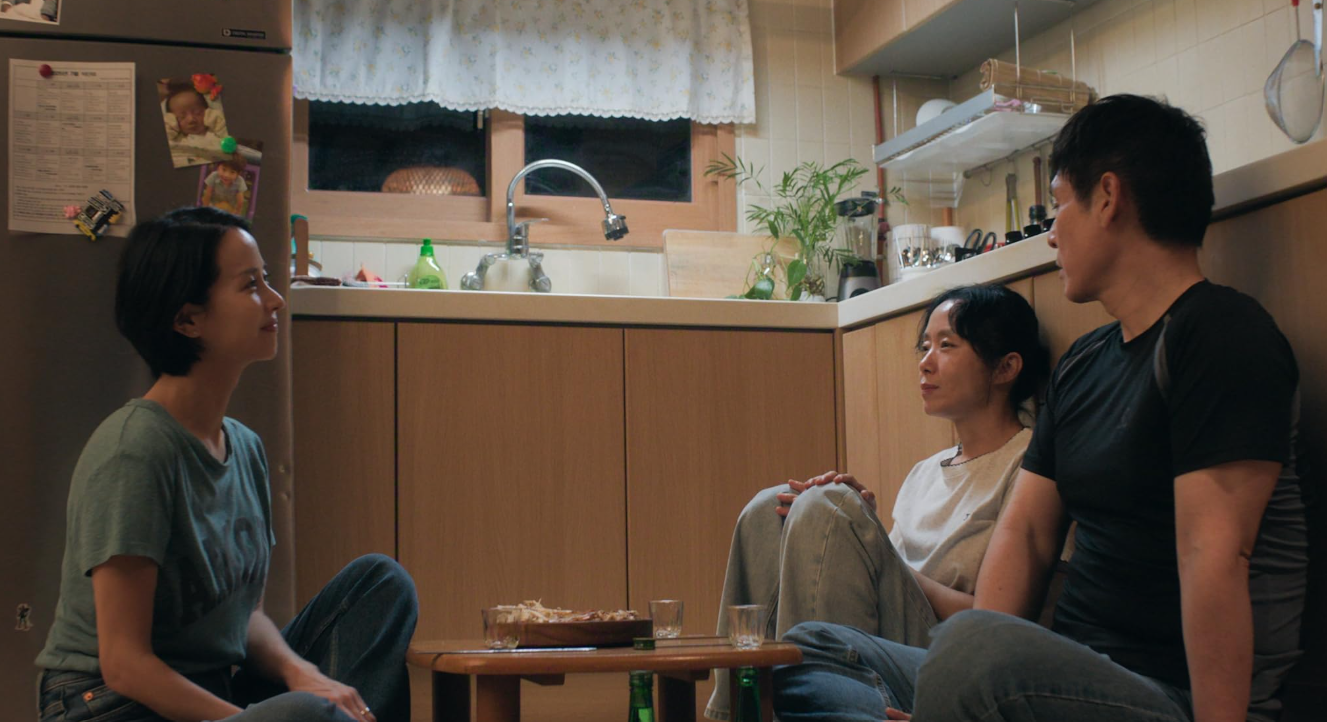
Creating a film that feels completely natural can require an extraordinary amount of planning. For cinematographer Kim Ji-yong, that challenge reached a memorable point while working on Possible Love, the latest feature from acclaimed South Korean filmmaker Lee Chang-dong. Although the drama embraces natural light, restrained camera movement, and realistic performances, the process behind its visual style involved careful calculations, extensive preparation, and even crew members shaking trees to recreate the conditions needed for a pivotal scene.
Kim, whose previous credits include Decision to Leave and Squid Game Season 2, discussed the filmmaking process during a cinematography masterclass at Netflix’s Creative Asia program at the Busan International Film Festival (BIFF). Titled “Cinematography of Possible Love: Quiet, Yet Deeper,” the session explored how he and Lee developed the film’s visual language and why making the finished movie appear effortless proved so demanding.
The discussion offered a fascinating look at the relationship between preparation and spontaneity in cinema. Rather than relying entirely on artificial lighting, elaborate camera setups, or visual effects, the filmmakers sought to preserve the feeling of observing real people in real environments. Achieving that effect, however, required the crew to anticipate problems long before the cameras started rolling.
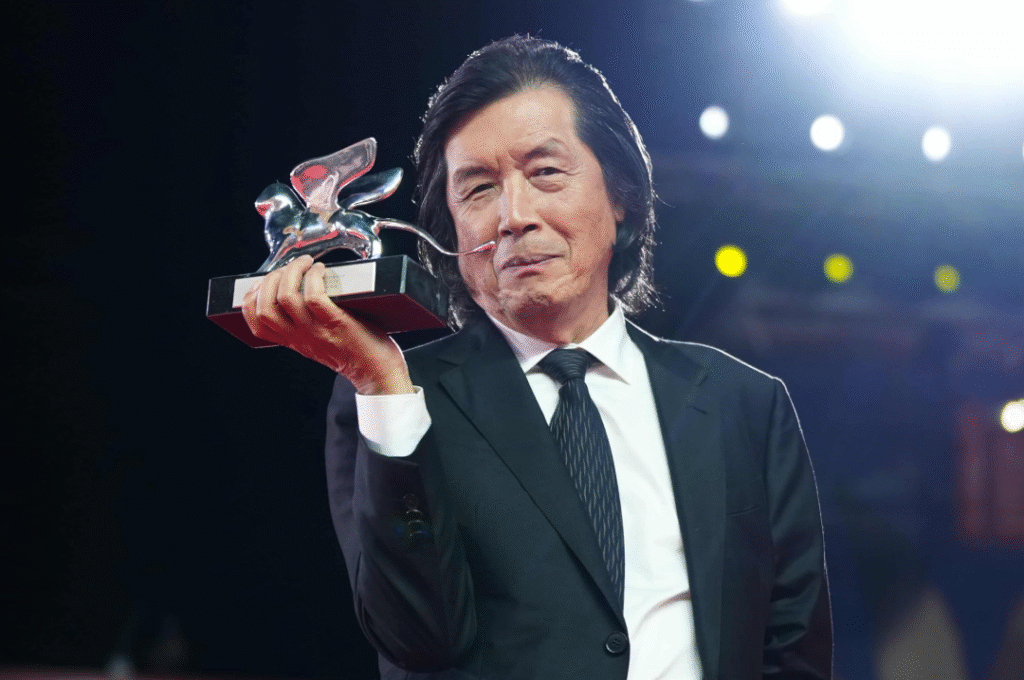
Possible Love marks Lee Chang-dong’s return to feature filmmaking after an eight-year gap. The film has already attracted significant international attention, winning the Silver Lion Grand Jury Prize at the Venice Film Festival and becoming South Korea’s submission for the Academy Award for International Feature Film. Following its screening in BIFF’s Icons section, the movie is scheduled to arrive on Netflix on November 6.
Kim Ji-yong Explains the Challenge Behind Possible Love’s Forest Scene
One of the most revealing moments from Kim’s presentation concerned the emotional climax of Possible Love, which takes place in a forest near the beach.
When Kim first read the screenplay, the scene described a forest that remained still, without wind. However, the realities of filming in the Korean summer created a different set of circumstances. Weather conditions at the location did not always match what the filmmakers needed, forcing Kim and Lee to reconsider how the scene should be staged.
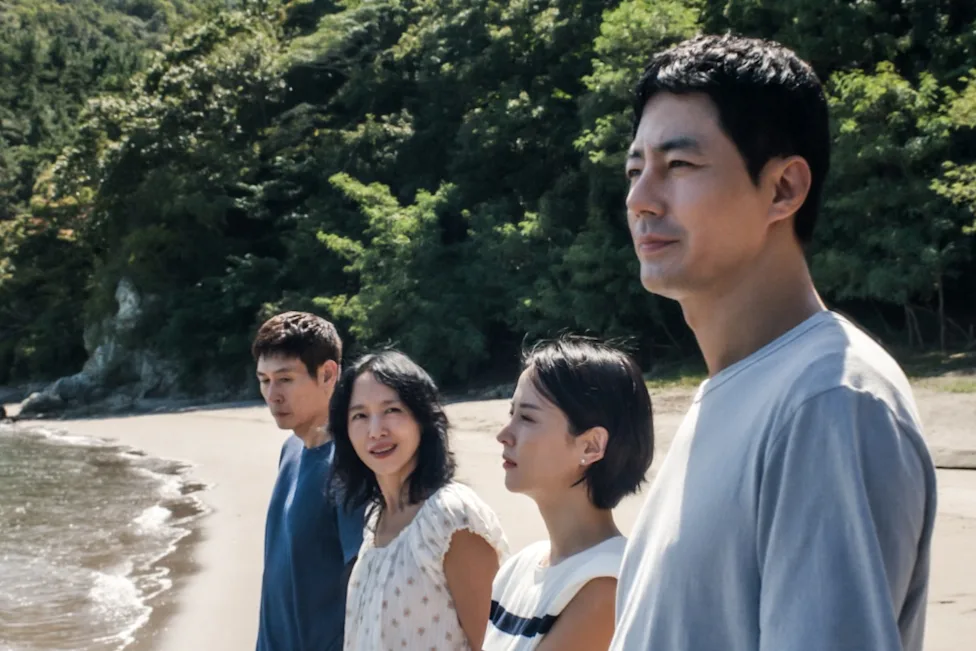
Kim eventually proposed changing the setup to accommodate the conditions. The solution was unconventional: members of the production crew used ropes to shake the trees, creating movement in the forest when the desired natural effect could not be achieved in the expected way.
The process became one of the most memorable experiences of Kim’s career, which spans more than two decades in filmmaking.
The story also illustrates an important principle of cinematography. A scene may appear spontaneous to an audience, but the final image is often the result of numerous decisions about the environment, lighting, camera placement, and movement. Even something as simple as the wind moving through trees can become a major production consideration when it carries emotional meaning within a story.
For the forest sequence, the filmmakers wanted the environment to contribute to the scene rather than simply serve as an attractive background. The movement of the trees needed to feel appropriate to the moment and consistent with the film’s overall atmosphere.
The crew’s improvised solution helped preserve the intended visual effect without abandoning the scene’s emotional purpose.
Kim described how the director often spoke about the idea of a “film ghost,” suggesting that a mysterious bit of luck sometimes appears on a production when the filmmakers have prepared thoroughly and given everything they have to the work.
The anticipated film ghost never arrived during the forest shoot. Instead, the crew created the necessary effect through practical effort.
Kim humorously described the crew members who shook the trees as the real “ghosts” of the production, highlighting the teamwork behind the finished sequence.
The anecdote captures the balance between artistic ambition and practical filmmaking. A director may imagine a particular atmosphere, but realizing that vision often requires the crew to adapt when nature refuses to cooperate.
Why Natural Light Was Central to the Film’s Visual Style
A defining feature of Possible Love is its commitment to a naturalistic appearance. Kim explained that the lighting strategy was built around supporting available light rather than overpowering it with artificial sources.
During daytime scenes, the crew generally relied on the light already present at each location. Film lights were introduced when the natural illumination did not provide enough support for the desired image.
For night scenes, the production made as much use as possible of existing streetlights and lamps.
This approach helped establish a consistent visual atmosphere, but it also placed considerable demands on preparation. Natural light changes constantly. The position of the sun shifts throughout the day, weather can alter the brightness of a location, and artificial sources already present in a room may create uneven illumination.
A cinematographer working in this style must understand how those elements will interact with the camera and the performers.
The challenge is not simply to avoid artificial lighting. Instead, the goal is to use whatever light is available in a way that preserves the intended mood while ensuring that the scene remains visually coherent.
For Kim and Lee, this meant treating the locations themselves as important parts of the film’s visual design.
The production needed to understand how light would enter rooms, where shadows would fall, and how the environment would look at different times of day. Decisions that might appear minor during preparation could have a major effect on the finished image.
Kim emphasized that the naturalistic appearance of Possible Love required more calculation and discussion than many of his previous projects.
The result demonstrates how a film can appear visually simple while relying on sophisticated planning behind the scenes.
Building a House Around the Direction of Natural Light
The filmmakers’ attention to environmental detail extended to the vacation home belonging to Sang-woo, a wealthy character played by Zo In-sung.
According to Kim, Lee discovered the location through a real-estate channel on YouTube. The team then developed the house during approximately two months of pre-production, carefully considering details such as the size and direction of its windows.
Those decisions were important because windows determine how natural light enters a space. Their placement influences the brightness of a room, the direction of shadows, and the appearance of characters as they move through the environment.
For a production committed to available light, these architectural details can become as important as the camera itself.
If a window is too small, it may not provide sufficient illumination. If it faces the wrong direction, the light may not create the intended atmosphere at the required time. Even a beautifully designed location can become difficult to film if its structure does not support the visual approach.
By planning the house around the film’s lighting needs, the team could create a more controlled environment while preserving the impression of naturalism.
The approach also demonstrates how cinematography influences production design. In some films, locations are selected primarily because they look attractive or suit the story. In Possible Love, the physical design of the environment was closely connected to the way the camera would observe it.
Kim explained that creating this kind of result requires extensive calculation, preparation, and debate.
That preparation may not be visible to viewers, but it helps the finished scenes feel believable. Instead of drawing attention to dramatic lighting effects, the cinematography allows audiences to focus on the characters and their relationships.
The house becomes more than a setting. It becomes part of the storytelling process.
Lee Chang-dong’s Return to Filmmaking With Possible Love
Possible Love is Lee Chang-dong’s first feature film in eight years, making it a significant return for the celebrated South Korean director.
Lee is known for films that explore complicated human relationships, emotional uncertainty, and the social pressures that shape people’s lives. His work often examines the gap between how people present themselves to the world and what they experience internally.
The new drama continues that interest through the story of two married couples whose lives occupy very different economic circumstances.
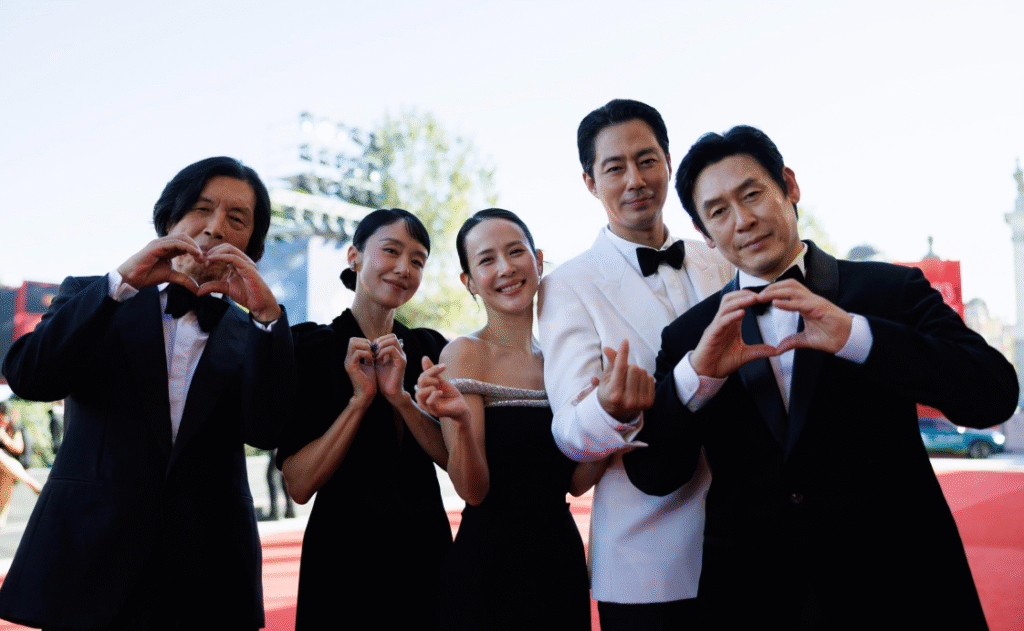
One couple consists of Mi-ok, played by Jeon Do-yeon, and Ho-seok, played by Sul Kyung-gu. Ho-seok has lost his job, adding economic pressure to their relationship.
The other couple is Ye-ji, played by Cho Yeo-jeong, and her husband Sang-woo, played by Zo In-sung. Ye-ji is a documentary filmmaker, while Sang-woo belongs to a wealthier social environment.
By placing these couples in contrasting circumstances, the film creates opportunities to examine class, intimacy, insecurity, and the ways people understand one another.
The drama’s naturalistic visual style appears well suited to those themes. Rather than relying on conspicuous cinematic flourishes, the cinematography can give the characters space to exist within their environments.
Subtle changes in lighting, camera distance, and movement can shape how audiences perceive a conversation or emotional reaction.
The restrained approach also reflects the title of Kim’s masterclass, which described the film’s visual language as quiet yet deeper. Its cinematography does not necessarily need to call attention to itself to influence the emotional experience.
Instead, the images can gradually shape the audience’s understanding of the characters.
A Single Handheld Camera Keeps the Performances Intimate
Kim revealed that Possible Love was filmed using a single handheld camera, with only two dialogue scenes departing from that approach.
A handheld camera can create a sense of immediacy because it responds to the movement of the operator rather than remaining completely fixed. Used carefully, the technique can make a scene feel as though the audience is present in the room, observing events as they unfold.
However, handheld cinematography requires considerable judgment.
If the camera moves too aggressively, the image can feel exaggerated or distracting. If the framing becomes too distant, viewers may feel disconnected from the characters or believe that the scene is being observed from an unnecessarily detached position.
Kim explained that finding the right distance from the actors was particularly important.
The camera needed to remain close enough to capture emotional details without making the performances feel overstated. At the same time, it had to avoid framing the characters from so far away that the audience felt as though it were intruding on them from a distance.
This balance is especially important in a character-driven drama.
A slight change in facial expression can communicate doubt, discomfort, affection, or resentment. The camera must be positioned to capture those details while still respecting the natural rhythm of the scene.
The single-camera approach also encourages continuity. Rather than constructing every conversation from numerous separate angles, the filmmakers could allow scenes to develop with a more unified visual perspective.
The technique does not automatically make a film realistic, but when combined with careful performances and naturalistic lighting, it can support a convincing sense of everyday life.
Blurring the Line Between Documentary Footage and the Main Film
Another distinctive aspect of Possible Love is its use of documentary filmmaking within the story.
Ye-ji works as a documentary filmmaker, which introduces a question about how her footage should look in comparison with the images created by Kim and Lee for the main narrative.
The production could have established a strict visual distinction between the documentary scenes and the film’s primary cinematography. Differences in framing, camera movement, or image texture might have made it immediately clear which footage belonged to Ye-ji’s documentary.
Instead, the filmmakers chose not to establish a rigid separation.
Kim explained that he wanted to blur the boundary between the two visual approaches. As the film progresses, footage captured by the documentary team and footage shot for the main story become more difficult to distinguish.
The decision was guided partly by intuition. Kim indicated that explaining the choice in purely technical terms was difficult, but the approach felt right for the story.
This creative decision could have important implications for how audiences experience the film.
Documentary images are often associated with observation and authenticity, while conventional narrative filmmaking is understood as a constructed representation of events. By allowing the two styles to overlap, Possible Love can encourage viewers to reconsider those assumptions.
The film may also invite questions about the relationship between watching and understanding other people. A camera can record a person’s behavior, but the resulting images do not necessarily reveal the full truth about their thoughts or motivations.
For a drama concerned with relationships and differing social perspectives, that ambiguity could be especially meaningful.
Rather than telling audiences exactly how to interpret each image, the cinematography leaves room for uncertainty.
Kim Ji-yong’s Decision to Strip Away His Familiar Style
Kim’s previous work includes projects with very different visual demands, from the acclaimed film Decision to Leave to the second season of Squid Game and the effects-heavy production Ashfall.
Those experiences have given him opportunities to work across a range of filmmaking styles. However, Kim explained that he wanted to set aside some of his familiar visual tendencies while working on Possible Love.
He noted that filmmakers inevitably develop recognizable habits and approaches over time. For this project, he wanted to remove those elements rather than automatically repeat a style associated with his earlier work.
That decision reflects an important aspect of cinematography: the visual approach should serve the story rather than function as a signature applied to every project.
A film that depends on psychological tension and restrained performances may benefit from a different visual language than an action-heavy production or a story involving elaborate effects.
For Possible Love, the goal was to create images that felt appropriate to the characters and their circumstances.
This meant exercising restraint, allowing natural light to shape scenes, carefully managing camera distance, and resisting the temptation to make every image visually dramatic.
The challenge was not to make the cinematography less thoughtful. It was to make the thought behind it less visible.
The audience sees the result as a believable world, while the crew understands the extensive decisions that made that world possible.
Possible Love Earns International Recognition
The film has already achieved an important milestone by winning the Silver Lion Grand Jury Prize at the Venice Film Festival. It has also been selected as South Korea’s submission for the Academy Award for International Feature Film.
These achievements place Possible Love among the South Korean productions attracting international attention.
Its screening in the Icons section of the Busan International Film Festival offers another opportunity for audiences to experience Lee Chang-dong’s return to feature filmmaking.
The film is scheduled to launch on Netflix on November 6, giving it a path to reach viewers beyond the festival circuit.
Its combination of a celebrated director, an experienced cast, and an unusually deliberate visual approach could appeal to audiences who appreciate character-focused international cinema.
Kim’s masterclass also provides a useful reminder that filmmaking achievements are not always the result of dramatic technical innovation. Sometimes they emerge from the careful coordination of ordinary elements such as sunlight, architecture, weather, camera position, and the movement of trees.
The result may look effortless, but that appearance is built through collaboration and preparation.
Final Thoughts: The Art of Making a Carefully Planned Film Feel Natural
Kim Ji-yong’s account of making Possible Love reveals how much work can exist behind a film that appears quiet and observational.
From constructing a house around the direction of natural light to using ropes to move trees during a pivotal forest scene, the production relied on a combination of careful planning and practical improvisation.
Kim and Lee Chang-dong also made deliberate choices about handheld camerawork, the distance between the camera and the actors, and the relationship between documentary footage and the film’s main narrative.
These decisions were designed to support a story about two married couples living under different economic circumstances, allowing the cinematography to deepen the drama without overwhelming it.
The film’s recognition at Venice and its selection as South Korea’s international feature Oscar submission have already drawn attention to Lee’s return. Its upcoming Netflix release will give a wider audience the chance to experience the finished work.
For Kim, one of the production’s most memorable moments came when the hoped-for “film ghost” failed to appear and the crew had to create the effect themselves. The anecdote captures the spirit of the entire project: naturalism may look effortless on screen, but it often depends on extraordinary effort behind the camera.
Possible Love offers a compelling example of how meticulous preparation can make cinematic storytelling feel spontaneous, intimate, and deeply human.