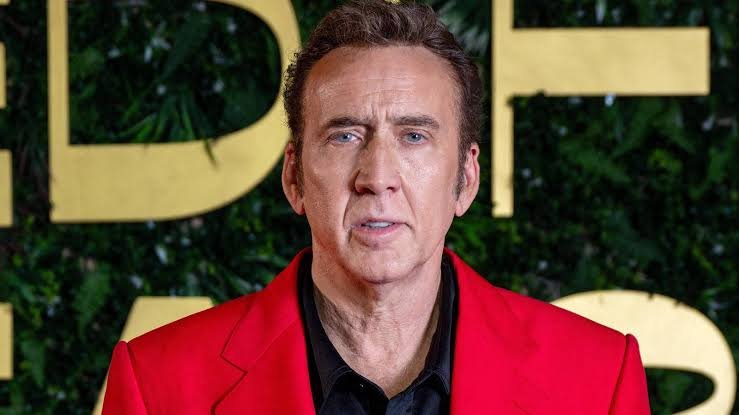
Nicolas Cage may be preparing for a new chapter in television, but the Oscar-winning actor is making it clear that he wants greater control over how his performances are used in an increasingly AI-driven entertainment industry. During an appearance at New York Comic Con, Cage discussed the possibility of joining the next season of True Detective, expressed reservations about working with Amazon again after refusing an artificial intelligence waiver for Spider-Noir, and joked about an unexpected idea for the next National Treasure movie.
The actor appeared at a spotlight panel on Saturday morning, where he reflected on his decades-long career across independent films, Hollywood blockbusters, cult favorites, and critically acclaimed dramas. He also discussed the challenges facing performers as technology transforms filmmaking and audiences increasingly discover movies through internet culture, short videos, and viral memes.
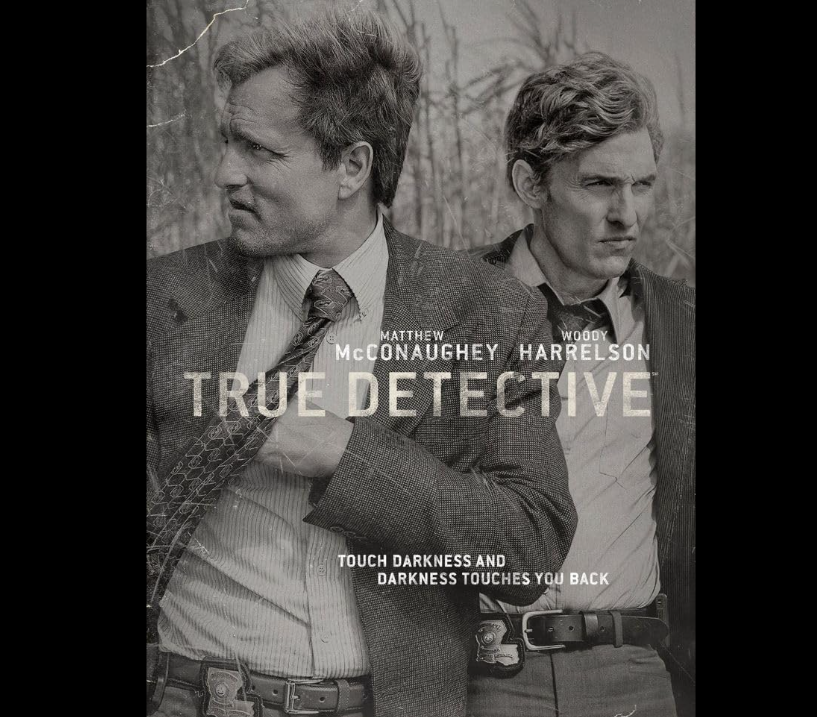
One of the biggest talking points came when Cage suggested that he might appear in the fifth season of HBO’s crime anthology True Detective. However, his comments sounded more like an expression of interest than a formal casting announcement, leaving the possibility open rather than confirming his involvement.
Cage also spoke candidly about his experience working on Prime Video’s Spider-Noir. He said he had refused to sign a waiver allowing his performance to be used by artificial intelligence and suggested that this decision could affect his chances of working with the studio again.
Despite his concerns about the industry’s technological direction, Cage is not retreating from filmmaking. Instead, he wants to collaborate with younger directors, particularly members of Generation Z, whom he believes are developing creative approaches outside traditional Hollywood structures.
From a possible television return to an unusual proposal involving National Treasure, Cage’s comments offered a revealing look at an actor who continues to experiment while defending the importance of human creativity.
Nicolas Cage Hints at a Possible Role in True Detective Season 5
One of the most intriguing moments of Cage’s New York Comic Con appearance came when he discussed his future in television.
The actor suggested that he might take on another television project, explaining that working on films continuously can be exhausting. He also acknowledged the practical realities of maintaining a career and supporting his family, saying that actors must sometimes consider different ways of working.
Cage then mentioned True Detective, indicating that he might appear in another season of the acclaimed crime anthology.
His comment immediately raised questions about whether he could become part of the show’s next chapter. However, he did not provide details about a character, storyline, production schedule, or agreement with the series.
For now, the possibility should be treated as a tease rather than confirmation that Cage has officially joined the cast.
True Detective has developed a reputation for presenting new investigations, characters, and settings across its seasons. The anthology format makes it possible for established performers to take on fresh roles without being tied to a single continuing storyline.
The series has attracted major actors over the years, combining crime investigations with psychological drama and explorations of human behavior. Its distinctive atmosphere and focus on morally complicated characters could offer Cage an opportunity to explore a different kind of performance from his familiar action and adventure roles.
Cage has built his reputation on taking creative risks, whether through independent dramas, psychological thrillers, dark comedies, or large-scale studio productions. A role in True Detective could allow him to bring that unpredictability to a serialized crime story.
His comments also suggest that television is becoming an increasingly attractive option for an actor who has spent much of his career moving between feature films.
Television productions can offer performers more time to develop a character across several episodes, while limited seasons can provide a complete story without requiring a long-term commitment to an ongoing series.
Still, until an official announcement confirms Cage’s involvement, fans should wait for further information about the show’s casting.
Cage Jokes About Directors Announcing National Treasure 3
Cage also addressed the continuing conversation surrounding a possible third installment of the National Treasure franchise.
During the panel, he joked about how directors sometimes make public announcements before actors have agreed to participate. He referred to director Jonathan Turteltaub discussing National Treasure 3 and suggesting that Cage would return.
The actor humorously objected to being committed to a project through someone else’s public comments, joking that directors should not be given microphones if they are going to make announcements on behalf of actors.
His remarks did not amount to a rejection of the franchise, but they highlighted an important distinction between a project’s development and a performer’s confirmed involvement.
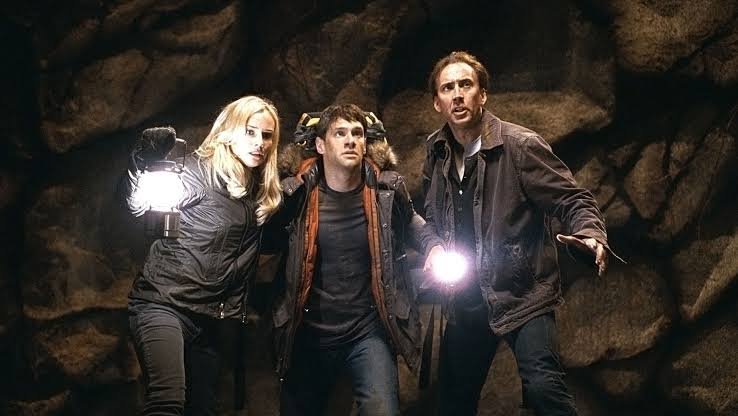
Cage famously played Benjamin Franklin Gates, a historian and treasure hunter who follows historical clues in pursuit of hidden artifacts and legendary riches. The first National Treasure film arrived in 2004, followed by National Treasure: Book of Secrets in 2007.
Both movies combined historical mysteries, puzzles, action sequences, and adventure, helping establish the franchise as a recognizable part of Cage’s blockbuster career.
A third film has remained a subject of discussion among fans, especially those eager to see Gates return for another adventure.
Cage added his own humorous twist to the conversation by suggesting that a new National Treasure film could involve Benjamin Gates investigating the Epstein files.
Calling the subject relevant, he joked that he would make such a movie.
The remark was clearly delivered as a comedic idea during the panel rather than a formal announcement about the next installment. Nevertheless, it demonstrated how Cage continues to approach public appearances with the unpredictable humor that has become part of his appeal.
His comments also illustrate the lasting cultural recognition of the National Treasure character. Even years after the previous movie, audiences continue to associate Cage with Benjamin Gates and the franchise’s combination of history, conspiracy, and adventure.
Whether a third film eventually moves forward with Cage remains a separate question. His remarks made one thing clear: he does not want others deciding his participation before he has personally committed.
Nicolas Cage Says He Is Unlikely to Work With Amazon Again After AI Disagreement
Beyond the television and franchise discussions, Cage offered some of his most direct comments about artificial intelligence in the entertainment business.
The actor spoke about his experience working on Spider-Noir, a series associated with Prime Video, and explained that he had refused to sign a waiver permitting the use of artificial intelligence in connection with his performance.
Cage said that Amazon is strongly oriented toward AI, referring to the company’s substantial investment in the technology. He made clear that he does not consider himself an AI-friendly actor and suggested that his refusal could mean he will probably not work with the studio again.
His statement was one of the panel’s most significant moments because it touched on an increasingly important issue for performers: how their faces, voices, movements, and performances may be used as AI tools become more sophisticated.
Artificial intelligence is already influencing parts of film and television production. Depending on the project, it can be used for visual effects, image generation, editing assistance, voice processing, digital environments, and other technical tasks.
However, its potential use in reproducing an actor’s appearance or performance has raised questions about consent, compensation, ownership, and creative control.
For performers, the concern is not simply whether a production uses AI. It is also whether their participation in a project could authorize uses of their likeness or recorded performance beyond what they originally agreed to.
Cage’s refusal to sign the waiver reflects his stated position on that issue. His comments suggest that he wants a clear distinction between performing a role himself and allowing a technology to reproduce or manipulate that performance under terms he does not accept.
He did not describe every detail of the waiver during the panel, so the exact scope of the proposed authorization should not be assumed. Nevertheless, his comments made his personal position clear: he is uncomfortable with AI use that he has not agreed to.
His prediction that he probably will not work with Amazon again was framed as a likely consequence of the disagreement, rather than a detailed account of a formal industry-wide ban or permanent decision.
The remarks also reflect a broader debate taking place across Hollywood, where performers, writers, directors, studios, and production companies continue to negotiate how emerging technologies should be used.
Why AI Has Become a Major Issue for Actors
The rise of generative AI has prompted questions about the future of acting and the value of a human performance.
An actor’s work involves much more than delivering dialogue. Performers make creative decisions about timing, expression, movement, emotion, and the way a character responds to a situation. These choices help give a role its individual identity.
AI tools may be able to generate convincing images, replicate voices, or produce digital versions of people. That possibility has raised concerns about whether a performer’s likeness could be reused without sufficient consent or whether digital reproductions could reduce opportunities for human actors.
The issue is particularly sensitive when agreements are broad or unclear. Performers need to understand what rights they are granting, how their data may be used, whether the authorization covers future projects, and whether additional compensation applies.
At the same time, filmmakers and studios may see AI as a tool that can help with certain production tasks or make technically demanding sequences more efficient.
The debate is therefore not necessarily a simple choice between accepting all AI applications and rejecting all technology. A major question is how to establish boundaries that protect performers while allowing creative teams to use appropriate tools.
Cage’s remarks show that he wants to maintain control over the use of his own performance. His position also highlights the importance of meaningful consent when actors sign contracts involving digital replicas or other AI-related rights.
For audiences, the issue raises questions about authenticity. If a performance is digitally reproduced or modified, viewers may want to know how much of what they see comes from the actor’s own work.
As AI technology continues to develop, such questions are likely to become increasingly relevant to casting, contracts, production practices, and the relationship between performers and studios.
Cage Wants to Work With Gen Z Directors
Although Cage expressed frustration with aspects of the modern entertainment industry, he also spoke enthusiastically about the creative possibilities emerging outside traditional studio systems.
The actor said he wants to collaborate with younger filmmakers, particularly Generation Z directors who are developing their own approaches through internet culture, YouTube, and independent production.
Cage described these filmmakers as people who are creating work from scratch and approaching their projects in their own way.
His comments suggest that he sees independent digital filmmaking as a possible path forward at a time when the industry is changing rapidly.
YouTube and other online platforms have made it easier for emerging directors to share their work, build audiences, and experiment with storytelling without necessarily following the traditional route through major studios.
Some creators begin with short films, music videos, online sketches, or independent projects before moving into larger productions. Others develop distinctive visual styles through experimentation and collaboration with small creative teams.
For an actor like Cage, working with such directors could provide opportunities to explore unfamiliar material and discover new performance techniques.
Cage has long moved between mainstream blockbusters and unconventional independent projects. His career includes commercially successful action films, critically acclaimed dramas, and performances that have developed devoted followings among fans of cult cinema.
Collaborating with emerging filmmakers would continue that pattern of experimentation.
It could also allow him to work with directors who have fewer established expectations about how a major Hollywood actor should behave on set.
Rather than treating experience as a reason to repeat familiar approaches, Cage appears interested in finding people who challenge him to try something different.
His comments reflect a larger shift in entertainment, where digital creators and independent filmmakers can develop an audience before receiving support from traditional studios.
From Con Air to Leaving Las Vegas: A Career Built on Reinvention
Cage’s New York Comic Con discussion also revisited the wide range of projects that have shaped his career.
His filmography includes action hits such as Con Air, supernatural adventures such as Ghost Rider, and dramatic performances in films such as Leaving Las Vegas.
He has also become associated with unconventional comedies and self-aware performances, including The Unbearable Weight of Massive Talent.
These projects illustrate the variety of approaches Cage has explored over the years. Rather than remaining within a single genre, he has repeatedly shifted between intense drama, broad comedy, action, fantasy, and experimental storytelling.
During the panel, he described himself as a continuing student of acting and filmmaking. He explained that his goal has been to learn, reinvent his approach, refine his technique, and expand the range of expressive tools available to him.
Cage’s willingness to move between genres has been an important part of his professional identity. A performer who appears in an intimate independent drama one year may take on a large-scale action role the next.
That flexibility has also helped his work reach different audiences. Some viewers know him primarily through his blockbuster films, while others admire his dramatic performances or his willingness to embrace unusual material.
Cage suggested that his characters remain relatable even when their behavior appears exaggerated or unconventional. In his view, the emotional foundation of a performance can help it connect with viewers regardless of how unusual the character might seem.
That philosophy helps explain why some of his performances continue to circulate online as memes, clips, and cultural references long after a film’s initial release.
Nicolas Cage Explains the Meme He Still Doesn’t Understand
The panel also turned to internet culture and the ways Cage’s performances have become part of online humor.
One particular meme from The Unbearable Weight of Massive Talent, his 2022 action comedy in which he plays a fictionalized version of himself, remains confusing to the actor.
Cage referred to the popular image associated with a psychedelic trip involving his character and Pedro Pascal’s character. He joked that he could not understand why the image had become such a notable meme, pointing out that both characters were simply wearing exaggerated smiles.
His reaction offered a humorous contrast between the way performers approach a scene and the way internet audiences may reinterpret it.
A moment that seems ordinary to an actor during filming can take on a completely different life online. A facial expression, a pause, or a line of dialogue may be removed from its original context and reused as a reaction image or short video.
Cage acknowledged that he is still trying to understand how to remain relevant in a culture where content moves rapidly and audiences can turn almost any image into a viral reference.
His willingness to discuss that uncertainty is notable. Rather than claiming to understand every trend, he admitted that he is still searching for the best way to connect with modern audiences.
That curiosity may also explain his interest in working with younger directors. Collaborating with people who understand digital culture could help him explore new forms of storytelling without abandoning the performance skills he has developed throughout his career.
A Dream Helped Cage Discover His Character in Perish
Among the projects Cage discussed was Perish, a film he described as a particularly unusual creative experience.
The actor shared a vivid dream that helped him understand how to approach his character. In the dream, he saw himself wearing a colorful artificial-fur coat and encountered a baby on one side and beautiful women calling to him from the other.
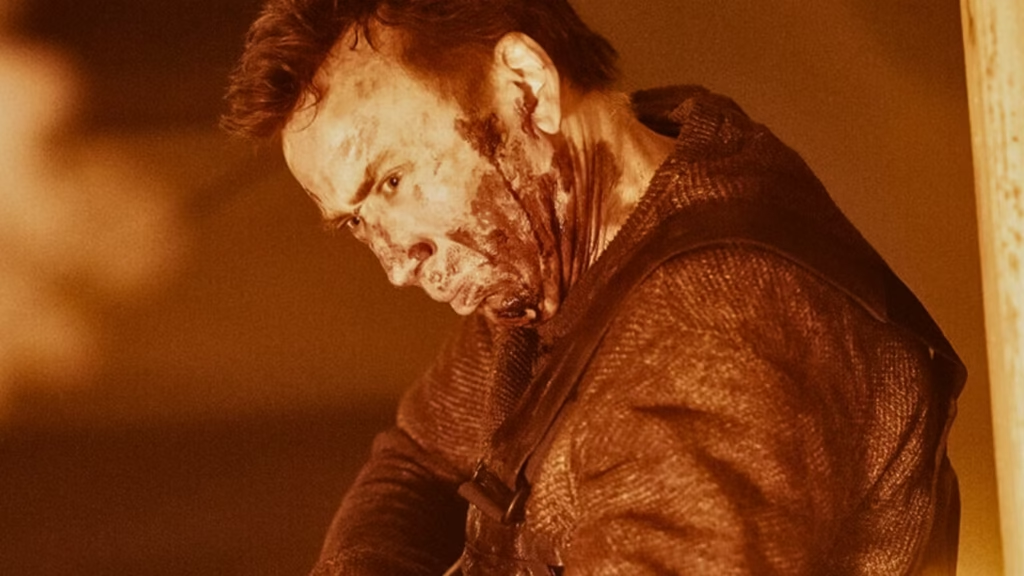
The women urged him to come toward them, but Cage said he felt responsible for protecting the baby, even though he did not know who the child belonged to.
He described choosing to stay with the baby rather than following the women. When he woke up, he felt that the experience had unlocked a way to play the character.
The story provides a glimpse into Cage’s approach to acting, which often involves unusual associations, emotional imagery, and a willingness to explore unconventional ideas.
For some performers, character development begins with research, physical preparation, or a detailed study of the script. Others use memories, imagination, dreams, or emotional experiences to discover a character’s motivations.
Cage’s account suggests that he found an emotional starting point through an image that combined temptation, uncertainty, and responsibility.
The dream gave him a situation in which the character had to make a choice. By deciding to protect the baby, the character revealed something about his values and priorities.
Whether the dream translates directly into the finished film remains to be seen, but Cage’s explanation demonstrates how he continues to search for creative inspiration.
Cage Defends His Creative Choices on Set
Cage also discussed the relationship between actors and directors, particularly when they disagree about how a performance should look.
He said he is not especially fond of directors who give actors detailed line readings, explaining that excessive direction of that kind can make him question why he was hired for the role.
His comments reflect a view of acting as a collaborative process in which performers need room to interpret their characters.
Directors establish the overall vision of a film, but actors also bring their own instincts, techniques, and creative decisions to their roles. Finding the right balance between those perspectives can be an important part of filmmaking.
Cage offered an example from The Prince, an upcoming project in which he used unusual hand gestures that the director initially questioned.
The actor said he believed the gestures would work and defended his approach. He expressed confidence that audiences would understand the choice when they eventually see the film.
His anecdote illustrates the creative negotiations that can take place on a film set. A performance decision may seem strange when viewed in isolation, but it can make sense within the completed scene or the character’s broader behavior.
Cage’s willingness to defend his instincts is consistent with his interest in experimentation. He appears comfortable taking risks when he believes a choice will communicate something meaningful about a character.
At the same time, his remarks underline the importance of trust between directors and actors. Collaboration works best when both sides can explain their intentions, challenge each other’s assumptions, and remain open to the possibility that an unexpected choice may improve the film.
What Comes Next for Nicolas Cage?
Cage’s New York Comic Con appearance offered several clues about the kinds of projects and creative challenges that interest him.
A possible role in True Detective could bring him to television for another substantial performance. His comments about National Treasure 3 show that the franchise remains a subject of public conversation, even as he resists being committed to a project before making his own decision.
His remarks about AI also make clear that he is thinking seriously about how the entertainment industry will change. He wants to protect control over his performances while finding collaborators who value hands-on creativity.
Meanwhile, his enthusiasm for younger directors suggests that he is not interested in simply repeating the approaches that made him successful in the past.
Cage has spent decades moving between genres, exploring unusual characters, and challenging expectations. His next chapter may continue that pattern, whether through television, independent cinema, or projects developed by emerging filmmakers.
For now, the most important distinction is between possibilities and confirmed projects. Cage has teased a potential connection to True Detective, but further details about his involvement have not been established by his comments alone.
His message, however, was clear: Nicolas Cage wants to keep reinventing himself, defend the human element of acting, and work with filmmakers who are willing to create something new.