
Zach Cregger’s new Resident Evil movie has delivered a surprisingly powerful opening at the global box office, overcoming significant pre-release skepticism to earn an estimated $108.3 million worldwide during its opening weekend.
The horror-survival movie collected approximately $60 million domestically and another $48.3 million from international markets, giving the latest adaptation the biggest opening weekend in the long-running Resident Evil movie franchise.
The result is particularly notable because the film arrived in theaters following months of debate among fans over Cregger’s creative approach. Instead of simply adapting one of the most recognizable stories from Capcom’s video-game universe, the filmmaker chose to create a new protagonist and take the story in a different direction.
That gamble now appears to have connected strongly with audiences during its first weekend.
The film stars Austin Abrams as Bryan, an original character who finds himself pulled into the terrifying world of a struggling Raccoon City. The cast also includes Zach Cherry, Kali Reis and Paul Walter Hauser, adding a mixture of established and rising performers to Cregger’s latest horror project.
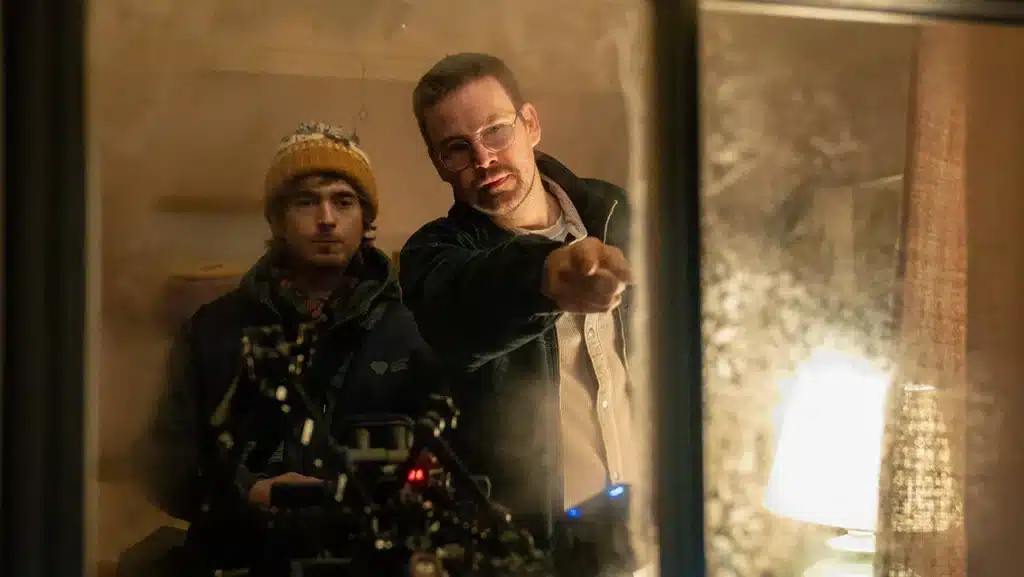
For Cregger, the opening also represents another major step forward following Barbarian and Weapons.
Resident Evil Opens With $108.3 Million Worldwide
According to the figures supplied for the film, Resident Evil earned an estimated $108.3 million worldwide during its opening weekend.
The domestic total of $60 million was considerably higher than projections that had generally placed expectations around the $40 million–$50 million range.
That difference makes the opening especially significant.
Rather than simply meeting expectations, the movie substantially exceeded the more conservative forecasts and established itself as a major theatrical release.
International markets contributed another $48.3 million, pushing the worldwide total beyond the $100 million mark after only its first weekend.
For a movie reportedly made for approximately $75 million, the opening represents an encouraging start for Sony and the future of this version of the franchise. Marketing expenses are separate from production costs, and the supplied information does not specify the film’s total promotional spending.
Nevertheless, the first-weekend performance gives the studio plenty to build on as the movie continues its theatrical run.

A Major Career Milestone for Zach Cregger
The opening is also a major achievement for Zach Cregger.
Before taking on Resident Evil, Cregger had already attracted attention with his work in horror.
His 2022 film Barbarian opened to approximately $10 million, according to the figures included in the supplied material. The movie developed a reputation for its unexpected twists and unconventional approach to horror.
Cregger followed that success with Weapons, which reportedly opened to approximately $70 million.
Now, Resident Evil has taken his career to another level with a $108.3 million worldwide opening.
The progression demonstrates how quickly Cregger has moved from being a filmmaker known primarily within the horror community to someone directing a major studio franchise.
The challenge with Resident Evil, however, was considerably different from creating an original horror story.
Cregger was working with one of the most recognizable names in video games.
That meant he wasn’t simply expected to frighten audiences.
He was also expected to satisfy a fan base that has spent decades developing strong opinions about the franchise’s characters, monsters, locations and mythology.
Why the Resident Evil Fanbase Was Skeptical
The road to the movie’s release wasn’t completely smooth.
Some fans questioned Cregger’s decision to move away from several of the most familiar elements of the games.
One of the biggest concerns involved the absence of major characters such as Leon S. Kennedy and the decision not to center the story around the familiar T-Virus mythology.
Instead, the movie introduces Bryan and presents audiences with a different perspective on Raccoon City.
The film also takes creative liberties with its setting.
The story’s more modern environment and snowy version of Raccoon City became points of discussion among fans who were expecting something closer to the locations and atmosphere established in the games.
Cregger has acknowledged that he underestimated how strongly some fans would react to his approach.
That reaction made the movie’s eventual opening even more interesting.
A project that generated skepticism before release managed to bring audiences to theaters in substantial numbers.

The Franchise Has Had a Complicated History on the Big Screen
The Resident Evil movie franchise has already gone through several different interpretations.
The earlier series starring Milla Jovovich became a commercially successful action-horror franchise, but its approach often differed considerably from the gameplay experience that fans associated with Capcom’s games.
While the movies incorporated recognizable elements from the games, they developed their own mythology and storytelling direction.
For some viewers, that created a disconnect between the films and the survival-horror gameplay that made Resident Evil famous.
Then came 2021’s Resident Evil: Welcome to Raccoon City.
That movie attempted to move closer to the video games, incorporating more recognizable characters, locations and references.
However, according to the supplied material, many fans felt that the film did not successfully translate its video-game influences into an effective movie experience.
That history created an unusual situation for Cregger’s film.
On one hand, fans wanted a movie that genuinely understood what made Resident Evil games distinctive.
On the other, moving too far away from established characters and mythology risked creating another backlash.
Cregger therefore had to find a difficult balance between respecting the franchise and creating a movie that could stand on its own.
The New Movie Embraces Survival Horror
One of the biggest reasons for the film’s strong reception appears to be its focus on the survival-horror experience.
The movie is described as a horror-comedy hybrid, but its central appeal remains rooted in the feeling of being trapped inside a dangerous world where survival is uncertain.
That is an important distinction.
The Resident Evil games have always combined horror with action, puzzles, exploration, strange creatures and occasionally absurd situations.
The result is a tone that can be difficult to reproduce on screen.
Cregger’s approach appears to recognize that the series doesn’t have to be completely serious to feel frightening.
Instead, the strange and sometimes ridiculous aspects of the games can become part of the entertainment.
The movie’s early response suggests that at least a portion of the audience appreciated that approach.
The supplied review information gives the movie an 8/10 rating, describing it as a “simple and exciting survival horror story” that benefits from Cregger’s filmmaking sensibilities.
The film was also reported to have surpassed Sonic the Hedgehog 3 on Rotten Tomatoes to become the highest-rated video-game movie at that point according to that metric.
Because audience and critic scores can change over time, those ratings should be viewed as a snapshot of the film’s reception rather than a permanent ranking.
Resident Evil Leads the Domestic Box Office
The strong opening also placed Resident Evil at the top of the domestic box office during its debut weekend.
Based on the figures provided, the domestic top five were:
- Resident Evil
- Practical Magic 2
- Spider-Man: Brand New Day
- The Odyssey
- Coyote vs. Acme
The worldwide rankings followed a slightly different order, with Resident Evil also taking the top position.
The figures supplied also put Christopher Nolan’s The Odyssey above $1.72 billion worldwide, while Spider-Man: Brand New Day had reached approximately $2.47 billion globally.
These figures place Cregger’s movie in a busy theatrical marketplace featuring several major releases.
Its ability to claim the top opening spot demonstrates that the Resident Evil brand still has significant theatrical recognition.
More importantly, the film’s opening suggests that audiences were willing to give a new interpretation of the franchise a chance despite the debate surrounding its creative choices.
What the Opening Means for the Future of Resident Evil
The $108.3 million opening could have broader implications for the future of Resident Evil on the big screen.
A strong theatrical debut provides Sony with evidence that audiences remain interested in seeing the property in cinemas.
It also demonstrates that a video-game adaptation doesn’t necessarily have to reproduce a game’s story character-for-character to attract a large audience.
Cregger’s movie takes significant liberties, introduces an original protagonist and changes aspects of the setting.
Yet the recognizable Resident Evil identity remains important.
The combination of survival horror, Raccoon City, monsters and the overall atmosphere gives audiences a connection to the larger franchise even when the specific story differs from the games.
That could potentially give future filmmakers more creative flexibility.
Instead of simply adapting individual games, the studio could explore different corners of the Resident Evil universe while retaining the core ingredients fans expect.
At the same time, the response from longtime fans demonstrates that creative changes will continue to generate debate.
For a franchise with such a long history, finding the right balance between familiarity and innovation will remain one of the biggest challenges.
Cregger’s Resident Evil Has Turned Skepticism Into a Strong Opening
Before its release, Resident Evil faced plenty of questions.
Would audiences accept a new protagonist?
Would fans miss Leon S. Kennedy and other established characters?
Would the modern setting work?
Could Cregger deliver another successful horror film after Barbarian and Weapons?
And perhaps most importantly, would the movie actually feel like Resident Evil?
The first weekend has provided a strong commercial answer.
With an estimated $108.3 million worldwide, including $60 million domestically and $48.3 million internationally, the movie has delivered a franchise-best opening according to the supplied figures.
That doesn’t settle every debate surrounding the film, but it demonstrates that audiences were willing to show up.
The result also gives Cregger another major success to add to his rapidly growing filmography.
Conclusion: A New Chapter for Resident Evil
Zach Cregger’s Resident Evil has entered theaters with a major box-office statement.
Despite questions surrounding its creative direction and concerns from some fans about the absence of familiar characters and story elements, the movie has delivered an estimated $108.3 million worldwide opening weekend.
The $60 million domestic debut and $48.3 million international haul make it the strongest opening in the Resident Evil movie franchise based on the supplied figures.
The success also marks an important moment for Cregger, whose previous films Barbarian and Weapons established him as a filmmaker to watch in the horror genre.
With Resident Evil, he has taken on an established global property and attempted to combine its survival-horror roots with his own filmmaking style.
Whether the film ultimately maintains its momentum will depend on its performance in the weeks ahead.
For now, however, the opening demonstrates that audiences remain highly interested in the Resident Evil universe—and that a movie doesn’t necessarily have to follow the most familiar path to attract a major theatrical audience.
For fans, the debate over Cregger’s creative choices will likely continue.
But after a $108 million-plus worldwide opening, one thing is clear: Resident Evil has successfully returned to the big screen with a major theatrical launch.