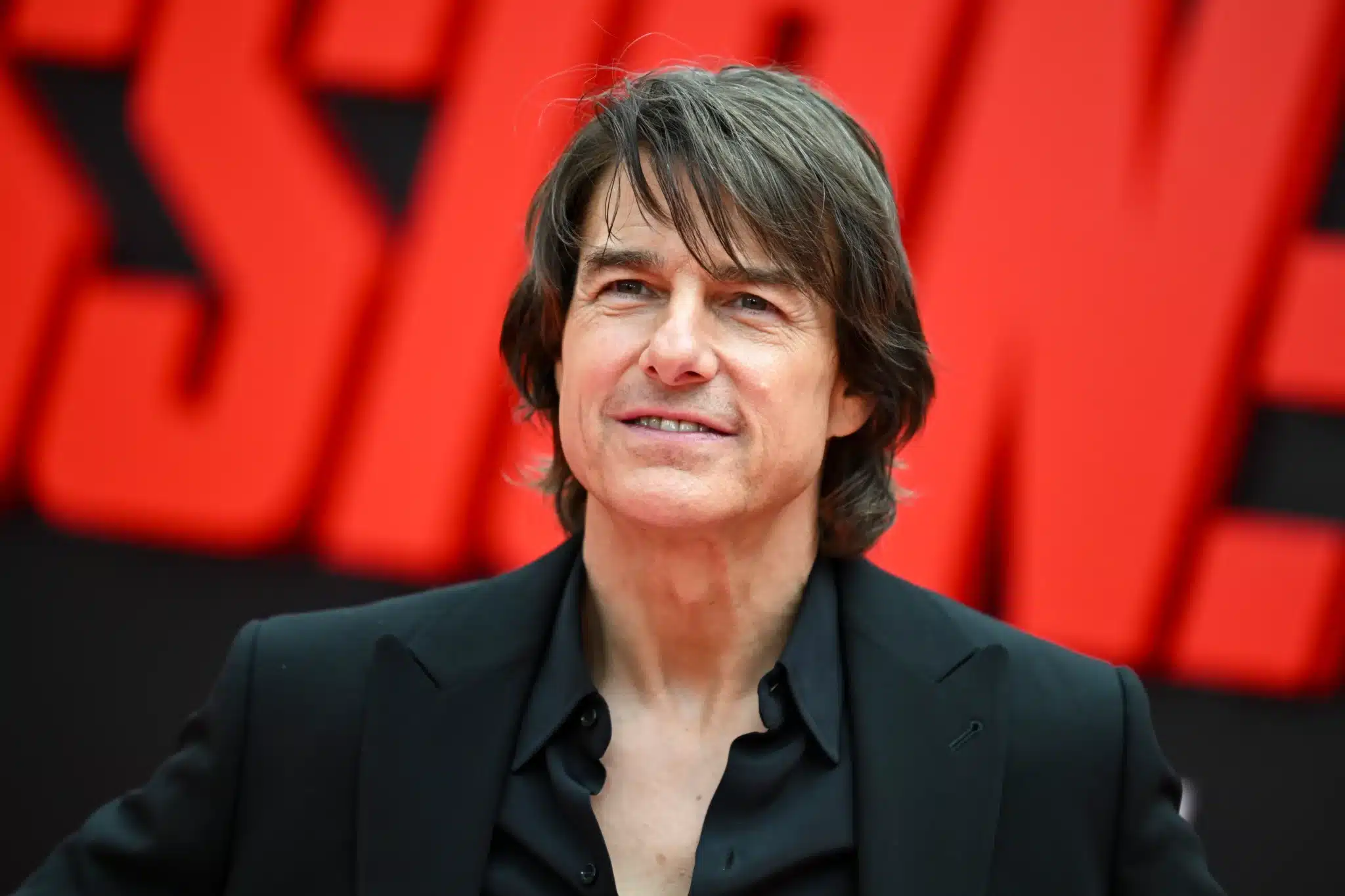
Tom Cruise has spent much of his career making a powerful case for the theatrical movie experience. From performing demanding action sequences to promoting major releases and making surprise appearances at cinemas, the Hollywood star has become closely associated with the idea that movies are meant to be experienced collectively on the big screen.
But Cruise wants to make one thing clear: his passion for cinema does not mean he is against television or streaming services such as Netflix.
In a recent interview, the actor explained that he has nothing against streaming platforms or television. In fact, he acknowledged that services such as Netflix can provide audiences with access to a much wider variety of movies than they might otherwise discover.
For Cruise, however, the difference comes down to the unique experience of watching a film together with other people in a theater.
His comments offer a more nuanced explanation of his long-standing support for theatrical filmmaking. Rather than viewing streaming as the enemy, Cruise appears to see it as another way for audiences to discover and experience movies while continuing to believe that theaters provide something that cannot easily be replicated at home.
Tom Cruise Says He Doesn’t Hate Netflix or Television
Cruise’s reputation as one of Hollywood’s strongest supporters of theatrical releases has sometimes created the impression that he is opposed to streaming.
During a recent GQ cover-story interview, however, Cruise pushed back against that idea.
“Movies are — this is about humanity,” Cruise said. “I have nothing against cable or TV or Netflix. I think it’s great. Create jobs and everything.”
His comments make it clear that his position is not simply about rejecting modern entertainment technology.
Cruise recognizes that television and streaming platforms play an important role in the entertainment business. They employ large numbers of people, provide opportunities for filmmakers and performers, and give audiences access to movies and shows from different countries and eras.
The actor’s primary argument is instead about what happens when people physically gather together to watch a movie.
“But what I like about cinema is it is all of us coming together in a room and sharing an experience,” Cruise explained.
That communal element has become an important part of Cruise’s public comments about filmmaking and moviegoing.

For Cruise, Cinema Is About Shared Humanity
Cruise’s argument goes beyond screen size, sound quality or technological presentation.
For him, going to the movies is fundamentally a social experience.
A theater brings strangers together for the same two or three hours. People laugh at the same jokes, react to the same surprises, become emotional during the same scenes and experience the story simultaneously.
That collective response is something Cruise believes is central to cinema’s power.
His comments also reflect the way he approaches filmmaking itself.
“When I’m working with people, I’m not afraid to, as I’m acting, to look foolish, to do it,” Cruise said. “It’s like: That’s not what this is about. It’s finding our tone, finding these tools together and having an experience.”
That philosophy reveals something about how Cruise views collaboration.
For the actor, filmmaking isn’t simply about one performer delivering a performance. It involves actors, directors, cinematographers, stunt teams, editors, designers, composers, camera crews and countless other professionals working toward a shared result.
The same concept, in his view, applies to audiences.
A movie is created by many people and then experienced by many people.
That connection is part of what makes cinema meaningful to him.
Netflix Can Help Audiences Discover Different Kinds of Movies
Although Cruise strongly supports theatrical releases, he also recognizes an important advantage of streaming platforms: accessibility.
During the interview, Cruise pointed out that streaming services can expose viewers to films they might not otherwise encounter.
When the discussion turned to whether younger generations primarily know him for his recent action movies rather than earlier films such as Magnolia and Eyes Wide Shut, Cruise disagreed.
“Surprisingly, that’s not true,” he said.
He explained that premieres can bring together several generations of moviegoers.
“When you go to a premiere, there’s three, four generations of people that are there,” Cruise said.
He then highlighted another advantage of streaming.
“When you look at Netflix, they are able to taste and see these different kinds of films,” he said, adding that streaming has helped reveal how “a library travels globally.”
That observation is particularly significant in an entertainment landscape where audiences can discover movies from decades ago alongside brand-new releases.
A viewer might watch one of Cruise’s recent action movies and then explore his older filmography through a streaming library.
In that sense, streaming can potentially help preserve and introduce movies to new generations.
For Cruise, that doesn’t have to conflict with the theatrical experience.
Instead, the two formats can serve different purposes.
The Theater Experience Remains Special
Cruise’s continued enthusiasm for theaters is understandable when viewed alongside his career.
Many of his biggest films have been designed around large-scale action, elaborate practical sequences and visual spectacle.
His recent work has frequently encouraged audiences to see movies in theaters rather than simply waiting for home viewing.
One of the clearest examples was Top Gun: Maverick.
The film became a massive global box-office success, earning approximately $1.48 billion worldwide according to the figures cited in the supplied material.
Its success was particularly notable because it arrived during a period when the movie industry was still dealing with major changes in audience behavior following the COVID-19 pandemic.
The film demonstrated that audiences could still turn out in enormous numbers for the right theatrical experience.
Steven Spielberg later praised Cruise for the impact of Top Gun: Maverick, telling him that he had “saved Hollywood’s ass” and potentially helped save theatrical distribution.
Those comments became part of the larger conversation surrounding the future of movie theaters.

Cruise Has Made Moviegoing Part of His Public Mission
In recent years, Cruise has repeatedly appeared at theaters and major film events.
He has interacted with fans, visited cinemas and publicly celebrated the people working behind the scenes to keep the theatrical business running.
That behavior has helped reinforce his image as an actor deeply invested in the traditional moviegoing experience.
His enthusiasm also extends beyond simply making blockbuster films.
Cruise has spoken about the craft of filmmaking, shared his knowledge with younger actors and continued to emphasize the importance of audiences experiencing movies collectively.
For him, the theater isn’t simply a location where a movie happens to play.
It is part of the art form itself.
The lights go down. The audience becomes quiet. The screen fills the viewer’s field of vision. Everyone experiences the story at roughly the same moment.
That environment can create a sense of anticipation and emotional connection that is difficult to reproduce when someone is watching a movie alone at home.
That doesn’t mean home viewing has no value.
Cruise’s comments about Netflix demonstrate that he understands the convenience and accessibility streaming provides.
Instead, his point is that the theatrical experience offers something different.
Tom Cruise’s Message Is About Connection, Not Competition
One of the most interesting aspects of Cruise’s comments is that he doesn’t frame theaters and streaming as necessarily being opposites.
His appreciation for Netflix suggests that he understands the importance of having a large and accessible film library.
Streaming services can help audiences discover international movies, older titles and films that might not have remained easily available through traditional distribution.
At the same time, Cruise believes theatrical releases provide a unique communal experience.
This distinction could become increasingly important as the entertainment industry continues to evolve.
Movies now reach audiences through theaters, streaming platforms, television, digital purchases and other forms of distribution.
Each method offers a different way of experiencing entertainment.
Cruise’s position appears to be that the existence of one format doesn’t eliminate the value of another.
For him, the theater remains particularly important because of the human connection it creates.
Cruise’s Emotional Connection to Cinema
Cruise has also described filmmaking as something much deeper than a conventional profession.
At the Governors Awards, where he accepted an Honorary Academy Award, Cruise spoke emotionally about what cinema means to him.
“The cinema, it takes me around the world,” Cruise said.
He explained that movies can help people appreciate differences between cultures while also recognizing how much humanity shares.
“No matter where we come from, in that theater, we laugh together, we feel together, we hope together,” Cruise said.
He described that collective experience as the power of the art form.
“That is why it matters. That is why it matters to me,” he added.
Cruise concluded with a particularly personal statement:
“So making films is not what I do, it is who I am.”
That sentiment helps explain why the actor continues to speak so passionately about theaters.
His relationship with cinema isn’t limited to box-office numbers or blockbuster franchises. It is tied to his understanding of movies as a way for people to connect with one another.

What Tom Cruise’s Comments Mean for the Future of Movies
The entertainment industry is no longer divided into a simple choice between theaters and television.
Audiences can discover a film in a cinema, revisit it on a streaming service, watch older movies on television or explore international productions through digital libraries.
Cruise’s comments acknowledge that reality.
He isn’t dismissing streaming. Instead, he is explaining why he continues to place such importance on theaters.
For one of Hollywood’s most recognizable movie stars, cinema represents a shared experience.
That belief has shaped much of Cruise’s recent career, particularly his commitment to large-scale theatrical releases.
At the same time, his acknowledgment of Netflix demonstrates that his perspective isn’t necessarily about rejecting change.
Streaming can provide variety, accessibility and a way for films to travel across borders and generations.
Theatergoing, meanwhile, can provide the communal atmosphere that Cruise believes is central to cinema.
Ultimately, his message is less about choosing one format over another and more about recognizing what each format can offer.
For Cruise, however, there is still something uniquely powerful about sitting in a dark theater surrounded by other people and watching a story unfold on a giant screen.
And after decades at the center of Hollywood, the actor clearly continues to believe that shared experience is one of the reasons movies matter.
Conclusion
Tom Cruise’s latest comments offer a clearer picture of his relationship with streaming and television. Despite his well-known commitment to theatrical filmmaking, the actor says he has “nothing against” cable, television or Netflix and recognizes that streaming platforms provide jobs and allow audiences to discover a broad range of films.
His preference for theaters comes from somewhere else: the communal experience.
Cruise believes cinema can bring people together regardless of their backgrounds. Audiences can laugh, feel and hope together inside a theater, creating a shared experience that he considers central to the art form.
His comments also suggest that streaming and theatrical cinema don’t necessarily have to compete for the same purpose. Streaming can help movie libraries travel globally, while theaters can preserve the collective experience that Cruise values so deeply.
For an actor who has spent decades making movies for audiences around the world, Cruise’s message remains remarkably consistent: technology may change how people access films, but the human connection created by cinema continues to matter.
And for Tom Cruise, making films isn’t simply a career.
As he put it, “it is who I am.”