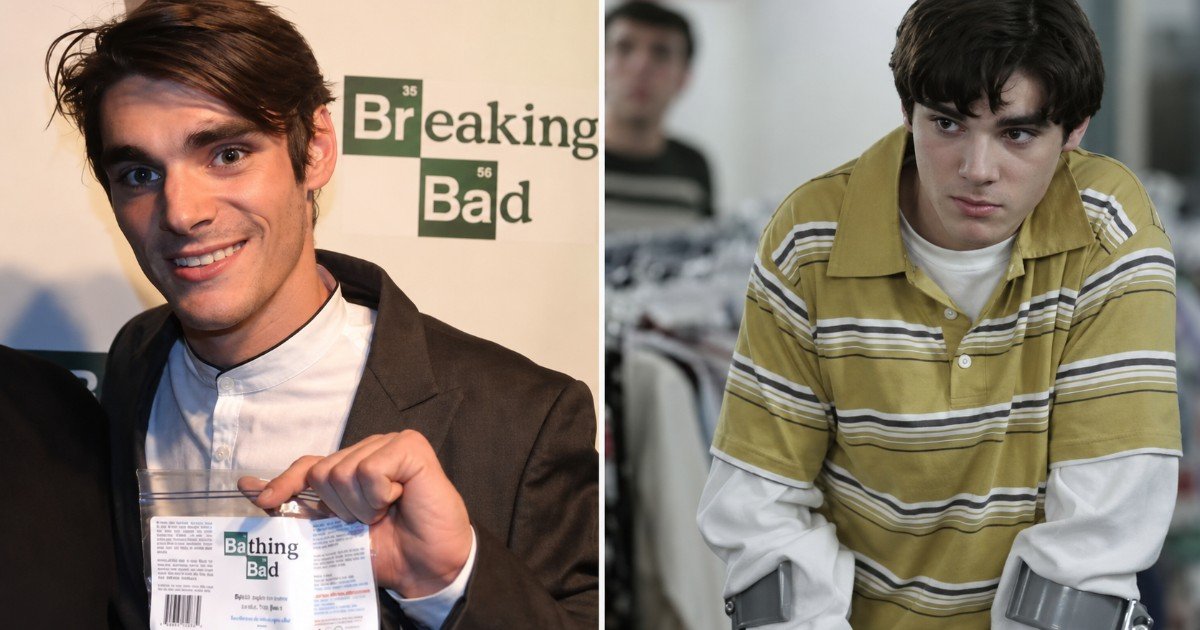
Actor RJ Mitte, widely recognized for portraying Walter “Flynn” White Jr. in the acclaimed television drama Breaking Bad, has reportedly died at the age of 34. Beyond his work on the award-winning series, Mitte was known for speaking openly about his experience with cerebral palsy and advocating for greater disability representation in entertainment and society.
According to statements included in the supplied report, Mitte’s representative, Sean Reilly, confirmed the actor’s death on October 12, 2026. Reilly described him as a beloved actor, philanthropist, and passionate advocate for disability rights. The report also states that authorities in Brownsville, Texas, confirmed the time and location of his death.
The news has prompted renewed attention to Mitte’s career, his contributions to disability awareness, and the impact of his portrayal of a character who shared his diagnosis.
For many television viewers, Mitte will always be associated with Walter White Jr., the son of Bryan Cranston’s chemistry teacher-turned-criminal character in Breaking Bad. However, his career extended beyond the hit drama, encompassing independent films, television projects, public speaking, and charitable initiatives.
His work helped challenge assumptions about what actors with disabilities could achieve, while his public comments encouraged people to view disability through a broader lens of identity, opportunity, and personal growth.
As audiences reflect on his reported death, his performances and advocacy remain central to the story of his life and career.
RJ Mitte Became a Familiar Face Through Breaking Bad
Mitte rose to international recognition through his portrayal of Walter White Jr. in Breaking Bad, the critically acclaimed crime drama that followed the transformation of Walter White, played by Bryan Cranston, from a high school chemistry teacher into a major figure in the illegal drug trade.
The series also starred Anna Gunn as Skyler White, Walter’s wife and the mother of their children.
Walter White Jr., who was also known as Flynn, played an important role in the family’s emotional story. While his father became increasingly involved in dangerous criminal activities, his son remained largely unaware of the full extent of those actions for much of the series.
The character provided a connection to Walter White’s life outside the criminal world. Family relationships, parental responsibility, and the consequences of deception were central themes of the drama, and Walter Jr.’s presence helped emphasize the personal cost of his father’s decisions.
Mitte’s performance was particularly significant because the character also had cerebral palsy, a neurological condition that affects movement and coordination.
Mitte himself had been diagnosed with cerebral palsy as a young child. This shared experience gave him a personal connection to the character and helped bring an additional dimension of authenticity to the portrayal.
Rather than treating disability as a character’s sole defining feature, the series presented Walter Jr. as a member of a complicated family, with his own relationships, frustrations, opinions, and experiences.
The role introduced Mitte to a worldwide audience and helped establish him as an actor capable of contributing to a complex dramatic production.
Breaking Bad went on to become one of the most widely discussed television dramas of its era, earning critical acclaim and major awards. Its performances, writing, direction, and exploration of moral compromise attracted a substantial international following.
Although Cranston and other leading cast members received considerable attention, Mitte’s portrayal of Walter Jr. also became an important part of the show’s identity.

His Experience With Cerebral Palsy Shaped His Advocacy
Mitte was diagnosed with cerebral palsy at the age of three. Throughout his career, he spoke about how the condition influenced his experiences and encouraged people to reconsider conventional ideas about disability.
His advocacy was rooted in the belief that a diagnosis should not determine how society views an individual’s abilities, ambitions, or potential.
In a public appearance at an event connected with the University of North Carolina’s Best Buddies program in 2014, Mitte discussed how living with a disability could provide knowledge and experiences that a person could carry into the wider world.
He also offered a personal interpretation of the idea of being normal, suggesting that it should not be defined by a rigid social standard.
Instead, he emphasized the importance of finding a place where people feel accepted, happy, and able to belong.
The message reflected a broader principle within disability advocacy: individuals should be recognized as people with different experiences and abilities, rather than being reduced to a medical condition or a perceived limitation.
For people with disabilities, social expectations can sometimes create barriers that are unrelated to their actual skills or ambitions. Limited representation in film and television can reinforce those barriers by giving audiences a narrow view of who can appear on screen and what kinds of stories they can tell.
Mitte used his visibility as an actor to challenge those assumptions.
His career also provided a practical example of why representation matters. When actors with disabilities appear in significant roles, they can help broaden the range of experiences shown in mainstream entertainment.
Their presence can encourage audiences to see disabled characters as full individuals whose lives include humor, relationships, ambitions, conflict, and personal growth.
Mitte’s advocacy extended beyond acting, making disability awareness an important part of his public identity.
RJ Mitte Believed His Disability Helped Shape His Success
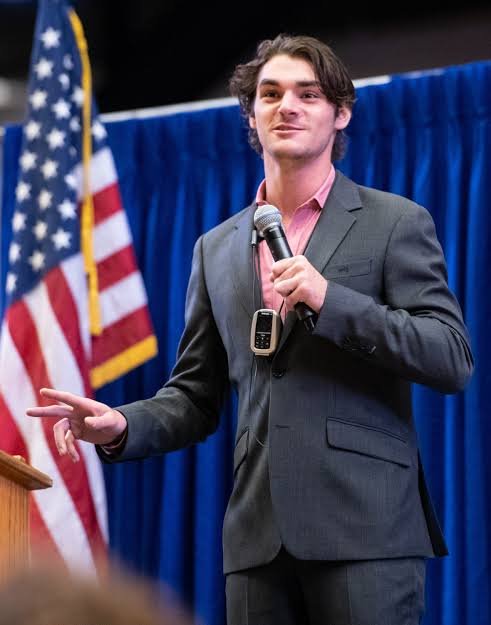
In a 2015 interview with a university student newspaper, Mitte reflected on the relationship between his disability and his professional development.
He explained that people with disabilities could make an impact through their abilities, personalities, and contributions. He also suggested that his own experiences had helped shape the person and actor he became.
Mitte’s perspective challenged the assumption that disability and professional success must be viewed as opposing forces.
His comments instead emphasized the importance of recognizing how individual experiences can influence someone’s outlook, determination, and approach to work.
For Mitte, the experience of living with cerebral palsy was not something he needed to separate entirely from his identity as an actor. It was part of his life, and he believed it had contributed to the perspective he brought to his career.
That message was particularly relevant in an entertainment industry where performers with disabilities have historically faced limited opportunities and narrow expectations about the characters they can portray.
An actor’s physical characteristics or medical history should not automatically determine the kinds of roles they can pursue. Wider representation can create more opportunities for performers to demonstrate their talents across genres and character types.
Mitte’s career offered an example of how visibility can help challenge restrictive ideas.
His success in Breaking Bad gave him an internationally recognized role, while his public speaking helped him discuss the importance of representation with audiences outside the entertainment industry.
His comments also encouraged people to keep working toward their ambitions, even when progress is difficult.
He stressed the importance of persistence, learning from failure, and continuing to grow rather than giving up when faced with obstacles.
Those ideas became an important part of the message he shared with people who followed his career.
The Real Story Behind Walter White Jr.
Shortly before his reported death, Mitte discussed his time on Breaking Bad during an appearance on The Joe Vulpis Podcast.
He reflected on how the character of Walter White Jr. had been conceived with cerebral palsy as part of the role from the beginning.
According to Mitte, the character was inspired by a real person with cerebral palsy who had been a college friend of series creator Vince Gilligan. The person reportedly used forearm crutches and later died.
Mitte’s comments offered insight into the origins of a character whose disability was an established part of the story rather than a detail introduced after the role had been developed.
The connection also helped explain why playing Walter Jr. felt familiar to the actor.
Because Mitte had personal experience with cerebral palsy, he could draw on his own understanding of the condition while developing the character’s physical behavior and perspective.
That did not mean the character was simply a version of Mitte himself. Acting still required him to work within the script, understand the family relationships, and respond to the dramatic situations created by the writers.
However, the shared experience provided a foundation for the performance.
Mitte also spoke positively about working with Cranston and Gunn, describing the knowledge and experience they brought to the production.
Although Breaking Bad explored dark subjects, including violence, criminal activity, and family betrayal, Mitte recalled that the atmosphere between takes could be light-hearted.
That distinction highlights an important part of television production. A series may portray disturbing or emotionally intense events while the cast and crew work in a collaborative environment behind the scenes.
For Mitte, the experience of making Breaking Bad appears to have been an important period of professional development.
It introduced him to a major international production and allowed him to work alongside experienced actors while helping bring a distinctive character to life.
His Message to Aspiring Actors and People Facing Challenges
Mitte frequently encouraged people to pursue their goals even when they encountered difficulties.
In his 2015 interview, he spoke about the importance of remaining passionate about one’s work and continuing to move forward.
His message was not that success comes easily. Instead, he emphasized persistence, effort, and the willingness to learn through setbacks.
He encouraged people to understand that failure can be part of the process of growth.
The advice reflected an approach to professional development that extended beyond acting. Whether someone is pursuing an artistic career, completing an education, entering a new profession, or trying to overcome personal obstacles, progress often requires patience and repeated effort.
For people with disabilities, those challenges may include barriers created by inaccessible environments, limited opportunities, or other people’s assumptions.
Mitte’s advocacy helped draw attention to the importance of seeing people as individuals with their own ambitions and potential.
He also emphasized that happiness and belonging should not be defined exclusively by conventional expectations.
His public statements encouraged people to make choices that reflected their own circumstances and aspirations rather than assuming there was only one acceptable way to live.
The message was consistent with his broader work on disability awareness: people deserve opportunities to participate, contribute, and define their own lives.
Beyond Breaking Bad: Mitte’s Film and Television Career
Although Breaking Bad remained his best-known project, Mitte continued working in film and television after the series established his profile.
His credits included the 2017 film The Recall, the 2020 production The Oak Room, and the 2022 series The Guardians of Justice (Will Save You!).
These projects allowed him to explore work beyond the role that first brought him international attention.
For actors who become closely associated with a major television character, building a career afterward can involve finding projects that demonstrate different aspects of their abilities.
Mitte’s work across several productions reflected his continued participation in the entertainment industry.
His career also contributed to a wider discussion about casting and disability representation. When performers with disabilities appear in different kinds of productions, they can help demonstrate that disability does not restrict an actor to a single genre or type of character.
Meaningful representation involves more than including a disabled character in a story. It also involves providing opportunities for disabled performers to develop careers, portray varied personalities, and participate in the industry as working professionals.
Mitte’s work on Breaking Bad brought this discussion to a mainstream international audience, while his subsequent roles continued his career beyond the series.
Talking to Strangers Was Among His Most Recent Projects
Mitte had recently been promoting Talking to Strangers, a film in which he played a leading character named Joshua, who also has cerebral palsy.

The film’s premise centers on an unlikely connection between a reserved man and a woman whose personality is described as vibrant and forceful.
Their interaction begins over lunch, but the relationship takes an unexpected turn when she asks him for something that challenges the boundaries of their encounter.
The story explores an unusual relationship and raises questions about social expectations, personal comfort, and stepping outside familiar patterns.
For Mitte, the project had a personal connection because the character shared his diagnosis. However, the film also offered an opportunity to explore a fictional individual with his own personality and circumstances.
According to the supplied information, Talking to Strangers was produced in less than ten days, making the production schedule notably brief.
Mitte described the film as an unconventional take on a love story that pushes social norms and encourages people to move beyond their comfort zones.
The project was among the final works he publicly discussed.
His involvement also continued the conversation about how disability can be represented in stories that focus on relationships and ordinary human experiences rather than treating disability as the entire subject of a character’s life.
His Final Public Appearance and Social Media Message
Mitte attended the Los Angeles premiere of Talking to Strangers on September 30, according to the supplied report.
The event marked his last reported public appearance.
On October 8, he shared a clip from an interview recorded around the premiere on his Facebook account. In the interview, he discussed the production process and the film’s approach to storytelling.
He also offered an encouraging message to people who admired his work and looked to him as an example of professional perseverance.
Mitte spoke about continuing to pursue goals regardless of how difficult or complicated the circumstances might seem.
He encouraged people to keep learning and growing, while recognizing that failure does not have to be the end of an effort.
His remarks reflected the themes he had discussed throughout his public career: persistence, personal development, and the importance of continuing to move forward.
The timing of the post has given the message added significance following the news of his reported death. However, it is important not to interpret an individual’s public statements as proof of what they may have been experiencing privately.
People’s internal experiences can be complex, and public appearances or social media posts do not necessarily reveal the full picture of someone’s emotional well-being.
The appropriate response is to remember Mitte’s work and advocacy while respecting the privacy of those closest to him.
A Legacy of Representation and Inclusion
Mitte’s career was notable not only for his role in a celebrated television series but also for his commitment to disability awareness.
By speaking publicly about cerebral palsy, he helped challenge assumptions about disability and encouraged audiences to consider how representation influences social attitudes.
His portrayal of Walter White Jr. placed a character with cerebral palsy within a major television drama without making the diagnosis the only aspect of his identity.
His subsequent advocacy helped extend that conversation beyond the screen.
He also supported charitable and community initiatives. According to the representative’s statement in the supplied report, Mitte served as an ambassador for United Cerebral Palsy and Shriners Children’s. He also served as president of The Mitte Foundation, which supported philanthropic efforts and community projects.
These activities formed part of his work outside acting and reflected his interest in supporting people with disabilities and encouraging broader inclusion.
Disability representation remains an important issue across entertainment and public life. Progress depends not only on the characters audiences see but also on opportunities for disabled performers, writers, directors, and other professionals to contribute to the industry.
Mitte’s visibility helped bring attention to those questions.
His career demonstrated that actors with disabilities can participate in acclaimed productions, build professional reputations, and use their public platforms to discuss issues affecting their communities.
For viewers who discovered him through Breaking Bad, his work offered a memorable performance. For those who followed his advocacy, his message extended beyond television and film.
Remembering RJ Mitte With Care and Compassion
The supplied report states that Mitte died by suicide on October 12, 2026. His representative confirmed the reported cause of death in a subsequent statement.
Following the news, Bryan Cranston reportedly expressed profound sadness and shared information about the 988 Suicide & Crisis Lifeline.
Cranston also recalled that he and Mitte had recently been making plans to have lunch. His comments reflected the shock and grief that can follow an unexpected loss.
Mitte’s representative asked the public to respect the privacy of his family and loved ones during this difficult time.
As audiences remember the actor, it is important to approach the circumstances of his death with sensitivity. Suicide is complex, and it is not appropriate to speculate about an individual’s private struggles or reduce a person’s life to the circumstances of their death.
Mitte’s story includes much more than his final days. It includes a major television role, a continuing film career, public advocacy, charitable involvement, and messages encouraging people to challenge assumptions and pursue their goals.
His work helped bring disability representation into conversations reaching audiences around the world.
For many viewers, Walter White Jr. will remain one of the memorable characters in Breaking Bad. For others, Mitte will be remembered for his willingness to speak openly about cerebral palsy and his belief that people should be recognized for their abilities, experiences, and individuality.
His reported death is a devastating loss, and his family’s request for privacy deserves respect.
As tributes continue, his performances and advocacy offer a lasting reminder of the importance of inclusion, compassion, and recognizing the full humanity of the people behind the public image.
If you or someone you know is struggling with suicidal thoughts, support is available. In the United States, call or text 988 to reach the Suicide & Crisis Lifeline, or visit 988lifeline.org for free, confidential support available 24 hours a day. If there is immediate danger, contact local emergency services.