
When a film dares to blend religious lore with supernatural horror, expectations naturally run high. The Carpenter’s Son, directed by Lotfy Nathan, takes this ambitious route — reimagining the teenage years of Jesus Christ through a chilling and controversial lens. Starring Nicolas Cage, FKA Twigs, and Noah Jupe, the movie is based loosely on the apocryphal Infancy Gospel of Thomas, an ancient text that speculates about the early, lesser-known years of Jesus’ life.
It’s an intriguing concept on paper: what if the Son of God’s adolescence was marked by encounters with darkness itself? Unfortunately, while the film boasts rich visuals and a talented cast, it struggles to balance reverence with storytelling coherence, ultimately becoming a cinematic oddity — one that teeters between profound and unintentionally absurd.
A Dark Tale Set in Roman-Era Egypt
The story unfolds around the year Anno Domini 15, in Roman-ruled Egypt. Joseph (played by Nicolas Cage) and Mary (FKA Twigs) are humble and protective parents to their young son, Jesus (Noah Jupe). Life in their small village appears peaceful until a mysterious figure known as “The Stranger” (Isla Johnston) begins to cross paths with Jesus.
At first glance, The Stranger seems merely eccentric, inviting Jesus to “play games all day.” But as their friendship deepens, subtle hints of danger emerge — The Stranger’s fascination with venomous creatures, her piercing gaze, and the strange energy that surrounds her. It doesn’t take long for the villagers to grow fearful, believing that something unholy is at work.
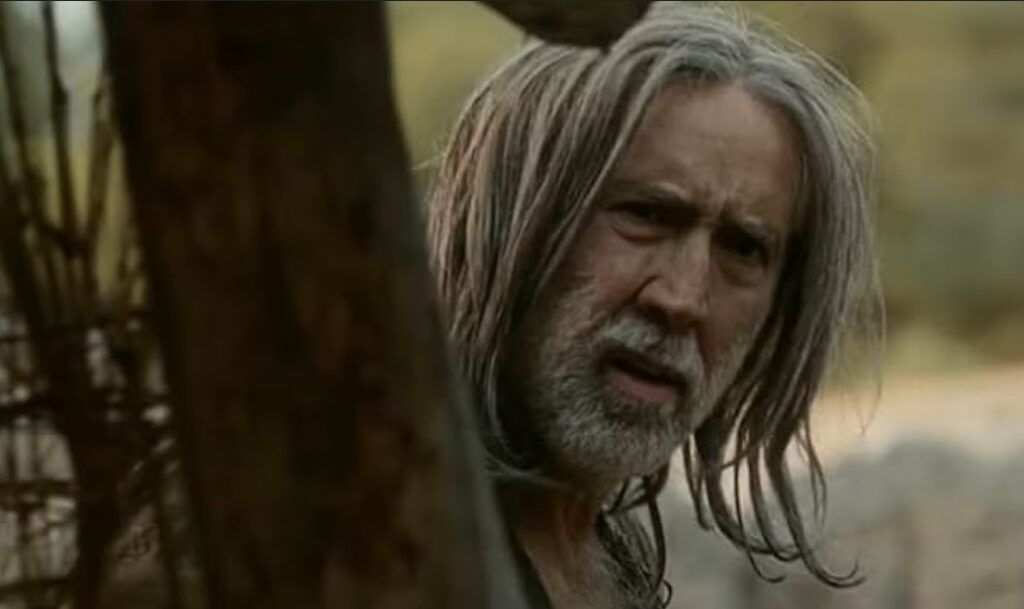
Meanwhile, Joseph’s unease escalates. His faith begins to waver as his son spends more time with this enigmatic figure. In one of the movie’s most memorable outbursts, Cage’s Joseph declares, “My faith has become a broken crutch!” — a line delivered with the dramatic intensity that only Nicolas Cage can provide.
The Stranger’s True Nature
The twist arrives midway through the film: The Stranger is none other than Satan in disguise. Isla Johnston, best known for The Queen’s Gambit, delivers a hauntingly magnetic performance as the young embodiment of evil. Her calm, almost seductive demeanor contrasts sharply with her chilling lines, like “I am the accuser of light… I am the adversary.”
Her performance alone adds depth to what could have easily become a one-note role. Johnston’s eyes, both innocent and menacing, capture the film’s unsettling tone perfectly. It’s easy to understand why Jesus becomes entranced by her — and why his parents are terrified.
A Clash of Faith and Fear
The Carpenter’s Son doesn’t shy away from Biblical symbolism. As Jesus’ connection with The Stranger grows stronger, bizarre occurrences plague the village. Aggressive snakes slither from people’s mouths, livestock dies mysteriously, and whispers of witchcraft spread like wildfire.
Joseph, torn between belief and fear, confronts both his faith and his role as a father. His relationship with Jesus fractures as the boy begins questioning his divine origins: “Tell me who my father is!” Jesus demands — a line that resonates as both a theological and emotional plea.
Nathan’s direction tries to marry the tone of an old-school Biblical epic with horror aesthetics. The result is a visually impressive but uneven film. Every frame seems carefully crafted, drenched in candlelight and shadows reminiscent of classic religious paintings. Yet, the solemn presentation often clashes with the absurdity of its premise — particularly when Nicolas Cage’s larger-than-life presence enters the frame.
Performances: When Casting Overshadows the Story
Cage, to his credit, delivers a surprisingly restrained performance as Joseph. However, his reputation as an actor associated with surreal and eccentric roles makes it difficult for viewers to take the film’s somber tone seriously. The audience can’t help but anticipate one of his signature outbursts — and when it arrives, it feels unintentionally comical.
FKA Twigs, on the other hand, gives a tender and subdued portrayal of Mary. Her quiet strength adds emotional balance to the chaos around her. Meanwhile, Noah Jupe — reuniting with Twigs after Honey Boy — captures the youthful innocence and confusion of a divine child caught between light and darkness.
But it’s Isla Johnston who truly steals the spotlight. Her portrayal of Satan in human form is mesmerizing, equal parts sinister and sorrowful. Johnston’s screen presence is so commanding that it’s easy to envision her future stardom — especially with her upcoming role in Baz Luhrmann’s Joan of Arc project.
A Sincere but Misguided Vision
Lotfy Nathan, who grew up in the Coptic Orthodox Church, clearly approached this project with deep personal conviction. His attempt to reinterpret a sacred narrative from an unconventional angle is bold, and the film’s production design reflects that ambition.
However, The Carpenter’s Son suffers from tonal confusion. It wants to be both a profound spiritual allegory and a campy horror film — and it doesn’t fully succeed at either. The pacing drags, the symbolism feels heavy-handed, and the script’s dialogue sometimes borders on parody.
Still, it’s hard not to admire Nathan’s courage in tackling such a taboo subject. The film’s atmosphere, combined with its striking cinematography and intense performances, ensures it won’t be easily forgotten — even if it leaves audiences more perplexed than inspired.
A Future Cult Classic in the Making?
Despite its flaws, The Carpenter’s Son has the makings of a future cult hit. Its bizarre premise, theatrical performances, and over-the-top moments make it the kind of movie that could thrive in midnight screenings — where audiences quote Cage’s lines and cheer for Satan’s monologues.
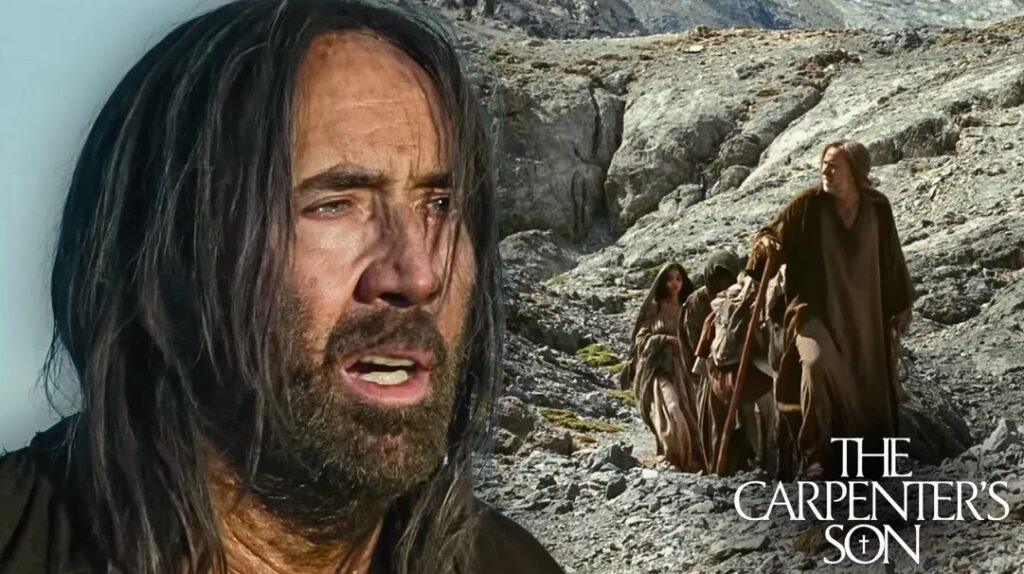
It might not have been Nathan’s intention to create an “accidentally funny” film, but there’s a certain charm in its earnest absurdity. In trying so hard to be profound, it circles back to being strangely entertaining — the kind of film that leaves you wondering whether to laugh, applaud, or pray.
Final Thoughts
The Carpenter’s Son is an ambitious experiment that blurs the line between faith and horror. It’s beautifully shot, well-acted, and conceptually daring — but also tonally confused and often unintentionally humorous. For viewers seeking something truly different, it might be worth a watch. Just don’t expect divine inspiration; expect divine absurdity.