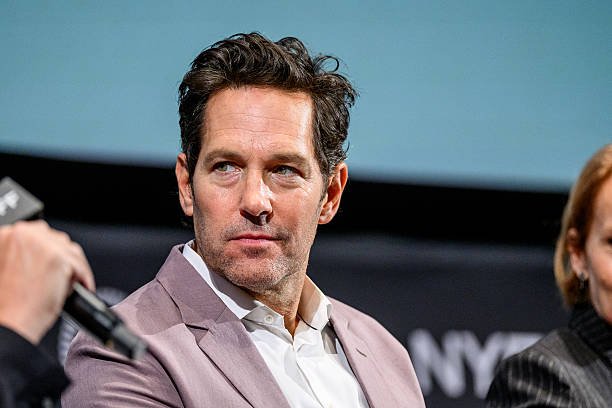
Paul Rudd is making a surprisingly strong argument for putting the smartphone down.
The actor, who stars in the upcoming film A Statement, says he deliberately leaves his phone in his trailer while working and believes the constant presence of smartphones has changed the way people communicate with one another.
Rudd’s comments came during the world premiere of A Statement at the New York Film Festival, where he discussed the experience of making the film without the distraction of mobile phones.
Directed by Oscar-winning filmmaker Tom McCarthy, A Statement takes audiences back to 1980 for a story centered on one of the earliest imagined attempts to bring experts together to address America’s growing climate crisis.
The film follows 20 experts who gather at a Florida beachside resort. Their task sounds straightforward but quickly becomes complicated: they must work together to draft a statement for Congress addressing the potential effects of carbon dioxide emissions on the climate.
The movie unfolds largely through discussions, disagreements and competing perspectives, giving it the feel of a political and intellectual chamber drama rather than a conventional action-driven film.
For Rudd, however, the experience of making A Statement was shaped just as much by what the actors did not have on set.
They didn’t have their phones.
And according to Rudd and co-star Amy Ryan, that restriction helped create a stronger sense of connection among the cast.
Paul Rudd Has Been Leaving His Phone Behind
Rudd plays the moderator of the historic meeting depicted in A Statement. While preparing for the film, he found himself spending more time interacting directly with the ensemble cast because he wasn’t carrying a smartphone around the set.
Speaking at the film’s world premiere, Rudd explained that he has already developed a habit of leaving his phone behind when he works.
“I don’t go to sets with a phone. I haven’t done that for a while now,” Rudd said.
He acknowledged that disconnecting isn’t necessarily easy.
“It’s important to put it down. Anytime. They’re horrible things. I’m addicted to it like everybody else. They’re facilitating our own destruction.”
The remark captures a contradiction that many people experience with smartphones.
Phones are useful for communication, entertainment, work and access to information. At the same time, constant notifications and endless scrolling can make it difficult for people to remain fully present in conversations or shared experiences.
For Rudd, the production of A Statement provided a practical demonstration of what happens when those distractions are removed.
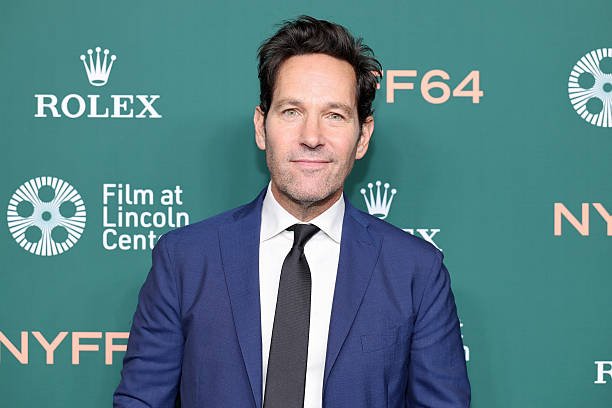
Tom McCarthy Enforced a Strict No-Phone Policy
The phone-free environment wasn’t simply Rudd’s personal preference.
Director Tom McCarthy reportedly established a strict no-phones policy for the production.
For a movie that takes place in 1980, the rule had an additional benefit.
The actors were already working in period costumes and recreating a world before smartphones, social media and constant digital communication existed.
Removing phones from the set therefore helped the cast experience something closer to the social environment their characters would have known.
Rudd said the restriction made the ensemble feel closer and contributed to a theatrical atmosphere.
“The world has changed since cell phones have existed. We don’t look at each other or talk to each other quite the same way,” he explained.
Without phones available during breaks, the cast members were encouraged to talk with each other.
That might sound like a small change, but Rudd suggested it had a significant effect on the production.
“Now, [with the phone ban], we were forced to really spend time with each other and talk.”
The experience also reminded him of a time when people naturally spent more time talking without reaching for a screen.
Working on a movie set designed to recreate 1980 helped reinforce that feeling.
“We’re dressed in a certain kind of way. It felt like, ‘Oh, yeah, I remember this. This feels like it used to feel when people sat around and spoke to one another.’”
A Movie About Communication Made Without Smartphones
There is an interesting connection between the subject of A Statement and the way it was made.
The film revolves around 20 people attempting to communicate, debate and reach agreement on a difficult issue.
Their meeting requires patience.
They have to listen.
They have to disagree.
They have to explain their positions.
And, most importantly, they have to remain in the room with one another.
That dynamic is also reflected in the cast’s experience.
Without smartphones available to provide an easy escape during breaks, the actors were encouraged to engage directly with one another.
In that sense, the production’s no-phone rule appears particularly appropriate for a film centered around a group of people trying to communicate effectively.
The cast includes Paul Giamatti, Tatiana Maslany, John Turturro, Amy Ryan and other performers, creating a large ensemble that needs to feel like a genuine group rather than a collection of individual stars.
The absence of smartphones may have helped create that feeling.
The Story Takes Place in 1980
A Statement is set at a Florida beachside resort in 1980.
The period is significant because the characters are dealing with questions surrounding carbon dioxide emissions and the potential impact of climate change at a time when the broader public conversation around the subject looked very different from today.
The movie imagines 20 experts gathering for a weekend conference.
Their goal is to formulate a statement to Congress explaining the potential effects of carbon dioxide emissions on the climate.
But reaching an agreement proves difficult.
The experts don’t necessarily share the same views, priorities or methods.
Their disagreements form the central dramatic engine of the movie.
Rather than following one hero trying to solve a problem, A Statement appears to build its story around the interaction of an entire group.
That makes the movie comparable in spirit to 12 Angry Men, where a group of people must remain together and debate an issue while their differing personalities and opinions gradually come to the surface.
Paul Rudd Found the Ensemble Experience Different
Rudd’s comments suggest that the no-phone policy didn’t merely make the set quieter.
It changed the way the actors interacted.
Large ensemble productions can sometimes involve actors spending long periods waiting between scenes. In the modern entertainment industry, those breaks can easily be filled by checking messages, browsing social media or watching videos.
That wasn’t an option on A Statement.
Instead, the cast members talked.
They learned more about each other.
They discussed scenes.
And they remained connected to the people physically around them.
For a film that depends heavily on conversation, this could have been particularly valuable.
The actors weren’t simply portraying people having a discussion. They were developing relationships within a large ensemble and spending significant amounts of time together.
That helped create an atmosphere Rudd compared to working on a play.
The theatrical quality of A Statement appears to be intentional, given that much of the film revolves around a group of people gathered in one location and debating an issue.
The lack of phones may have made that environment feel even more immersive.
Amy Ryan Says the Work Became “Much More Rich”
Amy Ryan, who plays a key role in the film and delivers a major wake-up call to the group near the climax, also praised McCarthy’s decision to remove phones from the set.
According to Ryan, the absence of notifications and endless scrolling made the creative process richer.
She encouraged other filmmakers to consider implementing similar policies.
Ryan described what happened during even short breaks between scenes.
Instead of everyone immediately looking down at their phones, people would start conversations.
“Hey, what are you doing? How’s your morning? What do you think of this scene?” became the kind of interaction that naturally filled those breaks.
The difference may appear small, but Ryan suggested it had a meaningful effect on the group.
She compared the experience to quitting sugar.
“I equate it to like when you quit sugar. In three days, it’s out of your system. You don’t miss it!”
Ryan also suggested that smartphones could eventually become something people use more intentionally rather than constantly.
Her comments point to a larger question that the film itself may encourage audiences to consider: how much attention are people giving to the screens in front of them, and how much are they giving to the people sitting beside them?
Smartphones Have Changed Everyday Communication
Rudd’s comments are not simply about filmmaking.
His observation reflects a much broader cultural shift.
Smartphones have transformed how people communicate, work and consume entertainment.
People can respond to messages instantly.
They can access news within seconds.
They can document moments as they happen.
They can maintain relationships across enormous distances.
But that convenience can also create a new kind of distraction.
A conversation can be interrupted by a notification.
A quiet moment can turn into an hour of scrolling.
A group of people sitting together can sometimes become a collection of individuals looking at separate screens.
Rudd’s experience on A Statement suggests that removing that option can have an unexpectedly positive effect on a creative group.
Instead of asking whether a phone is useful, the production effectively asked a different question:
What happens when the phone simply isn’t there?
For the cast of A Statement, the answer appears to have been more conversation and stronger interpersonal connections.
Why the No-Phone Rule Fits A Statement
The production’s policy also seems particularly appropriate because of the movie’s subject matter.
A Statement is about a group of people attempting to communicate about a complex problem.
The characters cannot simply leave a meeting every time they encounter disagreement.
They must listen to one another.
They must challenge assumptions.
They must explain their reasoning.
And they must eventually attempt to create a unified statement.
That process requires attention.
A constant stream of notifications would be almost the opposite of the environment the film is trying to portray.
By keeping phones away, McCarthy created a production environment where actors had fewer opportunities to retreat into their digital lives.
The result appears to have helped the cast develop the kind of ensemble chemistry that the movie requires.
Tom McCarthy’s Approach to the Film
Tom McCarthy, who won an Academy Award for his work on Spotlight, is directing A Statement.
His decision to establish a strict phone policy demonstrates how production choices can extend beyond cameras, costumes and performances.
The environment in which actors work can influence how they interact with one another, and McCarthy appears to have recognized that a film built around debate and conversation could benefit from an equally connected cast.
The 1980 setting also offered an opportunity to recreate a period when smartphones didn’t exist.
Rather than allowing modern technology to intrude on the production, the filmmakers created an environment that encouraged the cast to experience some of that difference themselves.
A Timely Story With an Old-School Filmmaking Experience
Although A Statement is set decades in the past, the questions surrounding communication, attention and climate discussions remain highly relevant.
The movie’s central meeting asks how experts might respond to the potential consequences of carbon dioxide emissions.
At the same time, the production itself explores another contemporary issue: how technology affects human interaction.
That gives Rudd’s comments additional significance.
He isn’t arguing that smartphones have no value. His own description acknowledges that he is “addicted to it like everybody else.”
Instead, his experience suggests that deliberately creating periods without phones can make people more present.
For a movie about people sitting in a room and talking through a difficult issue, that may have been exactly what the cast needed.
Final Thoughts
Paul Rudd’s comments about smartphones offer an intriguing glimpse into the making of A Statement.
The actor says he has stopped bringing his phone onto movie sets, and Tom McCarthy took that idea further by enforcing a strict no-phone policy throughout the production.
The result was a cast that spent more time talking to one another, discussing scenes and simply being present together.
Amy Ryan similarly praised the approach, saying the absence of notifications and doomscrolling made the work “much more rich.”
That experience mirrors the central idea of A Statement, a film about 20 experts gathered in a Florida resort in 1980 to debate how to communicate the potential effects of carbon dioxide emissions to Congress.
With an ensemble featuring Paul Rudd, Paul Giamatti, Tatiana Maslany, John Turturro and Amy Ryan, the film depends heavily on chemistry, conversation and disagreement.
Removing smartphones may have helped the actors create exactly that environment.
In an era when digital communication is nearly impossible to escape, A Statement offers an interesting behind-the-scenes reminder: sometimes the easiest way to reconnect with other people is simply to put the phone somewhere else.
And according to Rudd, doing so may reveal just how much we’ve changed since the days when people naturally sat together and talked.