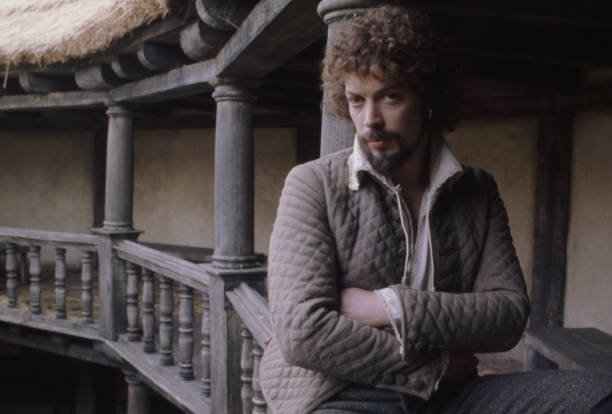
Tim Curry, the legendary actor and performer best known for his unforgettable roles in The Rocky Horror Picture Show and It, has died at the age of 80. A week after his death, details surrounding the cause of death have been made public, providing new information about the final chapter of the celebrated actor’s life.
Curry’s primary cause of death was coronary artery disease, according to documents from the Los Angeles County Department of Public Health. The documents also listed a history of stroke and kidney cancer as contributing conditions.
The actor died peacefully at his home in the Toluca Lake area of Los Angeles on August 25, 2026. His representative, Sean Katz, previously confirmed the news and remembered Curry not only for his extraordinary career but also for his intelligence, kindness and generosity.
His death marks the end of a career that lasted more than five decades and crossed virtually every major area of entertainment, including film, television, theater, animation and music.
For generations of audiences, Curry was the face of some of pop culture’s most distinctive characters. From Dr. Frank-N-Furter to Pennywise the Clown, his performances were often eccentric, theatrical and impossible to forget.
Tim Curry’s Cause of Death
According to the reported death documentation, coronary artery disease was identified as the primary cause of Curry’s death.
The condition, also known as coronary heart disease or ischemic heart disease, occurs when the arteries supplying blood to the heart become narrowed or blocked, often because of plaque buildup.
The documents also identified Curry’s history of stroke and kidney cancer as contributing conditions.
Curry had previously been open about the impact of a stroke he suffered in 2012. The medical event significantly affected his mobility and changed the way he worked during the later years of his career.
While Curry continued making appearances and remained active creatively, his physical limitations meant that his professional life looked very different from the decades when he regularly appeared on stage and screen.
His death at 80 therefore closes a remarkable chapter in entertainment history.
Curry’s Stroke Changed His Later Career
Tim Curry suffered a stroke in 2012, an event that had a lasting effect on his physical abilities.
In 2025, Curry spoke candidly about his continuing mobility difficulties during an event at the Academy Museum of Motion Pictures in Los Angeles.
He explained that he was still unable to walk and relied on a wheelchair, describing the situation as limiting. He also said that he continued to experience problems with his left leg.
For an entertainer whose career had been built partly around his commanding stage presence, physical movement and theatrical performances, the consequences were substantial.
Curry had spent decades performing characters that demanded tremendous energy. His work in musical theater, particularly, demonstrated his ability to combine acting, singing and movement.
Following his stroke, however, he had to adapt.
Rather than completely stepping away from entertainment, Curry continued finding ways to work.
His persistence became another important part of his legacy.
His Final Screen Appearance
Although Curry worked less frequently after his stroke, he did not completely disappear from the entertainment world.
According to available film-credit information, his final screen credit came in the 2024 horror movie Stream.
The appearance was another reminder that Curry remained committed to his craft even after facing significant health challenges.
His later years were not defined exclusively by his physical limitations.
Instead, Curry continued to be recognized for his creativity, distinctive voice and ability to connect with audiences.
His representative emphasized that Curry remained intellectually curious and generous throughout his life.
That description is especially fitting for an actor whose career constantly evolved.
The Rocky Horror Role That Changed Everything
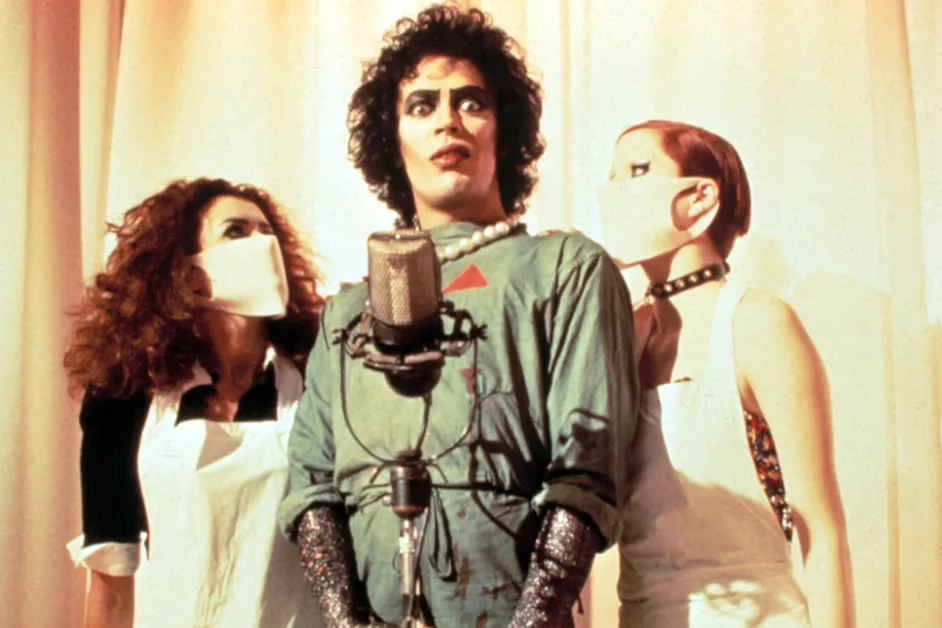
For millions of fans around the world, Tim Curry will forever be associated with Dr. Frank-N-Furter, the outrageous and charismatic character he played in The Rocky Horror Picture Show.
Released in 1975, the movie initially occupied a relatively unusual place in popular culture before eventually becoming a worldwide cult phenomenon.
Curry’s performance was central to that transformation.
As Dr. Frank-N-Furter, Curry brought together theatricality, humor, confidence and unpredictability. His performance became one of the defining portrayals in cult cinema.
The movie’s enduring popularity ensured that Curry’s work would continue to be discovered by new generations.
Even decades after its original release, The Rocky Horror Picture Show remained a major part of pop culture.
For many actors, a performance that becomes so iconic can become a burden, potentially limiting the types of roles they are offered.
Curry took a different path.
He refused to allow one character to define his entire career.
Tim Curry Refused to Be Typecast
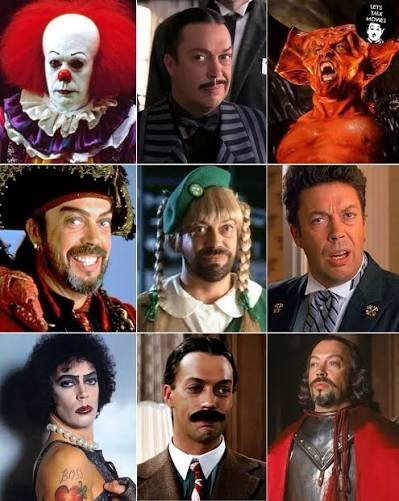
One of the most impressive aspects of Curry’s career was the sheer variety of characters he played.
After The Rocky Horror Picture Show made him internationally recognizable, Curry moved across genres rather than simply repeating the same type of flamboyant performance.
He appeared in comedies, dramas, horror films, musicals, children’s entertainment and television productions.
His career demonstrated remarkable versatility.
In 1981, Curry received a Tony Award nomination for playing Wolfgang Amadeus Mozart in the Broadway production of Amadeus.
The following year, he appeared as Rooster in the film adaptation of Annie, sharing the screen with Carol Burnett.
He later became part of the ensemble of the beloved 1985 comedy Clue, playing the butler Wadsworth.
His performance in Clue remains particularly popular among fans of classic comedy.
Pennywise Became Another Legendary Performance
In 1990, Curry took on another role that would become permanently associated with his name: Pennywise the Clown in the television adaptation of Stephen King’s It.
The character was dramatically different from Dr. Frank-N-Furter, yet Curry once again demonstrated his ability to create a memorable screen presence.
His Pennywise was sinister, unpredictable and deeply unsettling.
The performance became a defining interpretation of the character and helped establish Curry as one of the most recognizable actors in horror.
For many viewers who encountered It during the 1990s, Curry’s Pennywise became the image they associated with the terrifying clown.
Decades later, the character remained one of his most frequently discussed roles.
Curry’s Other Memorable Film Characters
Tim Curry’s filmography extended far beyond his two most famous characters.
He played Dr. Thornton Poole in the 1991 comedy Oscar and appeared as Mr. Hector, the suspicious concierge, in the 1992 family comedy Home Alone 2: Lost in New York.
In 1996, Curry brought his distinctive theatrical style to Muppet Treasure Island, where he played the legendary pirate Long John Silver.
He also portrayed Gomez Addams in the 1998 television movie Addams Family Reunion.
Each performance demonstrated Curry’s ability to transform his voice, physicality and personality depending on the character.
His work was often recognizable as Tim Curry while simultaneously making the character feel completely different from his previous roles.
His Success Extended to Animation and Voice Acting
Curry was also an accomplished voice actor.
In 1991, he won a Daytime Emmy Award for Outstanding Performer in a Children’s Series for his voice performance as Captain Hook in the animated series Peter Pan and the Pirates.
His distinctive voice made him particularly effective in animation.
Curry could make a character sound theatrical, threatening, playful or eccentric simply through vocal performance.
That skill opened another important avenue in his career and allowed him to reach younger audiences who may not have known him primarily from Rocky Horror or his live-action films.
Broadway Was Another Major Part of His Legacy
Although Curry became internationally famous through movies and television, theater remained an important part of his career.
His Broadway achievements included multiple Tony Award nominations.
In addition to his Amadeus nomination, Curry received further Tony recognition for his performances in My Favorite Year in 1993 and Spamalot in 2005.
These nominations demonstrated that his talents extended well beyond cult films and horror.
Curry was fundamentally a stage performer.
His theatrical background helped explain the larger-than-life quality he brought to so many screen characters.
Whether he was playing a villain, a comic character, a pirate or a musical role, there was often a sense of performance rooted in the theater.
A Career That Lasted More Than Five Decades
Curry celebrated his 80th birthday in April 2026.
By that point, he had spent more than half a century working professionally in entertainment.
Few actors can claim such a diverse and enduring body of work.
He became Dr. Frank-N-Furter for one generation, Pennywise for another and a familiar voice and character actor for countless others.
His work also reached audiences through different forms of media.
Some people remember him primarily from Rocky Horror. Others know him from It, Clue, Home Alone 2, Muppet Treasure Island or his animation work.
Still others encountered him through his Broadway performances.
That breadth is part of what makes his death such a significant loss.
Tim Curry’s Legacy Goes Beyond His Most Famous Roles
While Curry’s iconic characters will continue to define parts of his public legacy, his influence was broader than any individual role.
His career demonstrated that performers do not have to remain inside a single category.
He could be theatrical without being limited to musical theater.
He could be frightening without being only a horror actor.
He could be comedic without becoming exclusively a comedy performer.
That ability to move between genres helped keep his career fresh for decades.
His representative described him as someone who never wanted to be confined by other people’s expectations.
That description closely matches the trajectory of his career.
Fans Remember an Unforgettable Entertainer
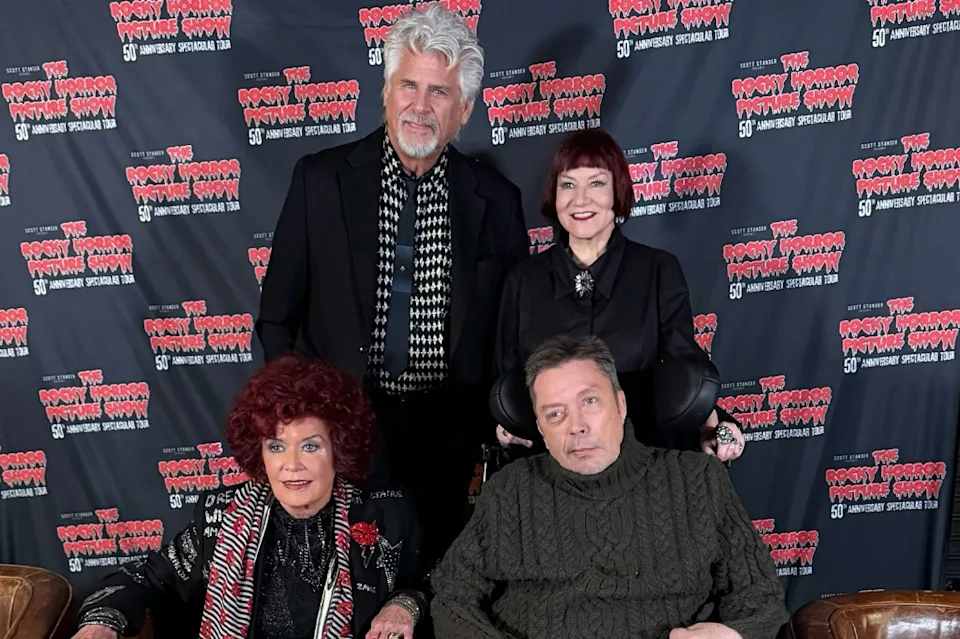
News of Curry’s death has prompted fans and fellow performers to reflect on the remarkable range of his career.
His characters became part of popular culture, but his influence went beyond individual performances.
Curry represented a particular kind of fearless entertainment—bold, theatrical and willing to embrace characters that many performers might have avoided.
Dr. Frank-N-Furter challenged conventions.
Pennywise terrified audiences.
Wadsworth provided unforgettable comedy.
Captain Hook demonstrated his gift for voice acting.
His Broadway performances showed that his abilities extended naturally to live theater.
Together, these roles form an unusually diverse artistic legacy.
Tim Curry Leaves Behind a Lasting Legacy
Tim Curry’s death at 80 marks the end of a remarkable career, but his work is unlikely to disappear.
The characters he created will continue to be watched, quoted, imitated and rediscovered.
The Rocky Horror Picture Show remains a cultural institution, ensuring that Dr. Frank-N-Furter will continue introducing new generations to Curry’s extraordinary performance.
Pennywise remains one of the most memorable horror characters ever brought to the screen.
His performances in Clue, Annie, Home Alone 2 and Muppet Treasure Island continue to attract audiences.
And his theater and voice work demonstrate that there was much more to Curry than his most famous movie roles.
He continued creating even after the stroke that dramatically changed his physical abilities. His determination to remain involved in entertainment speaks to the passion he had for his profession.
Curry’s representative remembered him for his “curious, expansive mind” and “generous, gentle heart,” qualities that remained with him throughout his life.
For an actor who spent more than five decades entertaining audiences across multiple generations, that may be the most fitting final tribute.
Tim Curry leaves behind an extraordinary collection of performances—and a legacy that will continue to entertain audiences for decades to come.