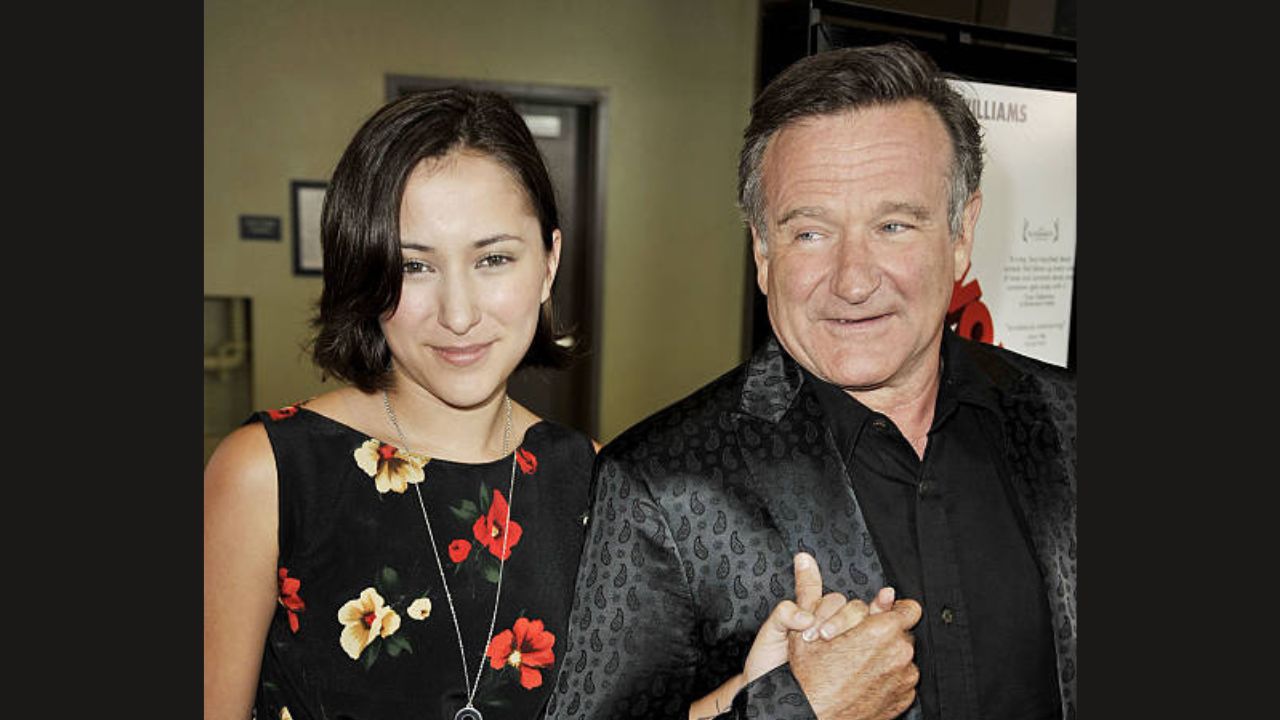
The daughter of the late comedy legend Robin Williams, Zelda Williams, has spoken out powerfully against the use of AI-generated videos that mimic her late father’s voice and image. Her emotional plea has sparked a major discussion online about ethics, consent, and respect in the age of artificial intelligence.
Zelda’s message, shared earlier this week, comes as technology advances allow people to recreate lifelike deepfakes of beloved figures — often without family approval. The 35-year-old actor and filmmaker has made it clear that these creations are both deeply distressing and disrespectful to her father’s memory.
Zelda Williams’ Emotional Message to Fans
On October 6, Zelda took to her Instagram Stories to share her frustration. Against a black background with white text, she pleaded with followers to stop sending her AI-generated clips that feature her late father.
“Please, just stop sending me AI videos of Dad,” she wrote. “Stop believing I wanna see it or that I’ll understand — I don’t, and I won’t.”
Zelda’s post, which she later deleted, reflected the exhaustion she feels seeing her father’s likeness repeatedly used without permission. She explained that while some people might find comfort in such recreations, she finds them creepy, invasive, and far from what Robin himself would have wanted.
“If you’re just trying to troll me, I’ve seen worse. I’ll restrict and move on,” she added. “But please, if you’ve got any decency, just stop doing this to him and to me, to everyone even, full stop. It’s dumb, it’s a waste of time and energy, and believe me, it’s NOT what he’d want.”
“It’s Disgusting” — Why She’s Against AI Remakes
In her post, Zelda compared these AI recreations to “disgusting, over-processed hotdogs” — stripping away real human emotion and artistic integrity.
“You’re not making art,” she said. “You’re making disgusting, over-processed hotdogs out of the lives of human beings, out of the history of art and music — and then shoving them down someone else’s throat hoping they’ll give you a like.”
Zelda, who has long been vocal about ethical storytelling, argued that using AI to mimic deceased individuals dehumanizes their memory. She stressed that these videos don’t honor Robin Williams — they exploit his image for social media engagement.
She went on to criticize people who defend AI-generated content as “the future,” saying that artificial intelligence isn’t truly creating anything new.
“AI is just badly recycling and regurgitating the past to be re-consumed,” she wrote. “You’re taking in the Human Centipede of content — and from the very end of the line, while the folks at the front laugh and consume.”
Her remarks were widely shared and discussed, reigniting debates about how far AI-generated content should go — especially when it involves those who have passed away.
Bernice King Joins the Conversation
Not long after Zelda’s post gained attention, another influential voice joined the discussion — Dr. Bernice King, daughter of civil rights leader Dr. Martin Luther King Jr.

Sharing Zelda’s message on X (formerly Twitter), Bernice added her agreement:
“I concur concerning my father. Please stop.”
Her post resonated with thousands, as she too has seen unauthorized AI videos featuring her father’s speeches and likeness circulating online.
Bernice’s response highlighted that this issue isn’t limited to Hollywood — it’s a universal problem that affects the legacies of historical figures, artists, and leaders alike.
The Rise of AI and Deepfake Culture
Artificial intelligence has made massive strides in recent years. Apps like Sora 2, reportedly one of the tools used to create AI-generated videos of Robin Williams and Dr. King, can generate photorealistic clips and voices in seconds.
Thousands of such clips have surfaced across social media platforms like TikTok, Instagram, and YouTube, often using celebrity voices to tell jokes, sing songs, or recreate emotional scenes.
While many fans see this as a creative tribute, experts warn that it crosses ethical lines when it involves deceased individuals — especially without permission from their families or estates.
Zelda’s comments highlight the emotional harm these recreations can cause to loved ones. They also expose a lack of regulation around AI-generated likeness rights, an issue that’s becoming more urgent as the technology spreads.
Fans Show Support for Zelda Williams
Following Zelda’s emotional post, fans flooded her social media with messages of support and empathy. Many agreed that AI-generated videos of Robin Williams are disrespectful and emotionally manipulative.

One fan commented,
“God, people can really be twisted to do that. It’s cruel.”
Another added,
“It’s heartbreaking that people would send her these videos. Her father took his own life, and now she’s being forced to see fake versions of him online.”
A third user wrote,
“People have lost empathy. It’s unbelievable how cruel this is.”
The support underscored how deeply Robin Williams’ death still resonates with millions — and how strongly fans still care about preserving his true artistic legacy, not a digital imitation.
Remembering Robin Williams’ Legacy
Robin Williams passed away in August 2014 at the age of 63, leaving behind a legacy of joy, depth, and humanity. Known for films like Mrs. Doubtfire, Good Will Hunting, and Dead Poets Society, Williams was celebrated for his unmatched comedic timing and emotional range.
He was discovered in his California home by his assistant, and reports later confirmed that he had been battling severe depression. His wife, Susan Schneider Williams, later revealed that he had been diagnosed with Parkinson’s disease, and was unknowingly suffering from Lewy body dementia, a rare brain disorder that affects thinking, movement, and mood.
Zelda, who was just 25 when her father died, has since become an advocate for mental health awareness and ethical technology use. Her latest stand against AI exploitation further cements her dedication to protecting her father’s memory and his true artistic spirit.
The Larger Debate: Art vs. Exploitation
Zelda’s message has reignited a broader conversation — where do we draw the line between artistic innovation and ethical exploitation?
AI allows fans to relive beloved voices and moments, but it also risks distorting legacies and profiting off grief. Many industry experts are now calling for stricter laws on AI likeness rights, ensuring families have control over how a deceased person’s image is used.
As technology continues to evolve, one thing remains clear: the digital resurrection of beloved icons is not always a tribute — sometimes, it’s a violation.
Conclusion
Zelda Williams’ plea is more than just a personal request — it’s a powerful reminder about respect, consent, and human dignity in an age where technology often blurs moral boundaries. Joined by voices like Bernice King, her stand may push more people to reconsider how they use AI and the lasting impact it can have on those left behind.
In honoring Robin Williams, perhaps the best tribute is not through artificial re-creations — but through remembering his laughter, kindness, and the genuine joy he brought to millions.