
In the dull hum of ordinary life, a woman’s voice suddenly rises—raw, piercing, and unignorable. It cuts through the silence like a blade, echoing pain that feels both deeply personal and universally human. Her face is twisted by grief, her breath frantic, as though the weight of existence has finally pushed her to the brink. Then something changes. The chaos in her voice settles. Her breathing slows. What once sounded like anguish becomes harmony, guided by an unshakable conviction that borders on the divine.
This is the emotional threshold through which Mona Fastvold’s extraordinary film, The Testament of Ann Lee, invites its audience. It is not simply a movie—it is an experience that feels closer to spiritual awakening than entertainment. Anchored by a monumental performance from Amanda Seyfried, the film transcends genre, blending history, music, devotion, and human resilience into something that feels timeless.
Calling The Testament of Ann Lee the finest cinematic achievement of the year almost feels insufficient. The film doesn’t aim to convince viewers of God’s existence in a conventional sense. Instead, it gently urges them to look inward—to recognize divinity in shared humanity, in restraint, in movement, and in collective belief. It imagines faith not as dogma, but as connection.
A Story That Defies Easy Classification
Fastvold’s film exists beyond labels. It is a musical, yet nothing like Broadway tradition. It is a feminist text, but never sermonizing. It is historical, though far removed from the stiffness of standard biopics. Instead, it flows like scripture—elegant, rhythmic, and alive with contradiction.
At its heart is Ann Lee, a woman born into extreme poverty in Manchester, surrounded by cruelty, repression, and rigid religious expectations. From an early age, she is deeply sensitive to injustice, particularly the way women are subjugated by both marriage and church doctrine. Physical intimacy repels her, manifesting in disturbing visions that conflate flesh with sin.
Despite her aversion, Ann eventually marries Abraham, a blacksmith who shares her curiosity about unconventional religious movements. Together with her brother William, they are drawn toward a group of Methodists known for ecstatic, full-bodied worship. In their communal breathing, chanting, and movement, Ann experiences something profound: liberation.
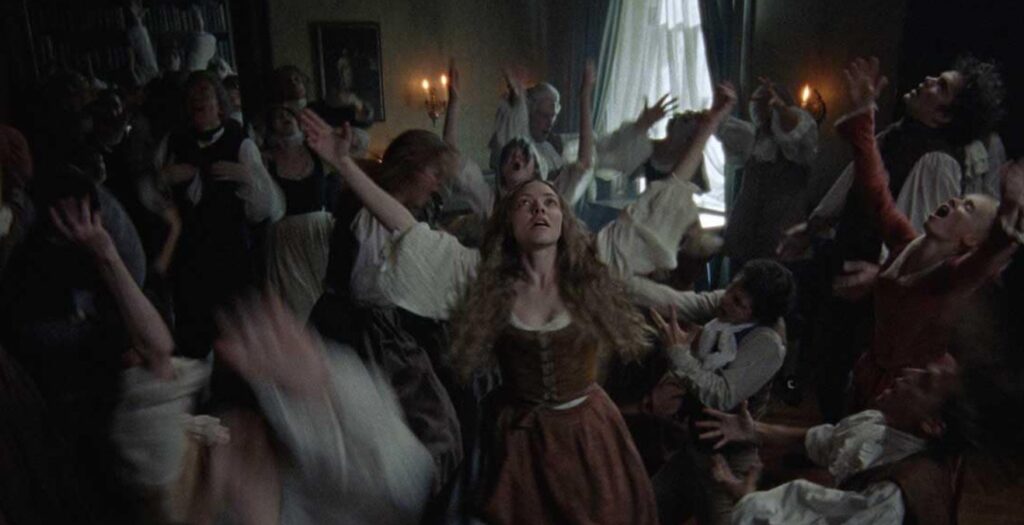
The congregation’s rituals—marked by rhythmic panting that crescendos into cries of grief and ecstasy—offer Ann a sense of belonging she has never known. For the first time, her lifelong burdens seem to lift.
Faith Forged Through Tragedy
Yet enlightenment does not shield Ann from suffering. Her marriage becomes a battleground between spiritual conviction and societal expectation, particularly as Abraham longs for children. Ann gives birth four times—and each child dies before reaching one year of age.
Fastvold portrays this devastating period with unflinching honesty. One extended sequence, centered around the haunting song “Beautiful Treasures,” becomes the film’s emotional core. Labeling it a “musical number” feels almost disrespectful to its gravity. It is a mother’s lament, rendered with devastating restraint and vulnerability.
Seyfried’s voice—clear, fragile, and aching—carries sorrow so palpable it feels almost intrusive to witness. It is not spectacle; it is grief stripped bare. The cumulative effect is overwhelming, redefining what musical expression can achieve on screen.
Music as Worship, Not Performance
The film’s music, composed by Daniel Blumberg, draws inspiration from traditional Shaker hymns. The songs are simple, repetitive, and deeply meditative. There are no grand crescendos designed to dazzle. Instead, the melodies seep into the soul through quiet persistence.
Lyrics such as “I hunger and thirst” gain power through repetition, embedding themselves in memory like prayer. The austerity of the compositions contrasts beautifully with the physical intensity of their performance. Group choreography sees the Shakers swaying, stretching, and moving as one—hands raised as if attempting to bridge the distance between heaven and earth.
The effect is hypnotic. Worship becomes physical. Belief becomes communal.
Celibacy, Resistance, and Defiance
Crushed by loss, Ann vows celibacy, interpreting her suffering as divine punishment for denying her spiritual instincts. She commits herself fully to abstinence, believing it to be a path toward redemption—not only for herself, but for others.
Her message is radical and deeply unsettling to the patriarchal structures around her. A woman preaching spiritual authority is deemed blasphemous. Ann’s pacifist sermons are met with hostility and violence. Yet each act of persecution only strengthens her resolve.
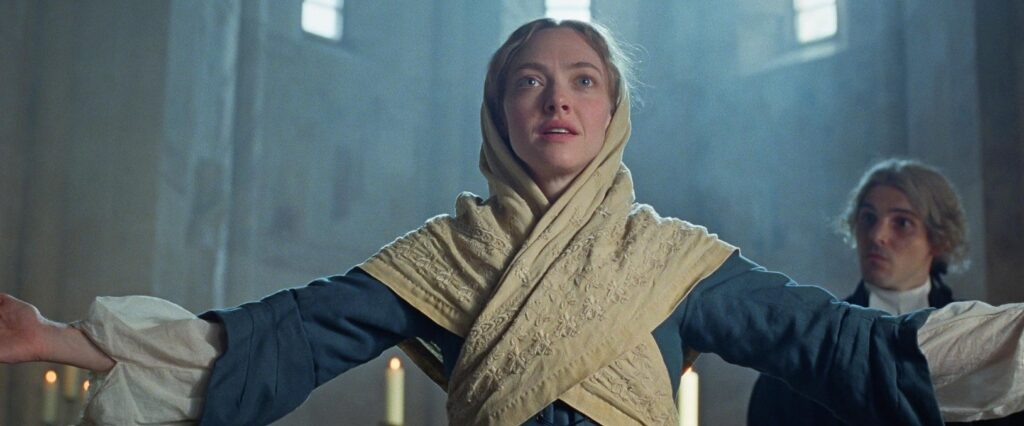
She starves herself, crosses oceans, and tills land in pursuit of a vision many deem impossible: a utopia built on equality, empathy, and restraint.
Seyfried’s portrayal is nothing short of transformative. Her performance is physically demanding, emotionally raw, and spiritually convincing. There is an unwavering purity in her delivery—spoken and sung—that makes it impossible not to believe in Ann’s divine calling.
A Vision of Radical Goodness
Shakerism, as presented in the film, is rooted in ideals that feel urgently relevant today: gender equality, nonviolence, communal care, and moral generosity. At its height, the movement attracted thousands who rejected war and material excess in favor of shared purpose.
Fastvold presents goodness not as an abstract ideal, but as an attainable way of life. That clarity is what makes The Testament of Ann Lee so powerful. In a cinematic landscape crowded with dystopias and moral ambiguity, this film dares to imagine heaven as something achievable.
It suggests that miracles need not be loud or spectacular. Sometimes, they are quiet revelations—moments of beauty that leave us changed.
A Film That Feels Like a Miracle
By chronicling Ann Lee’s unwavering pursuit of utopia, Mona Fastvold has created something bold, sincere, and deeply affecting. The film does not demand belief—it earns it. Not necessarily belief in God, but belief in the possibility of goodness, connection, and transformation.
If a film can leave you walking out of a theater feeling renewed—feeling that the world may still hold light—then perhaps that, in itself, is a miracle. And if The Testament of Ann Lee can exist in this moment, then there must still be hope waiting just beyond the door.