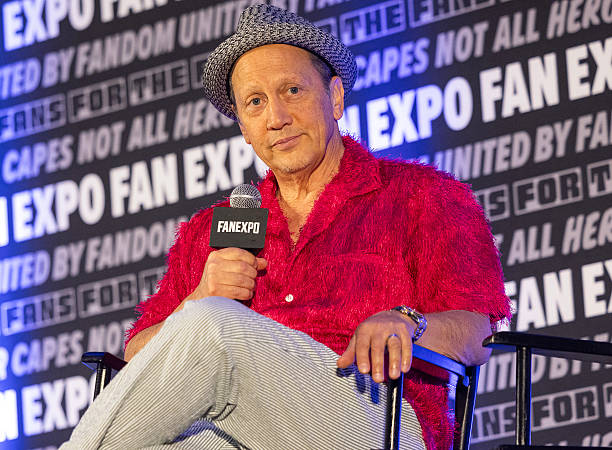
Actor and comedian Rob Schneider recently weighed in on the controversy surrounding late-night television, free speech, and the boundaries of comedy. Appearing on The Will Cain Show, Schneider offered candid reflections about what he sees as the shifting landscape of comedy, the responsibilities of broadcast television, and the importance of civil discourse in a polarized society.
The discussion came after growing criticism of late-night host Jimmy Kimmel, whose political monologues have often stirred heated reactions. For Schneider, the larger issue goes beyond any single TV show. In his view, the debate around who keeps or loses a television platform pales in comparison to the deeper societal concerns around violence, censorship, and freedom of expression.
The Debate Over Late-Night Comedy
The conversation began with a focus on the current state of late-night comedy, where Schneider pointed out that political jokes often overshadow entertainment value. He noted that late-night television once had a broader appeal, drawing laughs across the political spectrum, but today risks becoming a one-sided echo chamber.
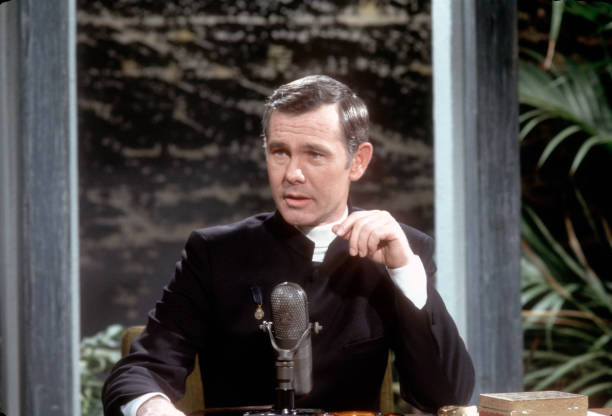
Schneider emphasized that historically, comedians thrived when they balanced sharp humor with relatability. Referring to iconic host Johnny Carson, he praised Carson’s ability to remain politically neutral while still entertaining millions. According to Schneider, Carson’s legacy was rooted in the fact that viewers could never fully tell where he stood politically. “Johnny was there to entertain,” Schneider said. “He wasn’t there to sway opinions—he was there to make people laugh.”
Comedy and Free Speech
Schneider also addressed the ongoing debate about free speech in entertainment. He reminded viewers that television airwaves are public property, requiring networks to operate in the public interest. When comedians blur the line between humor and political advocacy, he argued, they risk alienating audiences and undermining trust.
He added that losing a TV show should not be treated as the greatest tragedy, especially when weighed against real-world losses of life or liberty. Schneider made the case that outrage over entertainment decisions should be tempered by perspective: “The outrage over somebody losing their TV show should be dwarfed by somebody losing their life.”
This remark was widely seen as Schneider’s way of reframing the national conversation. Instead of focusing solely on media personalities, he urged people to keep their attention on more pressing issues that directly impact communities.
Roseanne, Censorship, and Political Echo Chambers
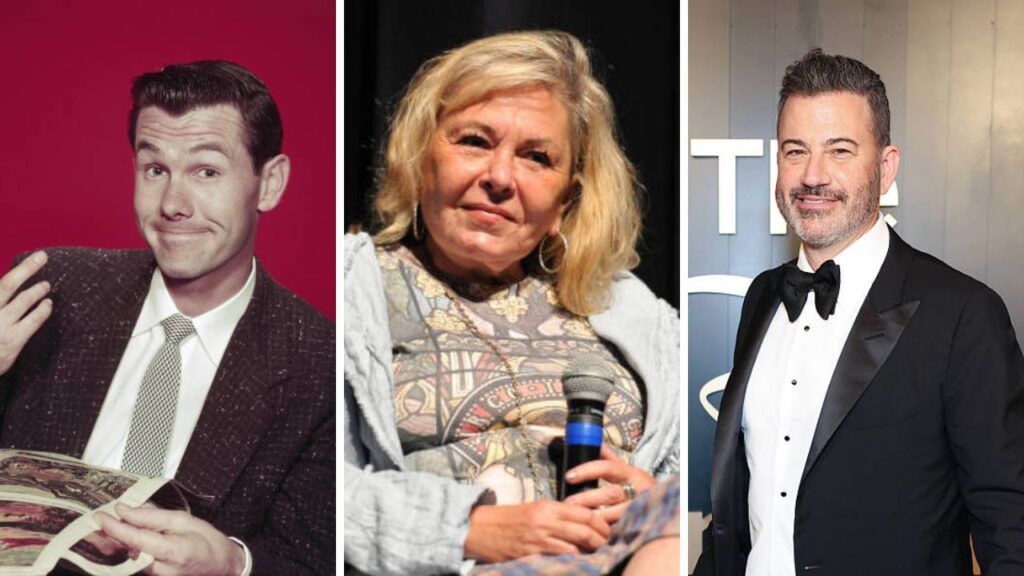
During the conversation, Schneider also recalled the controversy surrounding Roseanne Barr’s firing from her sitcom. He suggested that many who criticized Kimmel’s opponents did not speak out with the same energy when Roseanne lost her job over her comments. For him, this illustrates how selective outrage can erode genuine civil debate.
Schneider further touched on the topic of government involvement in content moderation, referencing reports that political administrations had pressured social media platforms to censor certain viewpoints. While he acknowledged that capitalist pressures naturally influence entertainment, he warned that government involvement crosses into dangerous territory.
The heart of his message was clear: free speech must remain central, even if some opinions are unpopular. Otherwise, society risks silencing dissent rather than engaging with it.
The Value of Debate
Perhaps the strongest theme in Schneider’s comments was the need for open, peaceful debate. He stressed that disagreements should never devolve into violence or demonization. Calling back to a quote from conservative commentator Charlie Kirk, Schneider warned: “When the conversations stop, the violence begins.”
He also highlighted the danger of labeling those with opposing views as “fascists” or “Nazis.” Such language, he argued, only deepens division and stifles dialogue. Instead, he encouraged people to come up with stronger arguments and better ideas rather than resorting to insults.
According to Schneider, dissent is not only healthy but essential for a vibrant democracy. Even bad opinions, he suggested, can serve a purpose by forcing society to sharpen and strengthen its good ones.
Learning From Johnny Carson’s Legacy
One of the most poignant moments of the discussion came when Schneider reflected on how Johnny Carson handled comedy during his decades-long run as host of The Tonight Show. Clips of Carson were played, showing him cautioning against entertainers becoming too self-important. Carson argued that comedians should avoid using their platform as a political pulpit and instead focus on laughter.
Schneider wholeheartedly agreed, noting that Carson’s neutrality allowed families of all backgrounds to laugh together. He contrasted this with today’s climate, where shows are often overtly political, potentially dividing audiences instead of uniting them.
This nostalgic reflection underscored Schneider’s larger point: comedy works best when it brings people together, not when it drives them further apart.
A Call for Civility
Schneider concluded his remarks with a heartfelt call for civility and love in public discourse. Citing Biblical principles, he reminded audiences that true rewards come not from loving those who already agree with you but from showing compassion to those who oppose you.
He urged Americans to resist the temptation of demonization and instead engage with empathy, kindness, and respect. “Let’s continue this debate and let’s do it peacefully, and let’s do it lovingly,” he said.
For Schneider, the future of comedy — and perhaps the health of society — depends on this commitment to civility.
Conclusion
Rob Schneider’s appearance highlighted not only his concerns about the state of comedy but also his broader perspective on free speech, media responsibility, and the need for civil dialogue. By pointing to figures like Johnny Carson and events like Roseanne Barr’s firing, he underscored how comedy reflects larger cultural struggles.
Ultimately, Schneider argued that while losing a television platform may seem significant, it should never outweigh the importance of preserving life, freedom, and meaningful conversation. His words serve as both a critique of modern comedy’s trajectory and a reminder that, even in disagreement, laughter and love should guide the way forward.