
Kate Winslet has built a career defined by emotional honesty, creative bravery, and a refusal to play things safe. In her latest project, Goodbye June, the Academy Award–winning actor takes on an entirely new challenge — stepping into the roles of director, producer, and lead actor all at once. The film marks a deeply personal milestone for Winslet, both professionally and emotionally, and represents one of the most meaningful chapters of her long and celebrated career.
As she reflects on the journey behind Goodbye June, Winslet opens up about what drew her to the story, how her family influenced the project, and why this particular film felt like the right moment to finally sit in the director’s chair.
A Story That Hits Close to Home
At the heart of Goodbye June is a script written by Joe Anders — Winslet’s son — making the project even more intimate. From the moment she read it, Winslet felt a powerful connection to the story. Rather than approaching it as just another acting opportunity, she recognized it as something deeply personal, layered with emotion, vulnerability, and truth.
The film’s themes revolve around family, mortality, love, and the complicated ways people say goodbye — not just to one another, but to versions of themselves. For Winslet, the script wasn’t simply well-written; it felt necessary. That emotional resonance played a major role in her decision to take on multiple responsibilities behind the scenes.
Rather than handing the story over to another director, she felt compelled to protect its emotional core. Directing Goodbye June allowed her to ensure the film remained honest, restrained, and grounded in real human experience.
Stepping Into the Director’s Chair
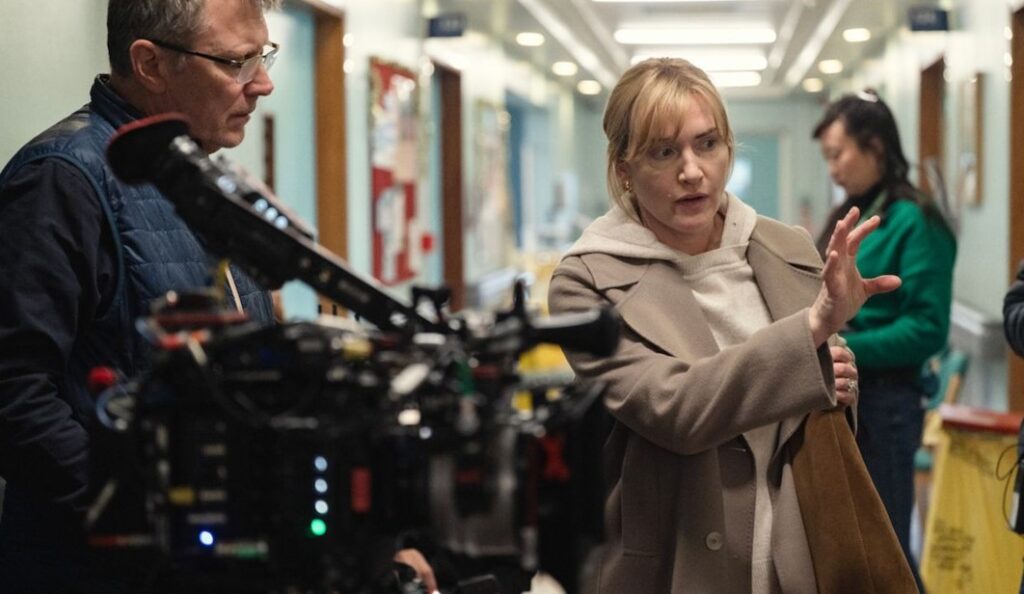
Despite decades of experience working with some of the world’s most respected filmmakers, Winslet had never directed a feature film — until now. While the idea had crossed her mind before, Goodbye June became the project that finally made everything click.
She approached directing with humility, preparation, and deep respect for collaboration. Rather than trying to control every moment, Winslet focused on creating a supportive environment where actors felt safe enough to be vulnerable. Her background as an actor gave her a unique sensitivity on set — she understood instinctively when to push, when to pause, and when to let a scene unfold naturally.
Balancing directing with acting was no small task, but Winslet credits preparation and trust in her team for making it possible. Every decision was rooted in emotional truth rather than spectacle, resulting in a film that prioritizes feeling over flash.
Convincing Helen Mirren to Say Yes
One of the most talked-about aspects of Goodbye June is Helen Mirren’s involvement. Winslet revealed that Mirren was initially hesitant to take on the role of June — a character facing the end of her life. The legendary actor has previously expressed reluctance toward playing dying characters, fearing repetition or emotional fatigue.
What changed her mind was the script itself. The writing offered depth, dignity, and nuance, avoiding clichés often associated with such roles. Winslet’s personal approach also played a key role. Rather than pitching the film as a dramatic showcase, she emphasized its humanity and restraint.
Mirren ultimately saw the role not as a portrayal of death, but as a reflection on living — and that distinction made all the difference.
Working With Children on Set
In addition to directing seasoned performers, Winslet also worked closely with young children on Goodbye June. Drawing from years of experience as both an actor and a mother, she emphasized the importance of patience, clarity, and emotional safety.
Winslet believes children perform best when they feel respected and unpressured. Rather than over-rehearsing or overwhelming them with instructions, she focused on simplicity and trust. Scenes were shaped around the children’s natural rhythms, allowing authenticity to shine through.
Her approach highlights a broader philosophy that guided the entire production: performances should feel lived-in, not manufactured.
Looking Back on an Iconic Career Moment
During the conversation, Winslet also reflected on one of the most talked-about moments of her career — a Vanity Fair cover shoot that became iconic for its boldness and authenticity. At the time, the image sparked widespread discussion about body image, confidence, and representation in Hollywood.
Looking back, Winslet sees the moment as a quiet act of defiance. She didn’t set out to make a statement — she simply chose honesty. That same philosophy continues to guide her work today, including Goodbye June.
Rather than chasing perfection, Winslet has consistently embraced imperfection, believing it’s where real connection lives.
An Unforgettable Experience at Sea
Beyond film and career reflections, Winslet also shared a deeply personal memory involving time spent at sea with loved ones. The experience, she recalled, was both grounding and transformative — a reminder of how precious presence and connection truly are.
Moments like these, she says, have increasingly influenced the roles she chooses and the stories she wants to tell. As her career evolves, Winslet is less interested in spectacle and more drawn to projects that reflect real life in all its messiness and beauty.
A New Creative Chapter Begins
Goodbye June represents more than just another film credit for Kate Winslet. It marks the beginning of a new creative chapter — one where she takes greater ownership of the stories she tells and how they are brought to life.
By directing, producing, and acting in a film so close to her heart, Winslet reaffirms her commitment to authenticity, collaboration, and emotional truth. It’s a bold step forward — and one that suggests even more exciting work lies ahead.