
When James Cameron looks back at the films that defined his career, one name repeatedly surfaces as a creative force who shaped modern cinema in ways audiences rarely see but always feel — Stan Winston. Known primarily as a legendary special effects artist, Winston was far more than a technician. To Cameron, he was a creative partner, a visionary, and a storyteller who believed that movie magic should feel real, emotional, and invisible all at once.
Their collaboration began in the mid-1980s, during a pivotal moment in Cameron’s life. In 1986, Cameron was under intense pressure as the writer-director of Aliens, the ambitious sequel to Ridley Scott’s Alien. Expectations were sky-high, budgets were large, and tensions on set were no secret. Yet, amid the chaos, Cameron forged partnerships that would last decades. One of those was with Sigourney Weaver. Another, arguably even more transformative, was with Stan Winston.
Stan Winston had already worked with Cameron on The Terminator, but Aliens took their collaboration to another level. Winston’s groundbreaking creature designs and practical effects helped give life to the terrifying Xenomorphs, earning the film an Academy Award for Best Visual Effects. More importantly, the experience cemented a creative trust between the two men — one rooted in pushing boundaries without sacrificing believability.
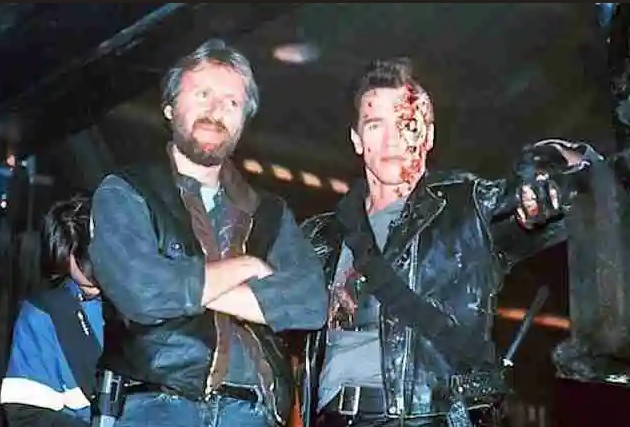
That trust only deepened with Terminator 2: Judgment Day in 1991, a film that would forever change visual effects in cinema. Winston was responsible for the practical and prosthetic elements of the T-1000, while computer-generated effects handled the liquid metal transformations. The result was a seamless hybrid of physical craftsmanship and emerging digital technology.
The Turning Point: Embracing CGI Without Fear
Around this time, Cameron had already begun experimenting with computer-generated imagery. He had “noodled around” with CGI during The Abyss, but it was Terminator 2 that convinced him of its true potential. What made this moment special was Winston’s openness to change.
Despite being a master of foam rubber, animatronics, hydraulics, and puppetry, Winston was not threatened by digital tools. Instead, he embraced them.
A few years later, after Winston completed work on Jurassic Park, Cameron visited his studio. What he saw surprised him — rows of artists working on early CGI software, including Maya. When Cameron questioned the shift, Winston didn’t hesitate.
CG, Winston believed, was the future of character and creature creation.
This wasn’t blind optimism. It was conviction backed by experience. Winston understood that technology was simply another tool — what mattered was how it served the illusion.
Building the Future: The Birth of Digital Domain
That shared belief led Cameron and Winston to co-found Digital Domain, a visual effects company built to fully embrace the future of filmmaking. Cameron famously joked about scaling up: why stop at a dozen workstations when you could have hundreds of artists shaping cinematic worlds?
Digital Domain quickly became a powerhouse, contributing effects to Cameron’s own films like True Lies and Titanic, as well as major projects from other filmmakers. From historical epics to explosive blockbusters, the company helped redefine what audiences thought was possible on screen.
But nothing tested that vision more than Avatar.
Avatar: A Gamble Years in the Making
The original Avatar was unlike anything Cameron had attempted before. Its technical complexity was staggering. In fact, it took nearly three years into production before the team completed a single shot that was ready for the final film.
By then, Stan Winston was seriously ill and no longer coming into the studio.
Cameron, knowing how important this moment was, called his longtime friend. He wanted Winston to see what their shared belief in digital character creation had achieved. Winston agreed, but when Cameron arrived at his house with the footage, the timing wasn’t right. The next day, Cameron returned — only to learn that Winston had passed away.
Winston never saw the finished Avatar. He never saw Pandora come alive on screen. Yet, Cameron considers him a co-author of the entire Avatar universe.
“He Just Wanted You to See the Magic”
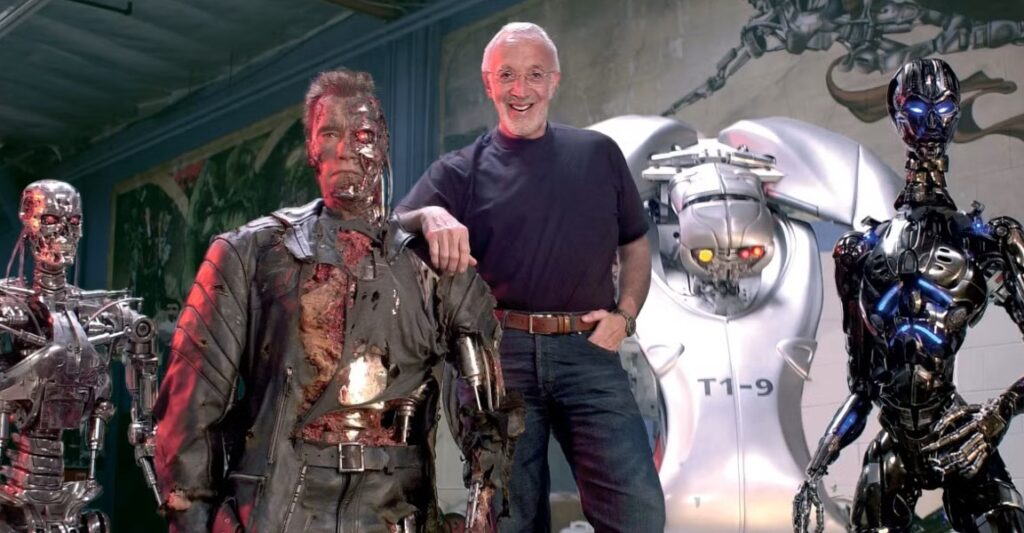
For Cameron, Winston’s philosophy was simple and profound. He never wanted audiences to notice the mechanics — the cables, levers, or technical tricks behind the scenes. He wanted viewers to believe.
The more impossible something looked, the more committed Winston was to making it feel real. That mindset continues to guide Cameron as he expands the Avatar saga, including the latest installment, Avatar: Fire and Ash, now playing in theaters.
Even though Winston is no longer here, his influence lives on in every digitally crafted creature, every emotionally grounded visual effect, and every cinematic moment where the audience forgets technology entirely — and simply feels the wonder.
A Legacy That Still Shapes Cinema
Stan Winston didn’t just help build monsters, robots, and alien worlds. He helped filmmakers understand that visual effects are not about spectacle alone — they’re about storytelling. His partnership with James Cameron wasn’t defined by tools or trends, but by a shared belief that cinema should always prioritize immersion, emotion, and magic.
And that magic, once seen, is impossible to forget.