
Mexican actor Diego Luna is having a powerful year — one that cements his image as a voice for rebellion, love, and human connection. In 2025, Luna is taking on two revolutionary characters: Valentin Arregui, a political prisoner in the film “Kiss of the Spider Woman,” and Cassian Andor, the reluctant hero in the Star Wars series “Andor” Season 2.
Both characters, though worlds apart in genre and setting, share strikingly similar emotional journeys — and Luna himself is the bridge that connects their stories of resilience and transformation.
Two Rebels, Two Worlds, One Spirit
In both projects, Luna portrays men caught in the struggle between oppression and freedom. Valentin Arregui, in Kiss of the Spider Woman, is a revolutionary imprisoned during Argentina’s brutal 1980s dictatorship. Cassian Andor, in the Star Wars universe, begins as a cynical mercenary but grows into a symbol of hope and defiance against the Galactic Empire.

While the two stories unfold in completely different universes — one real, one fictional — they share a deep emotional core. “They have the journey that they experience in common,” Luna explains. “Both are broken men at first, isolated from love and purpose. But they learn that connection is what gives them the strength to fight again.”
This revelation, Luna says, is what makes both roles profoundly meaningful.
Inside the Story of “Kiss of the Spider Woman”
The new film adaptation of “Kiss of the Spider Woman” is based on the 1993 Broadway musical, which itself was inspired by Manuel Puig’s 1976 novel. The film, which hit theaters on October 10, stars Diego Luna as Valentin, an idealistic Marxist imprisoned for his revolutionary activities.
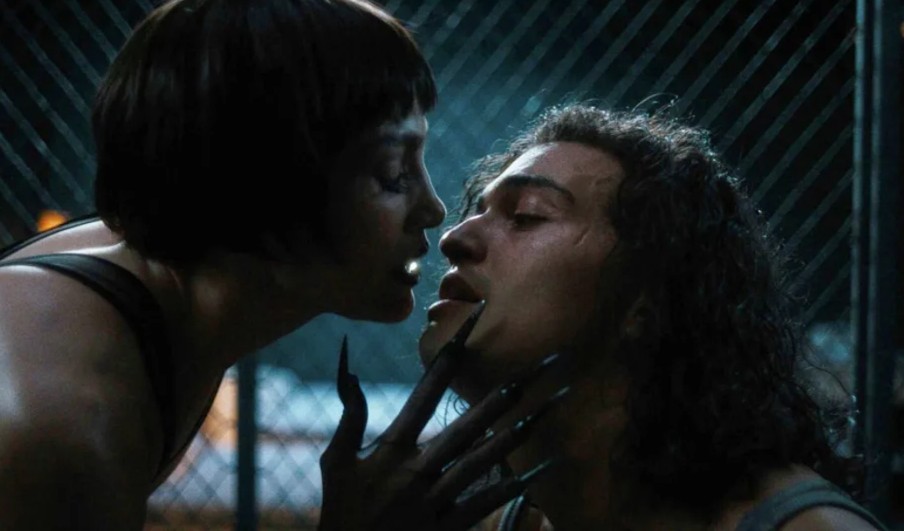
Valentin’s life takes a turn when he’s forced to share a cell with Luis Molina (played by Tonatiuh), a flamboyant and gentle window dresser jailed for “public indecency.” At first, Valentin mistrusts Molina, assuming he has little understanding of political struggle. But as the two men share stories, meals, and ultimately, sacrifice, they form a deep bond that challenges both of their beliefs about love and humanity.
Molina often escapes their harsh reality by narrating romantic tales of his idol, Ingrid Luna (Jennifer Lopez), a glamorous movie star within the film’s fictional universe. Her most famous role, Aurora — also known as the “Spider Woman” — becomes a symbol of both beauty and death, weaving fantasy and emotion into the men’s shared confinement.
Parallels Between Valentin and Cassian Andor
While Kiss of the Spider Woman unfolds in a dark, oppressive prison, and Andor spans across galaxies, Luna sees his characters as mirrors of each other’s transformation.

“When we find Valentin,” Luna explains, “he’s losing hope. He’s wounded, isolated, and emotionally guarded. He’s alienating himself from everything he once believed in. That’s exactly how we met Cassian in Season 1 of Andor — a man detached from cause, protecting himself from further pain.”
Over time, both men rediscover their faith in connection and community. Valentin learns to see love as a revolutionary act, while Cassian realizes that rebellion is built not just on strategy or anger — but on compassion and shared struggle.
“The beauty of both stories,” Luna says, “is that they remind us of something deeply human: that connection and love are the first steps toward change.”
The Importance of Connection in a Divided World
Luna’s reflection goes beyond his characters — it’s also a message about today’s society. “This story is sadly still relevant,” he says. “We live in a world where people are alienating themselves from others, protecting themselves emotionally because everything feels so uncertain. But when we disconnect, we lose our ability to love — and without love, there can be no change.”
It’s this emotional philosophy that binds both Valentin and Cassian. For Valentin, it’s his love for Molina — a love that transcends labels and social boundaries. For Cassian, it’s his loyalty to the people who shaped him: his adoptive mother Maarva (Fiona Shaw), his ally Bix (Adria Arjona), and the countless rebels who fight beside him.
“When there’s no chance to love, there’s no chance to change,” Luna reflects. “And if there’s no change, there’s no revolution.”
The Musical Dimension: A New Challenge for Luna
While Luna is no stranger to emotionally complex roles, Kiss of the Spider Woman presents an entirely new challenge — it’s also a musical. The film blends theater, fantasy, and political commentary, creating an experience unlike any of his previous projects.
The actor trained extensively for the singing and performance elements, something that surprised fans who knew him primarily from dramatic and action-driven roles. Yet, Luna says the musical format helped express Valentin’s inner transformation more powerfully.
“The songs are emotional confessions,” he says. “When Valentin sings, it’s not about performing — it’s about survival. It’s about letting feelings escape that he can’t express any other way.”
Rebellion Through Love
Both Andor and Kiss of the Spider Woman share a common truth — that rebellion doesn’t always begin with anger. Sometimes, it begins with empathy.
In Andor, Luna portrays a man who becomes a revolutionary through witnessing injustice. In Kiss of the Spider Woman, he plays a man who rediscovers his humanity and the power of vulnerability through love. Both characters remind audiences that love and compassion are revolutionary acts in themselves.
“The moment we lose our ability to love, we lose everything,” Luna says. “That’s when oppression wins — not when we’re silenced, but when we stop feeling for each other.”
Final Thoughts
In 2025, Diego Luna’s dual performances in Kiss of the Spider Woman and Andor Season 2 reveal an artist deeply engaged with the human struggle for freedom and meaning. Whether behind bars in Argentina or on the front lines of a galactic war, Luna’s characters show us that real change begins within — when broken people find the courage to reconnect and love again.
Through his artistry, Luna reminds us that even in the darkest times, rebellion is not just an act of defiance — it’s an act of love.