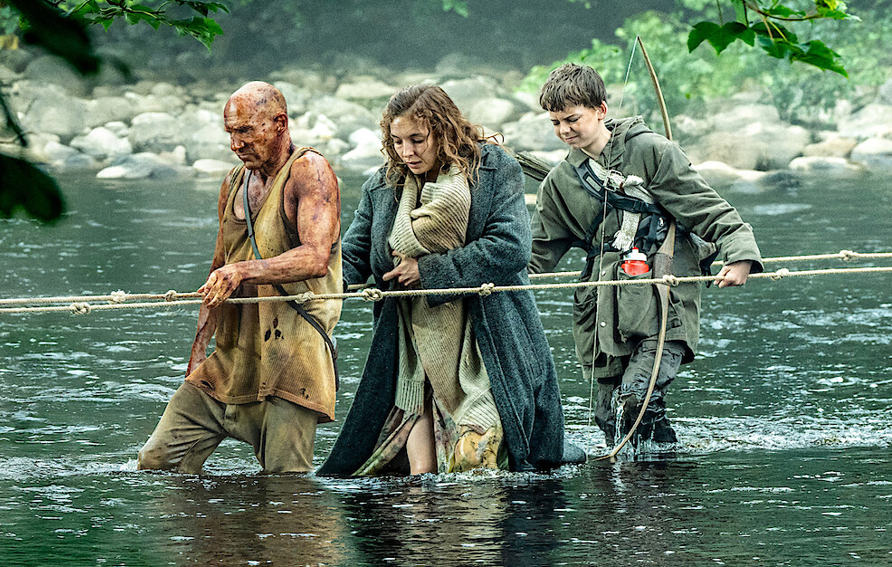
The 28 Days Later franchise has always been about survival, humanity, and the terrifying evolution of the Rage Virus. With 28 Years Later, director Danny Boyle and writer Alex Garland return to expand the lore, taking audiences into a world where the infection hasn’t disappeared — it has changed.
The story continues almost three decades after the outbreak that destroyed much of the UK. This time, we follow young Spike, a boy living with his community on Holy Island, as he faces the dangers of the mainland, encounters mutated infected, and learns devastating truths about life and loss.
Here’s a full breakdown of what happens in 28 Years Later, how the movie ends, and what it means for the future of the franchise.
Life After the Rage Virus
The world has changed dramatically since the Rage Virus outbreak. While most of the UK remains dangerous and uninhabitable, small isolated communities have learned to survive. Holy Island, located in northern England, is one such refuge. Life there isn’t easy, but it is safer than the infected-overrun mainland.
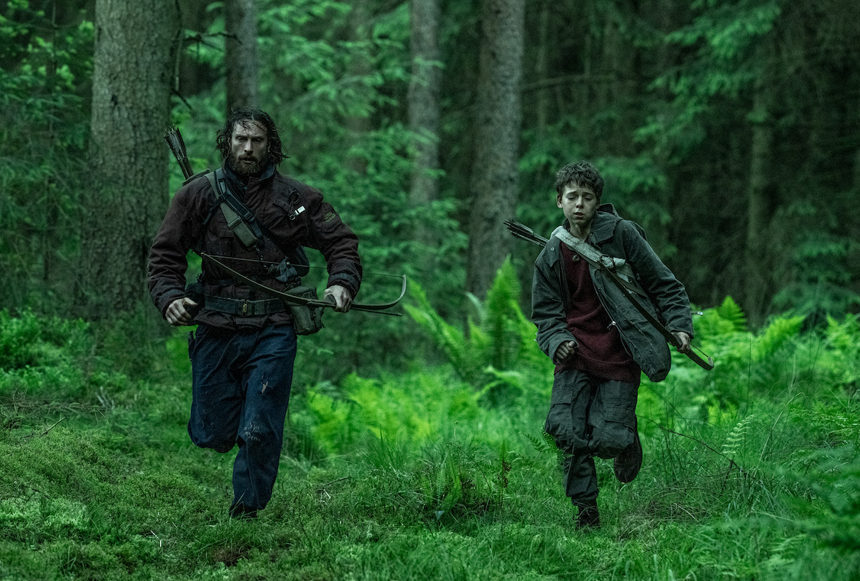
Jamie (Aaron Taylor-Johnson), a strict father, does everything he can to protect his son, Spike. But like many teenagers, Spike is restless, curious, and tempted to explore the world beyond their safe zone. His choices soon set him on a path that changes everything.
Spike’s First Kill — and His First Betrayal
The film opens with Spike’s first kill of an infected on the mainland, a moment that is celebrated by his community. However, his triumph is short-lived. Soon after, Spike discovers that his father is having an affair, a revelation that shakes his faith in the man he looks up to.
The betrayal fuels his desire to break away. Spike learns from his father’s friend Sam that a doctor lives on the mainland who might help Sam’s ill mother, Isla (Jodie Comer). Driven by anger and curiosity, Spike sneaks off with Isla, setting in motion the dangerous events of the film.
Chaos on the Mainland
Spike and Isla’s journey quickly becomes perilous. Armed only with a bow and arrow, Spike kills an infected but attracts a horde in the process. They take shelter in a gas station, but the building is leaking toxic fumes. Just as all seems lost, they are saved by Erik (Edvin Ryding), a Swedish soldier stranded after his squad was killed.
The trio bonds, but danger is never far. When they encounter an infected woman about to give birth, Isla instinctively helps deliver the baby. Erik, however, insists the infant must be killed — it’s likely infected. Before the argument can resolve, a massive Alpha infected appears, killing Erik in brutal fashion.
This sequence introduces two key concepts: the possibility of infected reproduction and the terrifying power of the Alpha mutations.
The Enigmatic Dr. Kelson
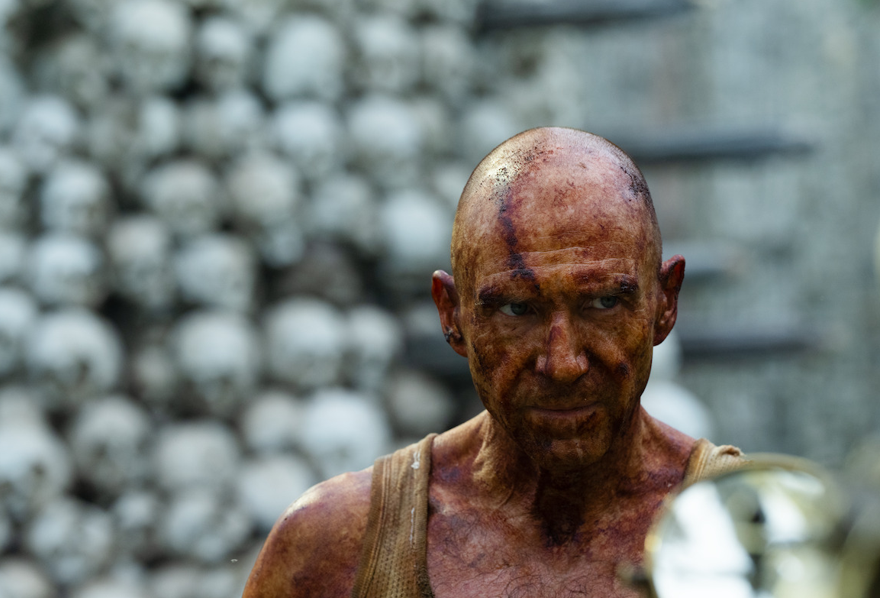
Just when things appear hopeless, Dr. Kelson (Ralph Fiennes) enters the story. Unlike others, Kelson seems to have a strange understanding with the infected. He calms them, communicates with them, and leads Spike and Isla to his home, ominously called the Bone Temple.
Here, surrounded by monuments made of human skulls, Kelson examines Isla and delivers devastating news: she has terminal cancer. Her pain and confusion weren’t from the virus, but from her illness. In a heartbreaking moment, Kelson euthanizes Isla with morphine and adds her skull to the Bone Temple, asking Spike to place it himself.
The Bone Temple serves as both a graveyard and a shrine, symbolizing Kelson’s twisted but oddly respectful relationship with death and the infected.
Spike’s New Responsibility
After Isla’s death, Spike finds himself alone with a newborn baby. Kelson suggests he return to Holy Island, and Spike reluctantly does. He leaves the child, now named Isla after his mother, in the community’s care. However, he doesn’t stay.
In a letter to his father, Spike explains that he needs to find his own path and will return when the time is right. His choice mirrors the broader theme of the film: children growing up in a broken world must forge their own survival.
Sir Jimmy Crystal and the Jimmies
Nearly a month later — exactly 28 days — Spike’s journey takes another bizarre turn. While fighting off a pack of infected, he is rescued by a strange group known as the Jimmies. They wear matching tracksuits, blonde wigs, and chunky necklaces with upside-down crosses.
At their head is Sir Jimmy Crystal (Jack O’Connell), a cult-like leader with a haunting backstory. As a child, Jimmy watched his entire family die in the early days of the Rage Virus. The trauma shaped him into the eccentric leader we see now, obsessed with nostalgia, television, and bizarre rituals.
The Jimmies’ presence adds a surreal, almost satirical layer to the grim world of 28 Years Later. Their appearance suggests that even in a world destroyed by infection, humans can be just as unpredictable and dangerous as the monsters.
What Are Alphas?
One of the most chilling revelations in the movie is the existence of Alphas — mutated infected who are stronger, faster, and far more intelligent than the standard infected.
Sam explains earlier in the film that, in some cases, the Rage Virus acts like steroids, amplifying strength and aggression. The Alpha encountered in the gas station is living proof, and its ability to overpower even armed survivors demonstrates how the infected continue to evolve.
The fact that infected can now reproduce — and mutate — hints that the virus is not just surviving, but thriving.
Ending Breakdown
The film closes with Spike being taken in by Sir Jimmy and the Jimmies. It’s unclear whether they will protect him or manipulate him, but his choice to leave his community behind suggests his story is far from over.
The ending sets up the sequel, 28 Years Later: The Bone Temple, which is already slated for release in 2026. With Spike caught between mutated infected, cult-like humans, and his own grief, the next chapter promises to explore darker, stranger, and more emotional territory than ever before.
Conclusion
28 Years Later balances emotional storytelling with terrifying new horrors. From the deeply personal tragedy of Isla’s death to the surreal rise of Sir Jimmy Crystal, the film expands the 28 Days Later universe in shocking ways. Spike’s journey is both heartbreaking and hopeful, making him the emotional core of this new chapter.
The ending leaves fans with more questions than answers, but one thing is clear: the Rage Virus has evolved, and humanity must evolve too — or face extinction.