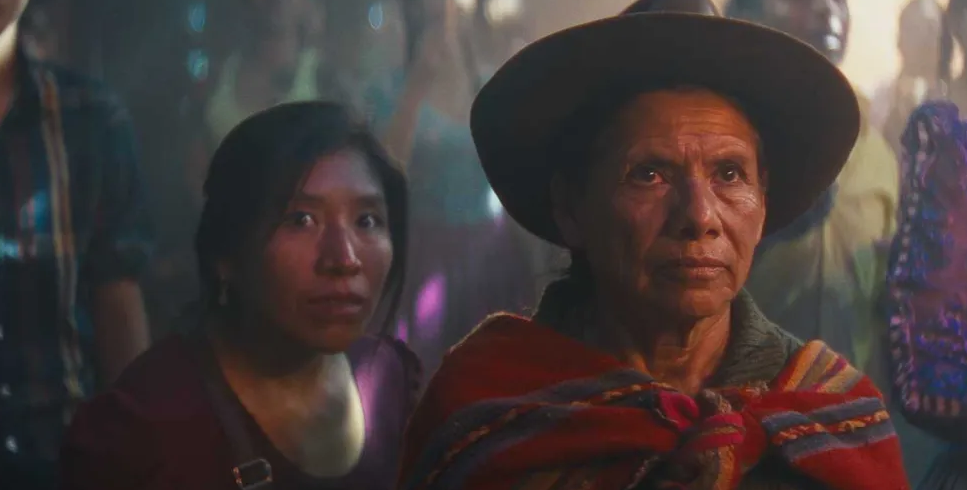
One of the most talked-about films to emerge from the recent Toronto International Film Festival is the Bolivian drama The Condor Daughter (La Hija del Cóndor). Directed, written, and produced by Álvaro Olmos Torrico, the film offers an intimate look at cultural identity, generational change, and the power of music, all set against the breathtaking backdrop of the Bolivian Andes.
After earning warm reception at its September 9 world premiere, the film is already being recognized as one of the most exciting Latin American titles of the year. Its trailer has now been released, giving audiences around the world a glimpse into a story that blends ancestral traditions with the struggles of a new generation.
A Story of Roots and Aspirations
At the heart of The Condor Daughter is Clara, a 16-year-old from the Totorani Quechua community. She lives with her adoptive mother, Ana, a midwife whose work is deeply tied to the traditions of Pachamama — the Quechua earth mother. Clara assists her mother during births, learning ancestral songs and rituals meant to bring new life safely into the world.
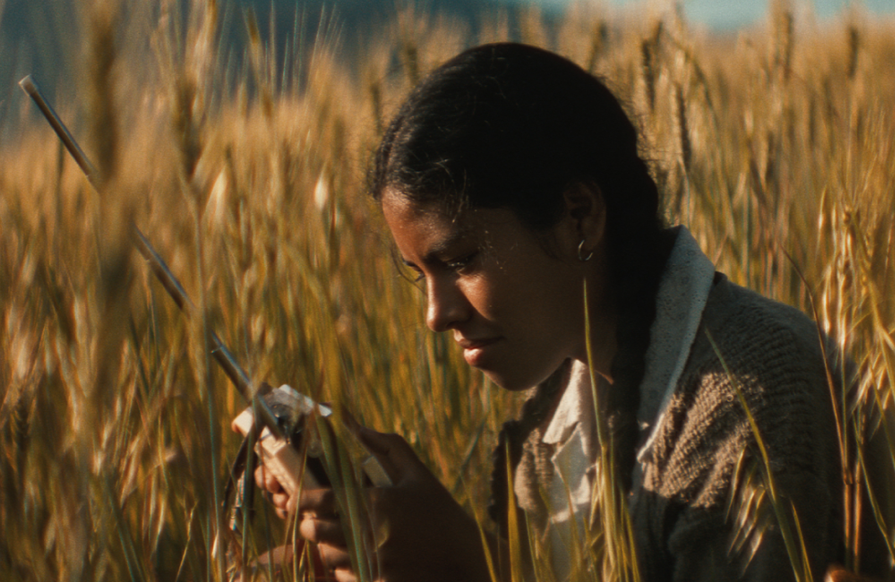
But Clara is also a teenager who dreams beyond the boundaries of her village. A radio connects her to the sounds of chincha music — a vibrant mix of cumbia and Peruvian rock that is wildly popular in the nearby city of Cochabamba. When Clara’s best friend tells her about meeting a boy from the city, the young girl begins to imagine a future shaped more by music and modern culture than by midwifery and rural traditions.
Her decision to leave the village in pursuit of becoming a chincha singer sets off the central conflict of the film. As Clara chases her passion, her mother Ana is left behind, fearing that the village’s hardships — dying animals, drying crops, and an air of abandonment — are connected to her daughter’s departure.
A Coming-of-Age Tale with Cultural Depth
On the surface, The Condor Daughter is a coming-of-age story about a teenager chasing her dream. But underneath, it is a meditation on deeper themes:
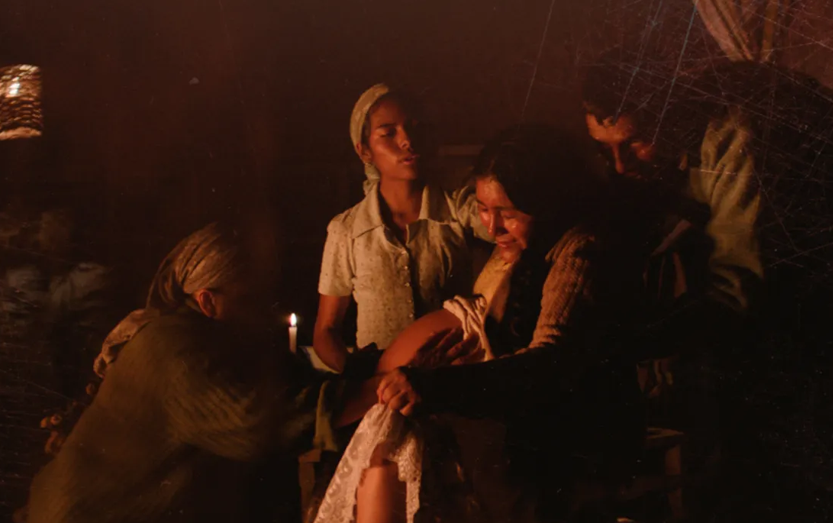
- Tradition vs. Modernity: Clara’s journey represents the tension between holding onto ancestral traditions and embracing modern opportunities. While she sees music as her path forward, Ana clings to the customs of her people, especially midwifery, which is increasingly disappearing as modern hospitals replace traditional practices.
- Motherhood and Pachamama: For the Quechua, motherhood is sacred and directly connected to the earth. As director Álvaro Olmos Torrico explains, midwives are considered messengers of Pachamama — guardians of life who preserve ancestral continuity. This philosophy is central to Ana’s identity, but it becomes a source of conflict when Clara seeks independence.
- The Disappearing Village: The story also reflects a broader social reality — rural depopulation. As young people migrate to cities in search of opportunities, villages become emptier, and ancient ways of life risk fading away.
By weaving these layers into Clara’s personal journey, the film manages to speak to both local realities and universal themes of identity, longing, and generational conflict.
The Visual Poetry of the Andes
The trailer for The Condor Daughter showcases stunning cinematography that plays a crucial role in storytelling. From expansive shots of valleys cascading into the distance to dimly lit interiors of Clara’s modest home, the imagery contrasts the vastness of the Andes with the intimacy of family struggles.
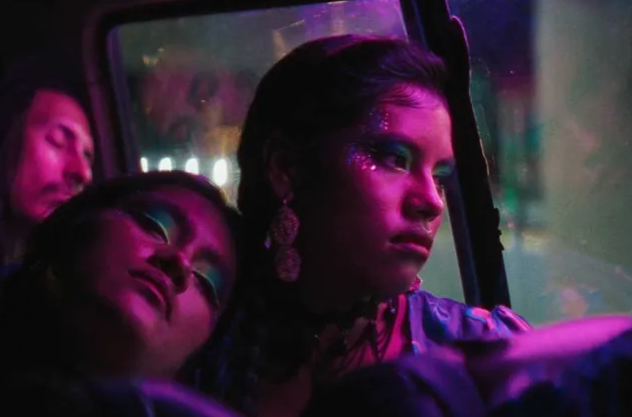
Equally powerful are the shots of Cochabamba, a city whose bright lights and bustling rhythms represent both opportunity and alienation for Clara and Ana. While Clara views it as a place where dreams can be realized, Ana sees it as a world disconnected from her traditions. This visual duality mirrors the emotional divide between mother and daughter.
The Filmmaker’s Vision
Álvaro Olmos Torrico, the mind behind The Condor Daughter, is a well-known figure in Bolivian cinema. With this project, he sought to tell a story that reflects the intersection of tradition and change while honoring the resilience of indigenous communities.
In his own words, Olmos Torrico explains:
“In indigenous communities, the earth is a woman — Pachamama — who provides and cares for us. Midwives are the messengers of the Pacha. For the Quechua, motherhood is deeply tied to the earth, time, and the agricultural cycle. These traditions persist despite adversity, and this film seeks to capture that endurance.”
This philosophy is evident throughout the film, where every birth, ritual, and decision made by the characters carries symbolic weight.
A Film with International Potential
Following its positive debut in Toronto, The Condor Daughter has already attracted international interest. Spain’s Bendita Film Sales is representing the film globally, and discussions are underway to bring it to audiences in North America, France, and Spain.
The film is also being showcased at the prestigious San Sebastián Film Festival, where it will continue to build momentum. Bendita Film Sales is simultaneously promoting other standout films in its lineup, such as Dance of the Living by José Alayón, The Ivy (Hiedra) by Ana Cristina Barragán, and The Portuguese House by Avelina Prat.
This growing international presence signals that The Condor Daughter could become one of Bolivia’s most important cinematic exports in recent years, elevating indigenous voices and stories to a broader stage.
Why The Condor Daughter Matters
The significance of The Condor Daughter lies not only in its compelling story but also in its cultural importance. At a time when many indigenous communities are fighting to preserve traditions amid globalization, the film sheds light on the delicate balance between honoring the past and embracing the future.
It also highlights the voices of women — mothers, daughters, and midwives — as central to cultural survival. Clara’s story, though personal, reflects a universal struggle: the desire to define one’s own path while remaining tied to one’s roots.
Conclusion
The Condor Daughter is more than just a coming-of-age tale set in the Andes. It is a poetic exploration of family, tradition, and the choices that shape identity. With its breathtaking visuals, heartfelt performances, and cultural depth, the film has the potential to resonate far beyond Bolivia, offering audiences worldwide a rare and intimate look at Quechua traditions in the modern age.
As international audiences get their first glimpse through its newly released trailer, The Condor Daughter promises to be one of the standout global films of 2025.