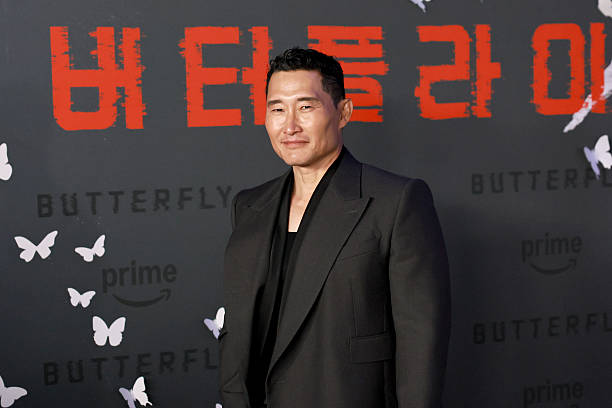
In the ongoing conversation about diversity, inclusivity, and authentic representation in Hollywood, actor Daniel Dae Kim has added his voice with some powerful insights. Known for his roles in Lost, Hawaii Five-0, and his recent projects as both an actor and producer, Kim has often been at the forefront of discussions about Asian representation in film and television.
Recently, in a thoughtful conversation with American Masters PBS, Kim opened up about what he believes is an “overcorrection” when it comes to nationality-specific casting for Asian and Asian American roles. While Hollywood has made strides in representation, Kim argues that the industry may be unintentionally creating new barriers for Asian actors by overly restricting casting choices to specific nationalities.
The Issue of Over-Specificity in Casting
Kim explained that in recent years, casting directors have increasingly emphasized matching the nationality of an Asian character to the actor. For example, if a role calls for a Korean American, the search is often limited to only Korean American actors, excluding equally talented performers of Chinese, Japanese, or other Asian backgrounds.

“Very often, when we’re cast, if the role calls for a Korean American, they will not see a Japanese American or Chinese American or any other Asian nationality,” Kim said. He pointed out that many of these roles are not written with cultural specificity in mind. Instead, they are often created by writers who are not Asian themselves, which means the character’s exact nationality may not be essential to the story.
Kim believes that such limitations can be unnecessary. He emphasized that the Asian American experience is broader than a single cultural identity, and in many cases, actors from different Asian backgrounds can authentically bring these characters to life.
When Nationality Does Matter
Despite his concerns about overcorrection, Kim clarified that nationality-specific casting is not always a bad thing. There are situations where it is necessary and respectful. For example, when a story revolves around real historical figures, authentic language use, or deeply rooted cultural traditions, then casting someone of the same background makes sense.
But when a role is meant to capture the shared Asian American experience—such as themes of identity, belonging, or alienation—Kim believes actors from any Asian background should be considered.
“Anytime there’s a role that focuses on the American experience of being Asian — that’s something that no matter if you’re Korean, Chinese, Indian, Malaysian — we all share in common as Asian Americans,” he explained. “We all know what it feels like to be othered. That’s a common experience. So to me, the nationality isn’t as important.”
A Double Standard in Hollywood?
One of Kim’s most striking observations is that Asian American actors seem to face stricter nationality-based scrutiny compared to performers from other backgrounds.
For instance, he noted that African American actors are rarely asked to specify their ancestral country when auditioning for American roles. Similarly, non-American actors from countries like England or Australia frequently play iconic American superheroes without anyone questioning their authenticity.
“How many of our superheroes who are playing American are from other countries like Australia and England?” Kim asked. The list is long — Andrew Garfield, Tom Holland, Christian Bale, Robert Pattinson, Henry Cavill, Benedict Cumberbatch, and many more. Yet, their casting has rarely been met with controversy.
So why, Kim questions, are Asian American actors held to a different, more limiting standard?
Practicing What He Preaches: Casting Choices in Butterfly
Kim is not just speaking theoretically—he has already put his philosophy into practice. In his upcoming spy thriller series Butterfly, Kim made a deliberate decision to cast Japanese American actress Reina Hardesty as his Korean American character’s daughter.
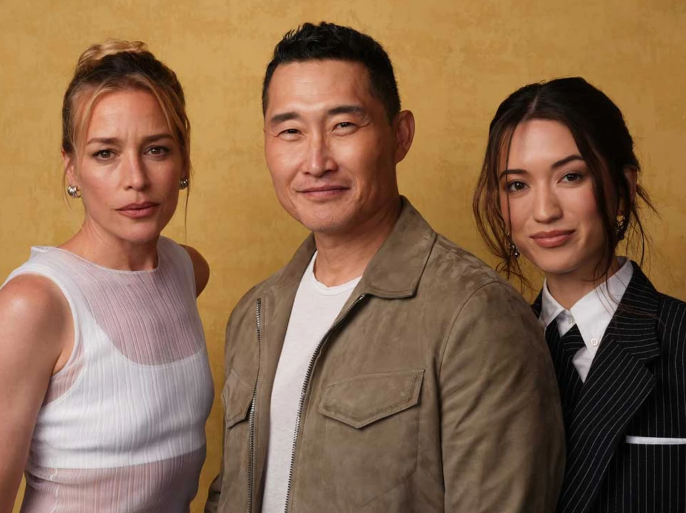
Hardesty, who is of mixed Japanese heritage, was chosen because she could authentically portray the emotional journey of alienation and identity in America, which is the core of her character’s arc.
“You don’t have to be Korean American to feel that way,” Kim explained, highlighting how the essence of the character’s struggle transcends specific nationality.
Breaking Barriers Beyond Casting
Kim’s comments come at a particularly significant moment in his career. Earlier this year, he was nominated for a Tony Award for Best Leading Actor in a Play for his performance in Yellow Face. Remarkably, he is the first Asian American ever to be nominated in this category.
Reflecting on this milestone, Kim called it a “watershed moment” for the Asian American community. “Now, it’s an even more important time to speak truth to power and talk about the ways that art can say things that are beyond a textbook or a classroom,” he said. “We can entertain, but also create understanding through the work that we do. And that’s why we as artists are so powerful.”
Why Kim’s Perspective Matters
The conversation around representation in Hollywood is often complex, with valid concerns on all sides. While authenticity and cultural respect are important, Kim’s words are a reminder that representation should not become exclusionary.
At its core, storytelling is about shared human experiences. Over-focusing on hyper-specific nationalities risks reinforcing divisions rather than building inclusivity. By advocating for a more flexible approach, Kim hopes to create more opportunities for Asian actors and ensure that the richness of the Asian American experience is represented in all its diversity.
Conclusion
Daniel Dae Kim’s insights highlight a critical tension in Hollywood today: the balance between authenticity and accessibility in casting. His call for a more nuanced approach is not about erasing cultural differences but about ensuring that talented actors are not boxed into unnecessary limitations.
As audiences continue to demand authentic representation, it will be important for casting directors, writers, and producers to reflect on Kim’s words. Perhaps the future of Hollywood lies not in overcorrecting past mistakes, but in finding a balance where stories feel true, actors have opportunities, and audiences see themselves represented in meaningful ways.