
Filmmaker Taika Waititi has never been afraid to express his opinions, and his latest comments have once again sparked a conversation about the relationship between film critics, audiences, and filmmakers. The director of Klara and the Sun has responded strongly to the negative reviews surrounding his latest movie, describing critics who disliked the film as “sad lost souls” who were unable to achieve their own artistic ambitions.
Waititi shared his reaction on Instagram over Halloween weekend after highlighting the noticeable difference between the film’s audience and critics scores on Rotten Tomatoes. While professional reviewers gave the movie a disappointing rating, audiences appeared considerably more enthusiastic about the science-fiction drama.
The film’s promotional poster showed an audience score of 78 percent, compared with a critics score of just 28 percent. The contrast became the focus of Waititi’s post, in which he made it clear that audience reactions matter more to him than professional reviews.
His comments quickly attracted attention, adding another layer of discussion to a movie that explores artificial intelligence, human relationships, technology, and the meaning of emotional connection.
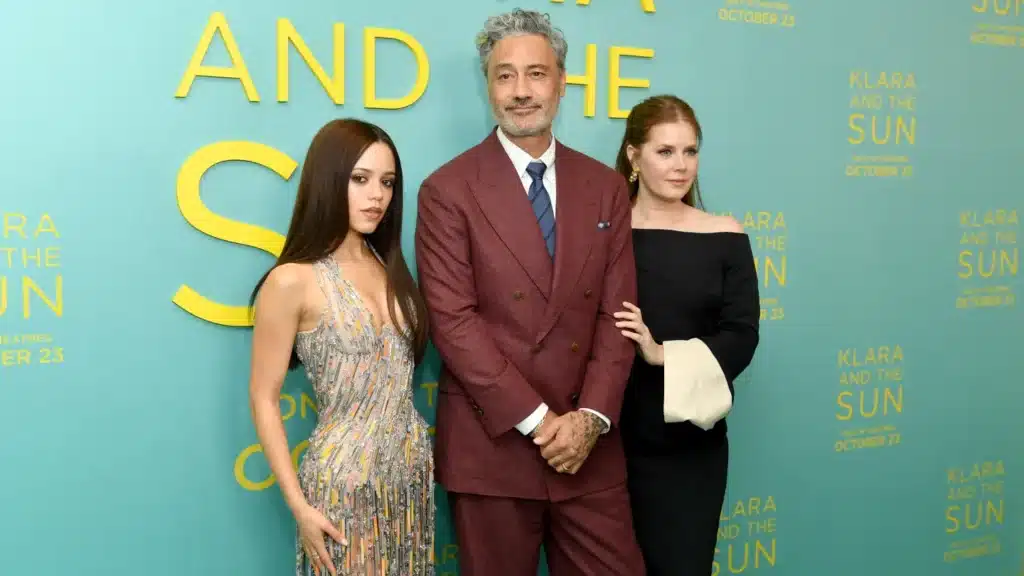
Taika Waititi Delivers a Blunt Response to Negative Reviews
Waititi took to Instagram on Saturday to share the Klara and the Sun poster, drawing attention to the difference between the audience and critics ratings.
In his caption, the filmmaker explained that he had not regularly read reviews directed at him or his fellow filmmakers for almost 15 years. Instead, he said he preferred to pay attention to the people who actually watch the movies.
He then delivered a pointed Halloween message aimed at critics who had given his latest film negative reviews.
Waititi described them as “sad lost souls” who, in his view, had failed to achieve their dreams of becoming artists and had consequently become critics. He also brought up his earlier film Jojo Rabbit, suggesting that some of the same critics who disliked that movie were now expressing similar opinions about Klara and the Sun.
His post ended with a series of dismissive words, calling the critics irrelevant, out of touch, and obsolete.
The comments reflect Waititi’s familiar outspoken personality. The filmmaker has built a reputation for combining humour, unconventional storytelling, and a willingness to challenge expectations. However, his latest remarks have also raised questions about how much importance filmmakers should place on professional criticism.
Film reviews have traditionally played an influential role in shaping public conversations around new releases. Critics analyse performances, direction, storytelling, cinematography, editing, and other creative elements. Their opinions can influence the way audiences approach a movie, although they do not always reflect the reactions of ordinary viewers.
In the case of Klara and the Sun, the difference between the two Rotten Tomatoes scores has provided Waititi with an opportunity to argue that audience appreciation should not be dismissed simply because professional reviewers are unimpressed.
Audience Scores and Critics’ Reviews Tell Different Stories
The difference between the critics and audience ratings is one of the most interesting aspects of the film’s early reception.
According to the figures highlighted in Waititi’s Instagram post, Klara and the Sun received a 28 percent critics score and a significantly higher audience score of 78 percent.
These numbers suggest that general viewers and professional reviewers have responded differently to the film.
However, Rotten Tomatoes scores should be understood carefully. The critics score represents the proportion of collected reviews classified as positive, rather than a direct average of how many points reviewers awarded the film. The audience score is calculated separately using audience ratings.
A higher audience score does not necessarily mean that every viewer loved the movie, just as a low critics score does not mean that every professional reviewer disliked it.
Nevertheless, the gap can become an important talking point, particularly when a filmmaker publicly challenges the critical response.
Waititi’s comments also bring back memories of the reaction to Jojo Rabbit, his 2019 satirical comedy-drama. That film received considerable attention for its unusual approach to the subject of Nazi Germany, using humour and an imaginary version of Adolf Hitler to explore the experiences of a young boy growing up during the Second World War.
The movie generated both praise and debate, eventually winning Waititi an Academy Award for Best Adapted Screenplay.
By mentioning Jojo Rabbit, Waititi appeared to suggest that negative critical reactions do not necessarily prevent a film from finding an audience or achieving lasting recognition.
What Is Klara and the Sun About?
Klara and the Sun is based on the 2021 novel of the same name by Nobel Prize-winning author Kazuo Ishiguro.
The story takes place in a dystopian future where artificial intelligence and advanced technology have become part of everyday life. One of the central developments in this world is the creation of artificial companions designed to provide friendship and emotional support to human beings.
The story follows Klara, an Artificial Friend, or AF, who observes the world around her with remarkable curiosity. Unlike an ordinary machine, Klara develops an unusual understanding of human behaviour, emotions, relationships, and the world outside her immediate surroundings.
Her life changes when she is selected to become the companion of Josie, a young girl dealing with an illness.
As Klara enters Josie’s household, she attempts to understand her new owner and develop a meaningful relationship with her. She also observes the complicated dynamics between Josie and the people around her, particularly the emotional concerns of a family facing uncertainty about the future.
At the heart of the story is a fascinating question: Can a machine genuinely understand love, loyalty, and human suffering?
The novel explores these ideas through Klara’s perspective, allowing readers to examine human behaviour through the eyes of an artificial being.
The film adaptation brings this unusual story to the screen, combining science fiction with emotional drama. Rather than focusing entirely on technological spectacle, the story examines the personal consequences of a world in which artificial intelligence becomes increasingly involved in human relationships.
Jenna Ortega and Amy Adams Lead the Cast
The film features Jenna Ortega and Amy Adams in leading roles.
Ortega has become one of the most recognisable young performers in Hollywood, particularly following her success in projects such as Wednesday and the Scream franchise.
Her performances have helped establish her as an actor capable of moving between horror, comedy, mystery, and emotional drama. Her involvement in Klara and the Sun brings additional attention from audiences familiar with her previous work.
Amy Adams, meanwhile, is an established Hollywood performer known for her versatility and ability to portray emotionally complex characters.
Her filmography includes Arrival, Enchanted, American Hustle, The Fighter, and Nocturnal Animals. She has received multiple Academy Award nominations throughout her career.
The combination of Ortega and Adams gives the film a cast with experience across different genres and generations.
Their involvement is particularly relevant to a story that depends on emotional relationships rather than action-heavy science-fiction sequences.
The film’s central themes also offer both performers opportunities to explore the complicated feelings that emerge when technology becomes part of family life.
Taika Waititi Discusses Artificial Intelligence in Hollywood
Beyond the controversy surrounding the reviews, Waititi has also discussed one of the film’s most relevant themes: artificial intelligence.
At the movie’s New York premiere earlier in the month, the director spoke about the growing influence of AI across the entertainment industry.
Artificial intelligence has become an increasingly important subject in Hollywood. Developments in generative AI, digital production, visual effects, voice technology, and automated creative tools have created new possibilities while also raising concerns among artists and industry professionals.
Waititi acknowledged that AI would probably become part of the entertainment business in some form.
However, he made an important distinction between using artificial intelligence as a tool and allowing it to replace human creativity.
He explained that he was comfortable with people using AI to support their work, but he did not want technology to replace the human beings responsible for making films.
His position reflects a debate taking place across the global entertainment industry.
Filmmakers, actors, writers, editors, animators, and visual-effects artists are considering how AI could change the way movies and television programmes are produced.
Some see the technology as an opportunity to improve efficiency, experiment with new visual ideas, and make certain creative processes more accessible.
Others worry that excessive dependence on AI could reduce employment opportunities, weaken artistic originality, and create questions about ownership and consent.
Waititi’s comments suggest that he sees a future in which technology and human creativity can work together, provided people remain at the centre of the creative process.
Why Artificial Intelligence Is Central to the Film’s Story
The subject of AI is not simply a promotional talking point for Klara and the Sun. It is fundamental to the story itself.
Klara is an artificial companion created to fulfil an emotional role in a human household. Her purpose is connected to companionship, but the story gradually raises deeper questions about whether a machine can understand the feelings it is designed to respond to.
This is particularly interesting because modern AI systems are becoming increasingly capable of communicating with people in natural and convincing ways.
They can answer questions, generate images, assist with writing, analyse information, and participate in conversations. As these technologies develop, the distinction between artificial interaction and genuine human connection is becoming an important subject of public discussion.
However, the ability to imitate emotional language is not the same as experiencing emotions.
Klara and the Sun explores this complicated territory through a fictional world in which artificial companions are integrated into everyday life.
The story encourages viewers to consider whether technology can provide the emotional support people need and whether human relationships can ever be fully replaced by artificial alternatives.
These questions make the film particularly relevant at a time when AI is becoming a major part of conversations about education, healthcare, entertainment, business, and personal relationships.
Klara and the Sun Faces a Difficult Box Office Start
Despite the attention surrounding Waititi’s comments, the film has faced a challenging beginning at the North American box office.
Klara and the Sun opened in approximately 880 theatres across North America and reportedly earned an estimated $725,000 during its opening weekend.
The film debuted outside the top 10, suggesting that it struggled to compete with other releases attracting larger audiences.
At the time of the reported figures, its worldwide box office total stood at approximately $1.7 million.
These early numbers indicate a modest theatrical start, although box office performance can change as a film expands into additional markets or benefits from word-of-mouth recommendations.
Several factors can influence the commercial performance of a movie, including its marketing campaign, release timing, theatre availability, competition, audience awareness, and the type of story being presented.
A thoughtful science-fiction drama may also attract a different audience from a large-scale action film or an established franchise.
The film’s future performance will depend on whether it can find viewers interested in its emotional themes and its exploration of artificial intelligence.
It is also worth remembering that box office earnings represent only one measure of a film’s success. Streaming distribution, international releases, long-term audience interest, and critical reassessment can all influence a movie’s eventual cultural impact.
Taika Waititi Continues to Challenge Expectations
Waititi has established a distinctive identity in modern filmmaking through his unusual combination of humour, emotion, and unconventional storytelling.
His work includes What We Do in the Shadows, Hunt for the Wilderpeople, Thor: Ragnarok, and Jojo Rabbit.
Each project demonstrates a willingness to approach familiar genres from unexpected angles.
With Thor: Ragnarok, he brought a colourful comedic sensibility to the Marvel superhero universe. With Jojo Rabbit, he used satire to tell a story about childhood, prejudice, and the consequences of extremist ideology.
Klara and the Sun represents a different creative direction, moving towards a quieter and more philosophical examination of technology and human relationships.
The film’s reception may not have matched the expectations of professional critics, but Waititi’s response demonstrates that he is not prepared to let negative reviews define the experience.
His comments have also created additional attention for a movie that might otherwise have received a relatively quiet theatrical release.
Whether audiences ultimately agree with the director or the critics remains a matter of personal taste.
Final Thoughts: Can Audience Appreciation Outweigh Critical Reviews?
The controversy surrounding Klara and the Sun highlights a familiar divide in the entertainment industry.
Critics and audiences do not always share the same opinions, and a film that receives negative professional reviews can still connect with viewers.
Taika Waititi’s reaction makes that difference impossible to ignore. His decision to publicly criticise reviewers has added another discussion to the film’s release, while his comments about artificial intelligence have brought attention to the deeper ideas behind the story.
At its core, Klara and the Sun is about companionship, emotional connection, technology, and the limits of artificial intelligence.
It asks whether a machine can understand the complicated nature of human relationships and whether technological progress can ever reproduce the emotional experiences that make people human.
Those questions are becoming increasingly relevant as AI continues to develop.
Ultimately, viewers will decide whether Waititi’s latest film deserves a place among his most memorable projects. But one thing is certain: the disagreement between its audience and critics scores has given the movie an additional spotlight, and the director has made his position on negative reviews very clear.