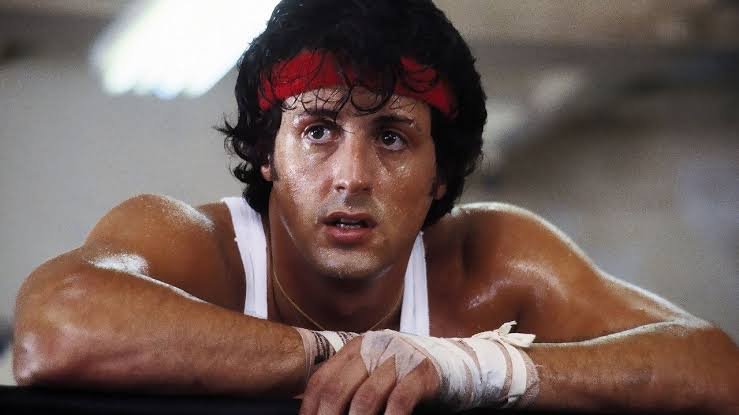
Winning the Academy Award for Best Picture is one of the biggest achievements a filmmaker can experience. For Sylvester Stallone, however, the night Rocky took home Hollywood’s top prize in 1977 was not filled entirely with celebration.
Stallone was only 30 years old when Rocky became an Oscar-winning phenomenon. He had written the screenplay, played the title character and watched his unlikely underdog story become one of the most celebrated films of its generation. The movie received 10 Academy Award nominations and ultimately won three, including Best Picture.
Yet when the winner was announced, Stallone says his first reaction was not excitement.
Instead, he felt confused, overwhelmed and, surprisingly, sad.
Decades later, the actor and filmmaker has opened up about what that extraordinary night meant to him—and why the absence of his parents continues to affect him.
Stallone Never Expected Rocky to Win Best Picture
When Rocky arrived in theaters in 1976, there was little reason to assume that the film would eventually become an Oscar champion.
The story followed Rocky Balboa, a small-time Philadelphia boxer who receives an extraordinary opportunity to fight heavyweight champion Apollo Creed. Rather than simply being a boxing movie, Rocky became a story about perseverance, self-respect, hope and the possibility of changing one’s life.
The film connected with audiences around the world and eventually became a major cultural phenomenon.
But Stallone says he did not expect the movie to defeat some of the heavyweight competition at the Academy Awards.
Among the films competing for Best Picture were Taxi Driver, Network and All the President’s Men—movies that were widely regarded as major dramatic achievements.
Stallone recalled sitting at the ceremony convinced that Rocky would not win.
He even remembered other writers approaching him and confidently telling him that he would lose.
So when the Best Picture announcement finally came, Stallone was not mentally prepared for what happened next.
“And the Winner Is Rocky”
According to Stallone, he was sitting in the audience believing that the result was already decided.
Then the presenter announced the winner.
When the words “and the winner is Rocky” were spoken, Stallone initially thought something had gone wrong.
“Come on. This is a joke,” he remembered thinking.
The moment was almost surreal.
The audience erupted into applause, but Stallone said he found himself struggling to process the experience.
He remembered hearing a buzzing sound and feeling as though he wanted to disappear into his seat.
Rather than immediately experiencing the overwhelming happiness that viewers might expect from such a moment, Stallone felt something much more complicated.
He later described the feeling as sadness.
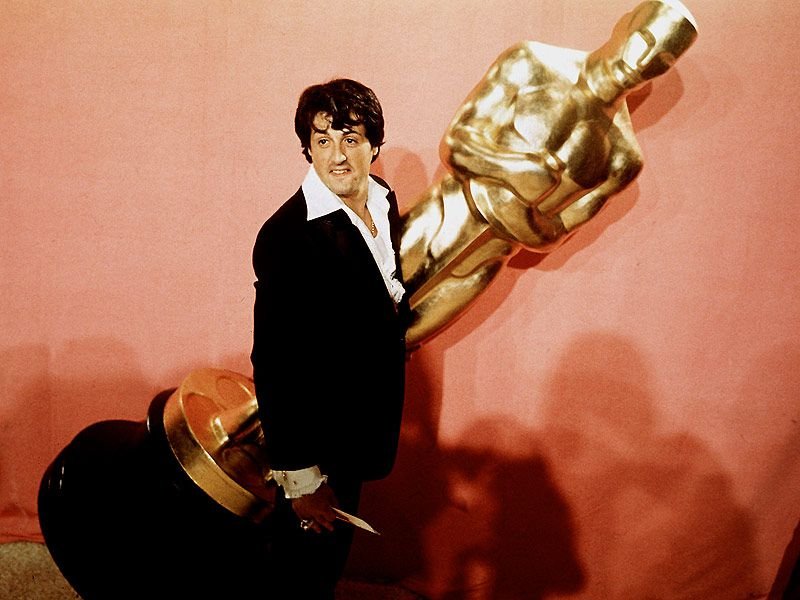
Why Winning Made Stallone Feel Sad
Stallone’s reaction was connected to something deeper than the Oscar itself.
At that moment in his life, he had imagined that reaching the pinnacle of Hollywood success would feel like a celebration shared with the people closest to him.
Instead, the achievement highlighted what was missing.
Stallone explained that he wanted the Oscar night to feel like a family celebration—a moment when he could look around and think that everyone had finally made it together.
But that wasn’t how the night unfolded.
“I wanted it to be a festive thing, family thing,” Stallone recalled.
He eventually came to understand that his relationship with audiences would become an important source of emotional connection.
He described the people watching his films in theaters as the people who would ultimately give him a unique form of love.
That realization became part of how he understood his career.
For Stallone, the Oscar represented enormous professional success, but it also exposed a personal wound.
The Pain of His Parents Missing the Oscars
One of the most painful aspects of that night was the absence of Stallone’s parents.
His family, including his parents, did not attend the Academy Awards ceremony with him.
For someone who had just achieved something extraordinary, their absence left a lasting emotional impact.
Stallone has discussed this subject more than once over the years. In a later conversation, he acknowledged that he still struggles to fully come to terms with the fact that the people he wanted beside him were not there.
He described the experience as both a “volcanic moment” and an incredibly sad one.
The contradiction is striking.
On one hand, Stallone was standing at one of the most important moments of his professional life. On the other, he was confronted with a painful realization about his family relationships.
For Stallone, those two emotions became inseparable.
“I Still Walk Around With It”
Stallone has been remarkably candid about how deeply the experience affected him.
Reflecting on his parents’ absence, he explained that some childhood and family experiences remain with a person even after decades have passed.
He compared children to soft clay, suggesting that the way parents treat their children can leave lasting marks.
His message was directed toward parents who may not realize how deeply their actions can affect their children.
Stallone acknowledged that he still carries the emotional impact of those experiences.
He said he wishes he could simply leave them behind, but they remain part of him.
That admission provides an important contrast to the public image of Stallone.
For much of his career, he has been associated with physically powerful characters such as Rocky Balboa and John Rambo—figures who represent toughness, determination and resilience.
But his reflections on his family reveal a much more vulnerable side.
Rocky Was More Than Just a Movie
The emotional significance of Rocky becomes even clearer when considering what the film meant for Stallone’s career.
Before Rocky, Stallone was struggling to establish himself in Hollywood.
He was determined to write a screenplay that would give him an opportunity to play the lead rather than simply accept whatever acting roles were available.
That determination became the foundation for Rocky.
The movie transformed him from a struggling actor and writer into an international star.
The film earned 10 Academy Award nominations and won three Oscars.
Its Best Picture victory was particularly significant because the movie’s success was built around an ordinary man being given one extraordinary chance.
Rocky’s journey mirrored aspects of Stallone’s own career.
Both were outsiders.
Both were underestimated.
And both were determined to keep fighting.
Stallone’s Relationship With His Father
Stallone’s complicated relationship with his parents has also become part of the story surrounding Rocky.
In his memoir The Steps, the actor writes about his relationship with his family and particularly his father.
One story involves his father appearing on the set of Rocky and demanding a role in the movie, even though the casting had already been completed.
Stallone ultimately made a last-minute casting adjustment.
However, the decision did not result in a peaceful day on set.
According to Stallone’s account, the long filming day eventually ended in a heated confrontation between father and son.
The story provides another glimpse into the complicated family dynamics that existed behind one of Hollywood’s most famous success stories.
While audiences saw Stallone’s rise as an inspiring Hollywood fairytale, his personal journey was considerably more complicated.
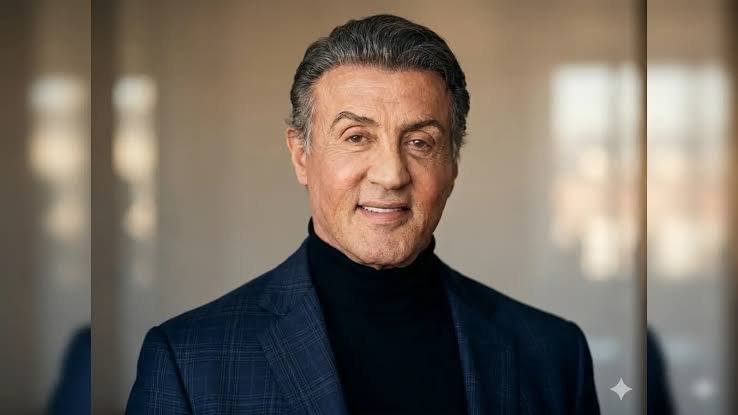
The Irony of Rocky’s Message
Perhaps the most powerful irony is that Rocky itself is a movie about dealing with disappointment.
Rocky Balboa doesn’t enter the ring because he expects to become world champion.
He understands that Apollo Creed is the favorite.
What Rocky wants is the opportunity to prove to himself that he can go the distance.
That philosophy became one of the film’s most enduring messages.
Stallone’s own Oscar experience seems to reflect a similar idea.
Winning Best Picture should have represented the ultimate validation. Instead, it reminded him that professional success cannot automatically repair personal relationships.
An Oscar can recognize someone’s work.
It cannot erase childhood memories.
It cannot change family history.
And it cannot guarantee happiness.
Why Stallone’s Story Still Resonates
Stallone’s reflections are particularly powerful because Rocky remains one of the most inspirational movies in modern cinema.
Millions of viewers have connected with Rocky because he is not presented as someone who has everything figured out.
He is struggling financially.
He is uncertain about his future.
He feels overlooked.
But he keeps moving forward.
Stallone’s real-life story contains some of those same themes.
His professional career reached incredible heights, but personal success did not eliminate emotional struggles.
That contrast makes his comments about the 1977 Oscars especially revealing.
The night gave Stallone worldwide recognition, but it also forced him to confront the complicated relationship between achievement and happiness.
Four Decades Later, the Oscar Still Means Something
More than four decades after Rocky won Best Picture, Stallone remains one of Hollywood’s most recognizable stars.
The Rocky character became one of the defining roles of his career, returning in multiple sequels and later inspiring the Creed franchise.
But the original 1977 Oscar remains unique.
It was the moment when a movie that began as an unlikely story became Hollywood’s biggest winner.
For Stallone, however, the memory is not simply about holding an Oscar.
It is about what he expected the moment to mean, who he wanted beside him and what he realized about his life when the applause began.
That is why his recollection of the night feels so different from the typical Hollywood victory story.
He didn’t simply win.
He discovered that success could bring complicated emotions along with it.
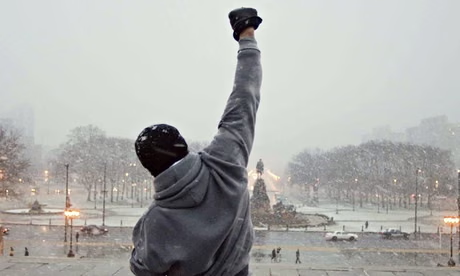
A Different Kind of Hollywood Victory
Today, Rocky is remembered as a cinematic classic and one of the most influential sports dramas ever made.
Its famous training sequences, Philadelphia setting, relationship between Rocky and Adrian, and climactic fight have become part of popular culture.
But behind the iconic character was a young Stallone experiencing one of the biggest moments of his life while simultaneously dealing with personal pain.
His story is a reminder that public victories and private emotions do not always match.
A person can be surrounded by applause and still feel alone.
A career can reach its highest point while personal relationships remain complicated.
And sometimes, the moments that look happiest from the outside can be among the most emotionally difficult to process.
For Stallone, the Oscar victory for Rocky was all of those things at once.
The film may have been about a boxer trying to go the distance, but Stallone’s own journey has also been defined by endurance.
And decades later, he is still reflecting on what that extraordinary night really meant.