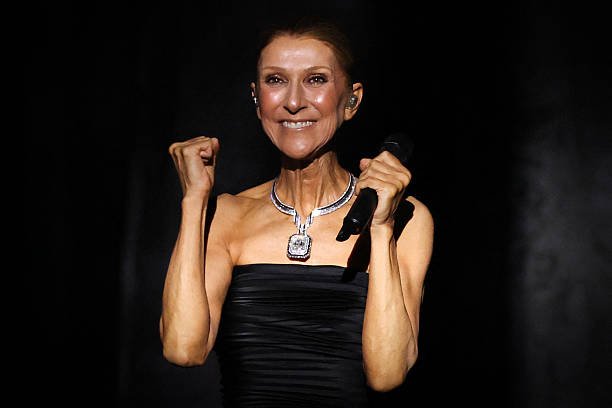
Celine Dion has officially returned to the concert stage—and her comeback was every bit as emotional, demanding and unforgettable as fans had hoped.
The Quebec-born superstar received a thunderous reception in Paris during her first full concert in more than six years, delivering a powerful set that became a deeply personal test of her voice, stamina and determination.
The most dramatic moment arrived during the encore.
Dion performed “All By Myself,” the 1996 power ballad that has long been regarded as one of the ultimate showcases for her extraordinary vocal range. As she reached one of the song’s biggest notes, she held it before releasing a breath and turning toward her musical director with a brief look of disbelief.
The reaction from the approximately 30,000 people inside the arena was immediate.
For many in attendance, that single note represented much more than a vocal achievement.
It was confirmation that Celine Dion was back.
The singer, now 58, has spent years dealing with stiff person syndrome, a rare and progressive neurological disorder that affects muscle control and can cause severe stiffness and spasms. The condition also affected muscles involved in her singing, forcing her to cancel touring plans and step away from the stage.
After years of uncertainty, Dion finally faced the enormous challenge of performing an entire concert again.
And when she finished, she had a simple message for the audience:
“Je vais bien.”
Translated into English, that means: “I’m doing fine.”
A Comeback More Than Six Years in the Making
Dion’s return to a full concert stage carries enormous significance because her last full concert took place on March 8, 2020.
She was diagnosed with stiff person syndrome in 2022.
The diagnosis forced the singer to cancel her planned world tour and eventually retreat from the public spotlight while she concentrated on her health.
Her fans were left wondering whether they would ever see her perform a full-length concert again.
There had been a glimpse of hope in 2024 when Dion made a surprise and emotional return to live performance during the opening ceremony of the Paris Olympics.
Standing at the Eiffel Tower, she performed a single song.
The appearance was powerful enough to be described around the world as a triumphant resurrection.
But an Olympic performance lasting one song and one night was fundamentally different from the physical demands of a concert tour.
This time, Dion had to perform approximately two dozen songs across more than two hours.
And she wasn’t expected to do it only once.
Her current engagement consists of 16 performances over five weeks, with another 10 dates scheduled for May 2027. In total, the run is expected to reach 26 concerts.
For an artist managing a neurological condition that can affect muscle movement and trigger painful spasms, the schedule represents a significant physical challenge.
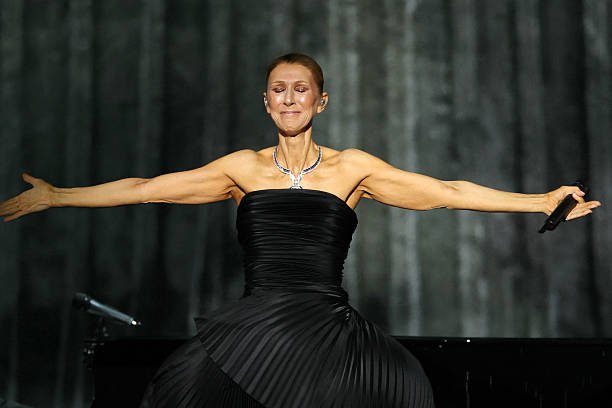
Celine Dion’s Health Made the Concert an Extraordinary Challenge
Stiff person syndrome is an extremely rare neurological condition, affecting approximately one or two people in a million.
The disorder can cause muscles to become increasingly stiff and can trigger spasms. Those spasms may be brought on by factors such as sudden sounds, physical contact or emotional stress.
That makes performing in a packed arena particularly challenging.
A concert environment is inherently loud and emotionally intense. Thousands of people are cheering, music is constantly playing and the performer must move, sing and interact with the audience for an extended period.
For Dion, the challenge was even more personal because the condition affected muscles involved in her singing.
The singer previously described performing while dealing with the condition as feeling like being strangled.
That makes the scale of her latest performance even more remarkable.
She wasn’t simply returning to a familiar job.
She was testing whether her body would allow her to perform at the level her career has demanded for decades.
“I Promised Myself I Wouldn’t Cry”
Dion’s emotions surfaced almost immediately.
During the opening portion of the concert, she became visibly emotional and cried before finishing the first song.
Wearing a Dior gown and a Boucheron necklace, she pressed her hands together in a gesture resembling prayer.
At another moment during “On ne change pas,” she missed her cue while singing a line connected to the young girl from Charlemagne, Quebec, who would eventually become one of the world’s biggest recording artists.
Dion acknowledged the emotion directly.
“I promised myself I wouldn’t cry,” she told the audience.
Instead of responding with silence, the crowd gave her another kind of support.
Fans began chanting the familiar riff from “Seven Nation Army.”
The moment transformed the arena into something closer to a celebration than a conventional concert.
Dion has spent years confronting the fragility created by her illness. Returning to the stage meant accepting that her performance might not be exactly the same as it was before her diagnosis.
Yet she continued.
And she sang for another two hours.
Her Voice Has Changed—but the Power Remains
One of the most noticeable aspects of Dion’s comeback is that her voice is not exactly the same instrument audiences remember from the height of her career.
Her highest range has been affected.
That is particularly significant for an artist whose identity has been closely tied to some of the most demanding vocal performances in popular music.
But the changes have not eliminated the power of her voice.
Instead, every major note now carries a different kind of meaning.
Rather than being something audiences simply expect from Celine Dion, those moments have become demonstrations of what she is still capable of achieving.
During the concert, she performed several of her signature songs, including “My Heart Will Go On” and “The Power of Love.”
She also performed “Ebben? Ne andrò lontana,” the aria associated with legendary opera singer Maria Callas.
Dion reportedly performed the aria while wearing pink feathers as artificial snow fell around her.
The combination of the elaborate staging and the emotional weight of the performance created one of the concert’s most dramatic moments.
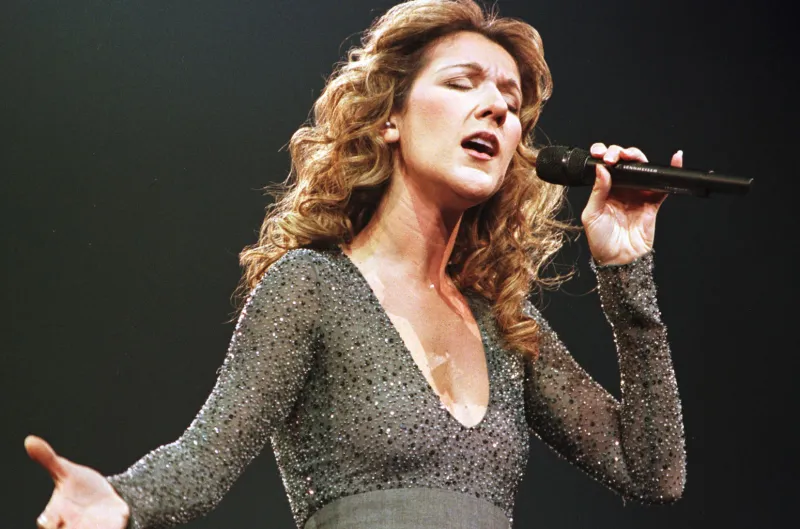
A Spectacular Stage for Dion’s Return
The concert production was designed to make Dion’s return feel like a major theatrical event.
The stage design by Willo Perron placed Dion among towering gray structures resembling enormous megaliths, creating an atmosphere reminiscent of a futuristic version of Stonehenge.
An 18-member gospel choir also joined her on stage, adding scale and emotional depth to several performances.
The elaborate production served an important purpose.
Dion’s return wasn’t presented as a small comeback or a tentative appearance.
It was a full-scale concert.
The message was clear: she was ready to reconnect with her audience in the environment where she had spent much of her career.
Fans Travelled From Around the World
The emotional significance of the performance was not limited to Dion herself.
Fans had traveled considerable distances to witness the comeback.
Among them were supporters from Canada, including Montreal-based fans who grew up listening to Dion’s music.
For many French-speaking Canadians, her songs are deeply connected to their cultural upbringing.
One fan described the experience of having a daughter beside her singing along throughout the concert after initially questioning whether traveling all the way to Paris to see Dion was necessary.
Another Montreal fan admitted that he had once pretended to be “too cool” for Celine Dion.
But once the concert began, he discovered that he knew practically every word.
The audience’s response demonstrated the extraordinary connection Dion has built with her fans over decades.
For people who had spent years wondering whether she would ever perform again, being inside the arena was not simply about attending a concert.
It was about witnessing a moment they once feared might never happen.
Fans Put Their Phones Away to Experience the Moment
Another concertgoer described making a deliberate decision to put away her phone.
Rather than documenting every song, she wanted to experience the performance directly.
That sentiment reflects the unusual nature of Dion’s comeback.
Fans weren’t simply watching a major pop star perform another tour date.
They were witnessing a milestone.
For many people in the audience, the emotional connection was more important than capturing footage for social media.
By the end of the evening, one fan joked that her voice had completely disappeared—and that she still had to work the following day.
It was a fitting description of the atmosphere inside the venue.
The Moment Everyone Was Waiting For
Then came the encore.
Dion returned to perform “All By Myself.”
The song has been one of her signature vocal showcases since she recorded it in the 1990s, and its demanding climactic moments made it an obvious test for her comeback.
As she approached the song’s biggest vocal passage, the entire arena waited.
Then she hit the note.
She held it.
And after releasing the final breath, she looked toward her musical director with a brief expression of surprise and relief.
For the people watching, the moment was almost impossible to describe.
Some fans had apparently been holding their breath along with her.
One concertgoer said that she grabbed her friend’s arm when Dion reached the note and then began crying.
Her reaction summed up what many people inside the arena were feeling:
“She’s back. She’s really back.”
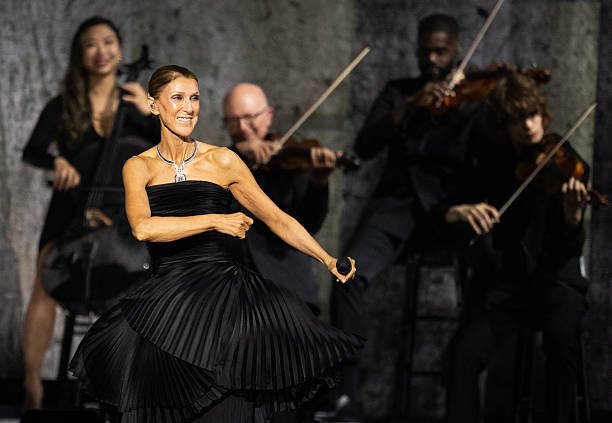
More Celine Dion Performances Are Still to Come
The Paris performance is not the end of Dion’s comeback story.
It is only the beginning.
She still has additional concerts scheduled as part of the current engagement, with more performances planned for May 2027.
That means the biggest question now is not whether Celine Dion can perform one full concert.
She has already answered that.
The question is how her body will respond to the demands of performing repeatedly.
A 26-night engagement represents a substantial physical commitment under any circumstances.
For someone living with stiff person syndrome, the challenge is even greater.
Dion’s return therefore has to be viewed one performance at a time.
Her willingness to return does not mean that her health challenges have disappeared. Instead, it demonstrates her determination to find a way to continue performing while living with a condition that fundamentally changed her relationship with the stage.
Celine Dion’s Comeback Is About More Than Music
For decades, Dion’s career has been defined by enormous vocals, sold-out concerts and songs that became global standards.
But this comeback has created a different kind of legacy.
The story is no longer simply about how high she can sing.
It is about resilience.
The years away from the stage forced Dion to confront uncertainty about her future as a performer. Her Olympic appearance in 2024 provided a glimpse of hope, but the return to a full concert required a much greater commitment.
Now, after completing a 25-song, two-hour-and-15-minute performance, she has demonstrated that she can once again stand before thousands of fans and deliver a complete show.
The concert may not have erased the difficulties she faces.
But it has given her and her fans something equally valuable: proof that a new chapter is possible.
Final Thoughts
Celine Dion’s return to the concert stage was an emotional triumph for both the singer and the thousands of fans who filled the Paris arena.
After years away because of stiff person syndrome, she performed a demanding set featuring some of her most recognizable songs, including “My Heart Will Go On,” “The Power of Love” and “All By Myself.”
There were tears, moments of vulnerability and inevitable changes in her voice.
But there was also determination.
The climactic “All By Myself” performance provided the defining moment. When Dion hit the difficult high note and then looked toward her musical director in apparent disbelief, the reaction from the audience said everything.
She had done it.
After years of uncertainty, Celine Dion was back on a full concert stage.
Her own message to the audience was simple: “Je vais bien.”
And with many more performances ahead, fans now have another reason to believe that this isn’t simply a comeback concert.
It is the beginning of Celine Dion’s next chapter.