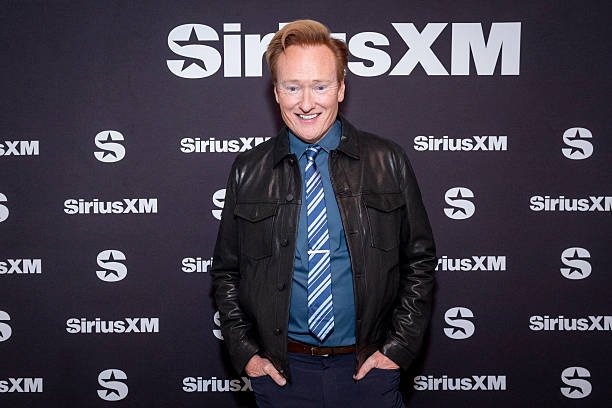
Conan O’Brien has revealed that one of the most important turning points in his career came at a time when he was struggling personally and professionally.
Long before he became one of television’s most recognizable late-night hosts, O’Brien was a writer on Saturday Night Live. Although he loved the legendary sketch-comedy program and the people he worked with, he eventually realized that he needed to leave.
When O’Brien walked away from SNL in 1991, however, he did not have another job waiting for him.
What happened next changed the course of his life.
O’Brien was offered an opportunity to join The Simpsons, the groundbreaking animated comedy created by Matt Groening. According to the comedian, that unexpected opportunity came at a difficult moment and ultimately “saved” his life.
The revelation came during an episode of his podcast, Conan O’Brien Needs a Friend, while speaking with Groening, the creator of The Simpsons.
For O’Brien, the job was more than another writing credit. It became the bridge between his years as a sketch-comedy writer and the extraordinary television career that followed.
Conan O’Brien Was in a “Funk” After Leaving SNL
O’Brien joined Saturday Night Live as a writer in 1988 and remained with the show until 1991.
Although working on SNL was an extraordinary professional opportunity, O’Brien explained that he was going through a difficult period in his personal life toward the end of his time on the show.
He described himself as being in a “funk” and ultimately decided that he needed to walk away.
O’Brien emphasized that his decision was not because he disliked the show.
Quite the opposite.
He said that he loved the job and the people around him, but felt that he needed to make a change.
The decision was therefore a risky one.
Leaving a prestigious position at Saturday Night Live without another job lined up could easily have resulted in a prolonged period of uncertainty. For O’Brien, it did exactly that—but only briefly.
The opportunity that arrived next would introduce him to a completely different style of comedy writing.

The Simpsons Arrived at Exactly the Right Moment
After leaving SNL, O’Brien suddenly found himself without a job.
That changed when two writers associated with The Simpsons, Mike Reiss and Al Jean, reportedly heard that O’Brien was available.
They helped open the door for him to audition for the animated series.
O’Brien recalled sending in some of the sketches he had written during his time at Saturday Night Live. Soon afterward, he received an unexpected message: he had a job on The Simpsons and needed to be there within just a few days.
The speed of the transition was remarkable.
One moment O’Brien was unemployed and uncertain about what would come next. The next, he was joining one of the most exciting comedy-writing environments in television.
Looking back, O’Brien told Groening just how important the opportunity had been.
He credited Groening and The Simpsons with changing his life in an “amazing way.”
Most significantly, O’Brien described the job as something that “really saved my life.”
That statement illustrates just how important the series was to him at the time.
Conan Was Intimidated by The Simpsons Writers’ Room
Joining The Simpsons was not an easy transition for O’Brien.
He had experience writing sketch comedy for SNL, but animated sitcom writing was a different discipline.
The structure, timing and storytelling requirements were unfamiliar territory.
O’Brien admitted that he was intimidated when he entered the Simpsons writers’ room.
He was surrounded by writers he considered incredibly talented, and the show itself had already developed a reputation for being one of the smartest and most innovative comedies on television.
For someone who had primarily worked in sketch comedy, the experience represented a significant learning curve.
Yet that discomfort eventually became part of what made the job so valuable.
O’Brien was entering an environment where he could develop new skills, experiment with different forms of storytelling and work alongside writers who were pushing the boundaries of television comedy.
He later described that period as a “magical part” of his life.

The Simpsons Helped Launch O’Brien’s Next Career Chapter
O’Brien remained with The Simpsons until 1993.
Although his time on the show lasted only a couple of years, the experience proved enormously influential.
During his tenure, he was able to demonstrate his ability to write for a completely different comedic format.
The job also helped establish his reputation beyond Saturday Night Live.
Then came another major career transformation.
In 1993, O’Brien became the host of Late Night, taking over a program that had become synonymous with a particular style of late-night television.
It was a major leap.
O’Brien had gone from being a relatively unknown comedy writer to becoming the face of a national late-night program.
His unusual comedic sensibility eventually became one of his biggest strengths.
Rather than simply following the established formula of late-night television, O’Brien developed a distinctive identity built around absurd humor, eccentric characters, surreal sketches and his willingness to make himself the punchline.
That style helped him build a devoted audience over the years.
Conan’s Journey Through Late-Night Television
O’Brien hosted Late Night from 1993 through 2009, establishing himself as one of the defining comedy personalities of his generation.
His tenure was not always an easy one.
Late-night television is an intensely competitive environment, and O’Brien’s style was initially very different from the more conventional approach associated with many network talk shows.
Over time, however, his audience grew and his comedic voice became unmistakable.
In 2009, O’Brien moved from Late Night to The Tonight Show, one of the most prestigious positions in American television.
His time hosting The Tonight Show lasted less than a year, ending in 2010.
The episode became one of the most talked-about moments in modern late-night television history.
Yet once again, O’Brien demonstrated the ability to rebuild.
His career continued through television, comedy specials, podcasting and digital projects, allowing him to reach audiences beyond the traditional late-night format.
The same willingness to adapt that had helped him after leaving SNL would become a recurring theme throughout his career.
O’Brien Still Credits Groening for Changing His Life
During his conversation with Groening, O’Brien expressed deep gratitude for the opportunity he had received decades earlier.
He acknowledged that he did not know where his career would have gone if he had not joined The Simpsons.
That uncertainty is particularly striking considering what happened afterward.
Without The Simpsons, there is no guarantee that O’Brien’s career would have followed the path audiences now know.
The animated series gave him the chance to prove himself in another form of comedy, helped expand his professional network and provided a crucial creative environment during a difficult period.
For Groening, offering O’Brien a job was simply part of the process of building a talented writing staff.
For O’Brien, it became a life-changing opportunity.
That is one of the most fascinating aspects of career success: sometimes a seemingly temporary job becomes the foundation for everything that follows.
Conan O’Brien Believes Late-Night Television Is Changing
O’Brien’s reflections about his early career come at a time when he has also been thinking about the future of late-night television.
In August 2025, during his induction into the Television Academy Hall of Fame, O’Brien predicted that the traditional late-night format would eventually disappear.
He argued that the version of late-night television that audiences have known for decades is likely to change significantly.
But O’Brien made an important distinction.
He does not believe the personalities who define late-night comedy will disappear.
Instead, he believes they will adapt to new platforms and formats.
That prediction reflects the broader transformation taking place throughout the entertainment industry.
Traditional television is no longer the only way audiences consume comedy. Podcasts, streaming platforms, social media and digital video have created new ways for performers to reach viewers.
O’Brien himself has embraced that transition.
His podcast Conan O’Brien Needs a Friend has become an important part of his modern career, allowing him to have longer and more conversational discussions with actors, comedians, writers and other creative personalities.
His conversation with Groening is a perfect example of how different his career looks today compared with his early years in television.
Conan O’Brien Defends Stephen Colbert’s Future
While discussing the future of late-night television, O’Brien also addressed the continuing importance of comedians such as Stephen Colbert.
O’Brien argued that talented performers do not simply disappear because a traditional television format changes.
Instead, they evolve.
He specifically praised Colbert as someone who is too talented and too important to simply walk away from the entertainment landscape.
O’Brien suggested that Colbert could thrive in a new format that gives him greater creative control.
The comments are particularly interesting because the entertainment industry continues to reconsider how late-night comedy works in an era dominated by streaming, social media and podcasts.
The traditional model—a comedian sitting behind a desk, interviewing celebrities and delivering a monologue to a studio audience—has existed for generations.
But audiences now have countless alternatives.
Comedians can publish directly online. Actors can appear on podcasts. Writers can create independent projects. And audiences can watch clips without ever tuning into a complete television episode.
O’Brien’s own career provides a useful example of that transformation.
He began as a writer for SNL, moved into animation with The Simpsons, became a late-night host, transitioned through network television and eventually expanded into podcasting and digital entertainment.
His career has never remained confined to one format.
A Career Built on Unexpected Second Chances
Perhaps the most meaningful part of O’Brien’s story is that his career was shaped by moments when the next step was not obvious.
Leaving Saturday Night Live left him without a job.
Joining The Simpsons gave him a new direction.
Leaving The Simpsons led him toward late-night television.
The end of his Tonight Show run could have represented another career crisis, but O’Brien again reinvented himself.
That pattern makes his description of The Simpsons as a show that “saved my life” particularly powerful.
The series arrived at a moment when he was uncertain about his future and gave him an opportunity to rediscover himself creatively.
It also allowed him to learn a completely new form of comedy writing.
The experience ultimately became one of the foundations of the career that followed.
Final Thoughts
Conan O’Brien’s revelation about The Simpsons offers a fascinating look at the unpredictable path behind a successful entertainment career.
When he left Saturday Night Live in 1991, he was in a difficult place and had no job waiting for him. Then came an unexpected opportunity from Matt Groening’s animated series.
O’Brien initially felt intimidated by the legendary writers’ room and had to learn a style of writing that was completely different from the sketch comedy he had previously known.
But the experience became a transformative chapter in his life.
Two years later, he moved into late-night television and began a journey that would eventually make him one of the most recognizable comedians and television hosts in America.
Today, O’Brien continues to adapt as the entertainment industry changes.
His podcast demonstrates that a comedian’s career no longer has to depend entirely on traditional television.
And his prediction that late-night television will eventually evolve reflects the same lesson his own career has demonstrated repeatedly: formats can disappear, but talented performers can reinvent themselves.
For O’Brien, The Simpsons was more than a writing job.
At exactly the moment when he needed a new direction, it gave him one—and, by his own account, it may have changed everything.