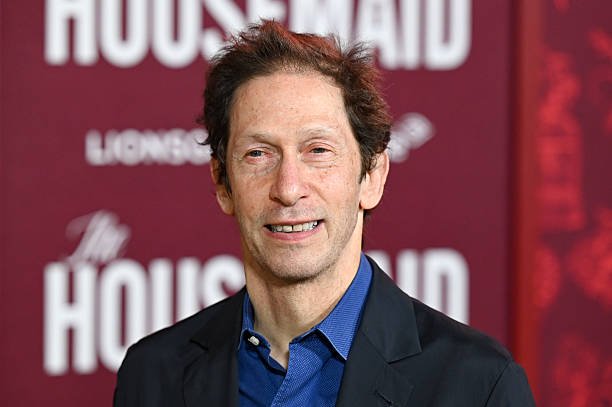
Tim Blake Nelson has spent much of his career moving effortlessly between acting and filmmaking, but his latest directorial project required an extraordinary amount of patience.
The actor and filmmaker spent approximately 12 years trying to bring The Life and Deaths of Wilson Shedd to the screen. The journey involved assembling casts, searching for financing and repeatedly watching plans collapse before production could finally become a reality.
For Nelson, the experience was emotionally exhausting. He has described the long development process as a nightmare and has acknowledged that his personal journals from those years contain plenty of frustration and despair over his inability to get the film made.
Now, however, the years of setbacks are finally behind him.
The Life and Deaths of Wilson Shedd is set to premiere at the Toronto International Film Festival, giving Nelson the opportunity to finally present a film that remained one of his most persistent creative ambitions for more than a decade.
The project is also arriving during a busy period for Nelson, who has continued working as an actor while developing additional directing projects. He recently found himself on the set of HBO’s Task Season 2, working alongside a remarkable ensemble that includes Mark Ruffalo, Mahershala Ali, Édgar Ramírez and Harry Melling.
For Nelson, the experience illustrates both sides of his career: the difficult process of getting an ambitious independent film made and the rare privilege of working with major filmmakers and performers on a high-profile television production.
A Film That Took 12 Years to Reach the Screen
The Life and Deaths of Wilson Shedd was not a project that came together quickly.
Nelson spent roughly 12 years trying to secure the resources necessary to make the movie. At various points, he managed to put together potential casts and financing arrangements, only for the plans to fall apart.
The obstacles were especially challenging because of the film’s subject matter.
Much of the story takes place inside a maximum-security prison. The central character is an English teacher, played by Amanda Seyfried, who unexpectedly develops a connection with Wilson Shedd, a charismatic inmate portrayed by Scoot McNairy.
The story also ventures into death row and explores extremely difficult themes surrounding imprisonment, violence, human relationships and execution.
That combination made the project a difficult sell in a film industry increasingly focused on proven commercial success.
Nelson recalled hearing variations of the same response from potential backers: they wanted to see the finished movie before committing to it.
That created an obvious problem. Without financing, Nelson could not make the film, but without making the film, he could not show potential financiers what the finished project could become.
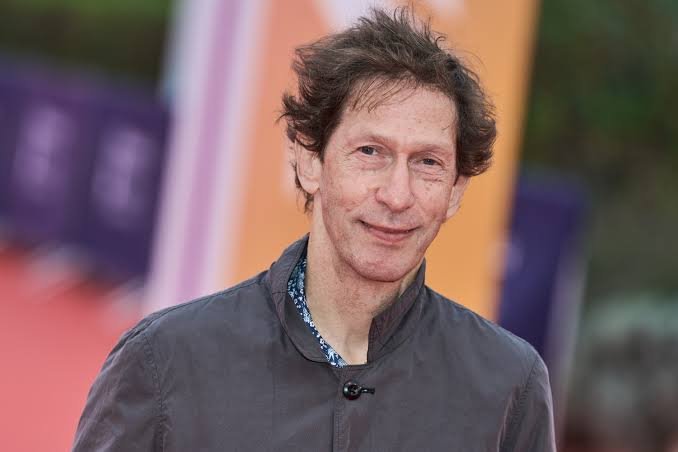
The Financing Challenge Behind Independent Filmmaking
Nelson’s experience with Wilson Shedd highlights one of the biggest challenges facing filmmakers who want to make ambitious independent dramas.
The film’s subject matter was never designed to be an easy commercial proposition. It deals with prison life, emotional vulnerability and the death penalty, while placing a complicated relationship at the center of the story.
Nelson also faced another hurdle: his previous feature as a director, Anesthesia, had received only a limited release and did not perform strongly commercially.
That history made raising money for another ambitious drama even more difficult.
In today’s financing environment, filmmakers are often expected to demonstrate a strong record of commercial success before investors are willing to take significant risks. For an independent director working on a challenging drama, that can become a frustrating cycle.
Nelson’s persistence eventually paid off when V42, a company focused on socially conscious filmmaking, came aboard.
The connection was particularly meaningful because the company’s founder, Miles David Romney, had previously produced the animated project Ninety-Five Senses, on which Nelson had also worked.
After years of false starts, production finally began in Georgia last year.
For Nelson, getting the cameras rolling was a major personal milestone.
Why the Delays May Have Helped the Film
Although the lengthy development process was painful, Nelson now believes some of the delays ultimately benefited the movie.
One of the biggest advantages was that the extended timeline eventually led him to Amanda Seyfried and Scoot McNairy.
The two performers became central to the film and, according to Nelson, delivered performances that transformed his understanding of what the characters could become.
Seyfried came aboard after Nelson approached her while the two were working on The Testament of Ann Lee in Hungary in 2025.
Their first meeting happened in Budapest, and Nelson said he quickly realized that she possessed qualities that were ideal for the character.
He was particularly impressed by Seyfried’s openness, unpredictability, intelligence, decency and work ethic.
Those qualities were important because her character is not simply required to deliver dialogue. She has to communicate subtle emotional shifts while teaching inside a prison environment and developing a complicated relationship with an incarcerated man.
Nelson was especially fascinated by the small behavioral details Seyfried brought to the role.
He described moments in which she appears to surprise even herself, creating the feeling that audiences are witnessing genuine human behavior rather than a carefully rehearsed performance.
That quality can be difficult to achieve on camera.
For Nelson, Seyfried’s ability to remain completely present helped make the character feel spontaneous and authentic.
Scoot McNairy Brings Humanity to Wilson Shedd
Scoot McNairy was equally important to Nelson’s vision.
The actor’s career has included numerous character-driven performances, and his profile has continued to grow through television and film.
Nelson said he was immediately captivated by McNairy’s audition.
What impressed him most was the actor’s ability to find humanity inside Wilson without ignoring the darker elements of the character.
That balance is crucial.
Wilson cannot simply be presented as a sympathetic prisoner, nor can he be reduced to a villain. The character exists somewhere in the complicated space between those extremes.
The film’s emotional impact depends on the audience being able to understand why another human being might become drawn to him while still recognizing the seriousness of his circumstances.
McNairy’s performance allowed Nelson to explore precisely that contradiction.
The director has said he prefers writing roles that he could never personally play. For him, one of the pleasures of filmmaking is giving performers opportunities to do things that fall outside his own strengths.
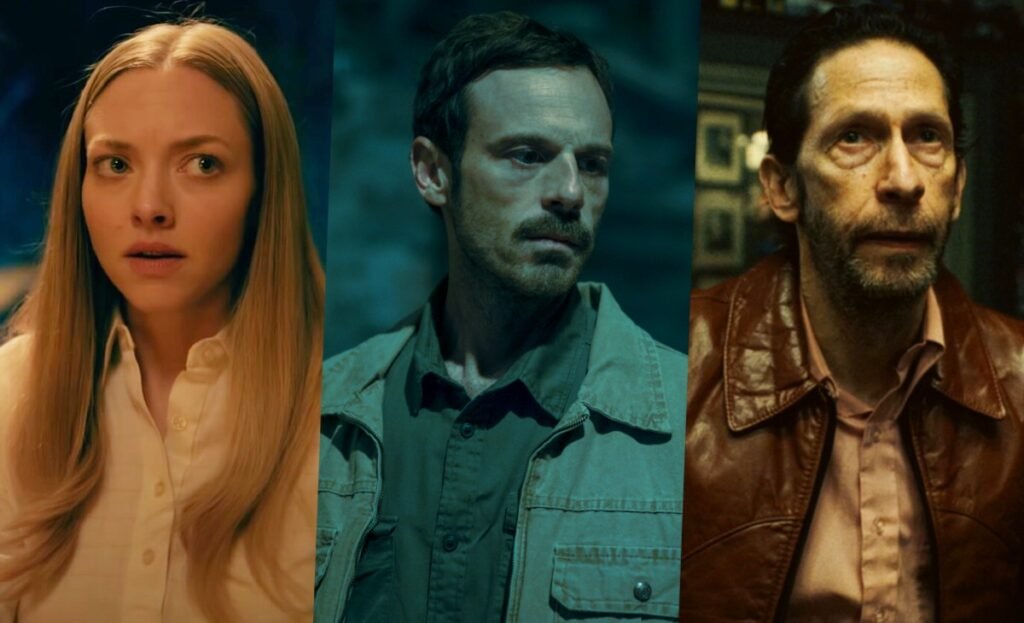
Why Nelson Didn’t Play Wilson Shedd
Nelson is an accomplished actor himself, with memorable performances in projects including O Brother, Where Art Thou?, Minority Report and The Ballad of Buster Scruggs.
So why didn’t he simply take the title role?
The answer is surprisingly straightforward.
Nelson believes audiences would not find him convincing as Wilson Shedd.
The physical and romantic dynamics of the story were important factors. Wilson needed to be believable as someone who could attract the character played by Seyfried.
Nelson felt that he was better suited to another role in the story.
He ultimately appears as the prison warden, giving himself a supporting part rather than trying to force himself into the central character.
That decision also allowed Nelson to focus more fully on directing.
For a filmmaker who had already spent so many years fighting to make the project, being behind the camera was clearly a major priority.
A Story About More Than the Death Penalty
Nelson has made clear that he personally opposes capital punishment.
That perspective naturally informs a film involving death row and an execution.
However, he does not want The Life and Deaths of Wilson Shedd to be reduced to a political argument about the death penalty.
The movie includes a difficult execution sequence, but Nelson sees the film’s central question as something much broader.
At its heart, the story examines what human beings are capable of doing to one another.
That approach allows the film to explore moral questions without turning into a conventional political message movie.
Nelson is also comfortable with the possibility that some viewers may leave the film with opinions about capital punishment that differ from his own.
For him, the primary objective is not necessarily to persuade.
Instead, he wants the audience to confront difficult questions about humanity, relationships, violence and compassion.
That may ultimately make the film more emotionally powerful than a straightforward political drama.
Toronto Premiere Could Open the Door to Distribution
After spending more than a decade trying to make the movie, Nelson now faces another important moment.
The Toronto International Film Festival premiere could help the film secure a distributor and reach a much larger audience.
Independent films often depend heavily on festival responses to attract distribution interest. Strong reviews, audience reactions and industry attention can significantly influence what happens after a festival premiere.
For Nelson, that makes Toronto particularly important.
He hopes the film can leave the festival with the kind of momentum necessary to find its audience.
The movie’s challenging subject matter may make the commercial path difficult, but the festival platform could help demonstrate why the project was worth the effort.
Tim Blake Nelson Joins HBO’s Task Season 2
While Nelson is promoting his long-awaited film, he has also returned to acting.
He is currently involved in the second season of HBO’s Task, created by Brad Ingelsby.
Nelson praised Ingelsby’s writing and said he was offered a character that provided a new challenge.
The actor also highlighted the opportunity to work alongside several performers he greatly admires.
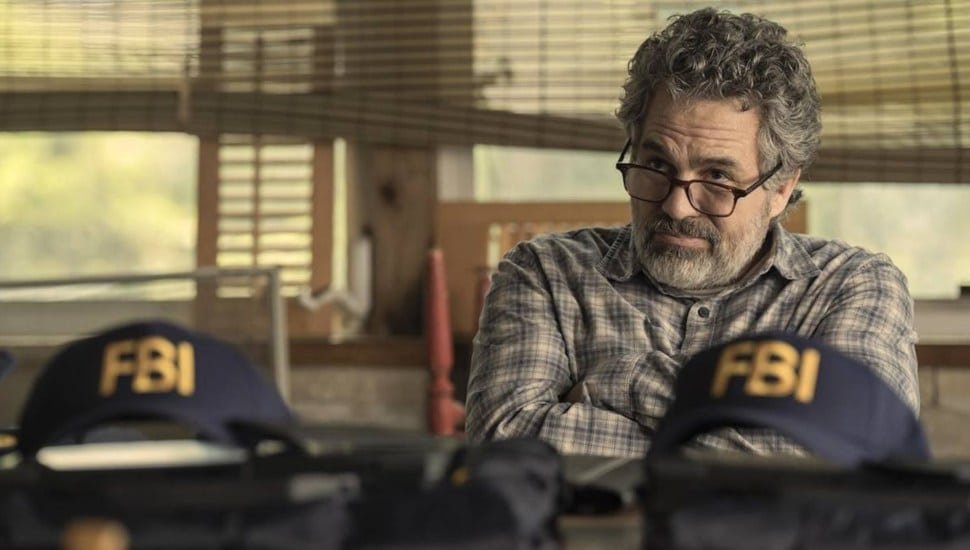
Among them is Mark Ruffalo, an actor Nelson had wanted to work with for some time.
Nelson recently filmed a scene featuring Ruffalo as well as Mahershala Ali, Édgar Ramírez and Harry Melling.
For an actor with Nelson’s experience, the chance to share scenes with such a group remains an exciting part of the profession.
He described being part of the series as a privilege, despite the fact that his attention is simultaneously focused on getting Wilson Shedd into the world.
One Regret About the Task Experience
There is, however, one small disappointment.
Nelson does not have screen time with Julianne Nicholson, who is returning in the broader Task world following her acclaimed work on Mare of Easttown.
That is something Nelson wishes had been different.
Still, he remains enthusiastic about the experience.
The series gives him the opportunity to work with talented actors and a writer whose material he clearly respects.
It also demonstrates why Nelson has continued to maintain a strong acting career even while pursuing his ambitions as a director.
Balancing Acting With Directing
Nelson’s career has always involved a balancing act between performing and filmmaking.
As an actor, he has worked with some of the most respected directors in the industry.
As a filmmaker, he has had to experience the less glamorous side of the business: fundraising, development, uncertainty and years of waiting.
The Life and Deaths of Wilson Shedd appears to represent a particularly personal example of that struggle.
Twelve years is an enormous amount of time to spend pursuing a single film.
The project survived changing circumstances, financing difficulties and casting changes before eventually reaching production.
Now, with its Toronto premiere approaching, Nelson finally gets to see whether the movie can connect with audiences in the way he hoped.
A New Chapter for Nelson Behind the Camera
Despite the difficulty of making Wilson Shedd, Nelson does not appear ready to abandon directing.
He is already working on additional scripts and remains interested in developing more projects.
The experience has taught him how difficult it can be for filmmakers to obtain financing, particularly when they are working outside the safest commercial genres.
But it has also reinforced the value of persistence.
A project that once seemed impossible is now ready for a major festival premiere.
That alone represents a significant achievement.
Nelson’s simultaneous work on Task also demonstrates that his creative ambitions extend in multiple directions. He can move from an independent prison drama that took more than a decade to make to a major television production featuring some of Hollywood’s most respected performers.
The Long Wait May Finally Be Worth It
For Tim Blake Nelson, The Life and Deaths of Wilson Shedd is more than another directing credit.
It is the result of years of rejection, uncertainty and persistence.
The film’s difficult subject matter may have contributed to the long road toward production, but Nelson believes the eventual cast and creative circumstances made the wait worthwhile.
Amanda Seyfried and Scoot McNairy became the performers he ultimately wanted for the central roles, while Nelson found a supporting part that allowed him to remain focused on directing.
Now the movie gets its chance in Toronto.
At the same time, Nelson continues to build his acting career with HBO’s Task, working alongside Mark Ruffalo, Mahershala Ali, Édgar Ramírez and Harry Melling.
The contrast between the two projects captures the unusual nature of Nelson’s career.
One represents the difficult, deeply personal process of creating an independent film from the ground up.
The other offers the opportunity to become part of a prestigious television ensemble.
After waiting 12 years to see The Life and Deaths of Wilson Shedd become reality, Nelson can finally move forward.
And if the Toronto premiere generates the response he hopes for, the next chapter of his directing career may arrive much sooner.
Conclusion
Tim Blake Nelson’s journey with The Life and Deaths of Wilson Shedd is a reminder that some films take far longer to reach audiences than their creators ever expect.
For more than a decade, Nelson continued returning to the project despite financing problems, casting changes and the commercial challenges surrounding its subject matter.
Now, the film is finally ready for its Toronto premiere, led by Amanda Seyfried and Scoot McNairy and featuring Nelson himself in a supporting role.
The director hopes the festival can help the movie find a distributor and ultimately reach viewers who are willing to engage with its difficult questions about human nature, violence, relationships and morality.
Meanwhile, Nelson is continuing to act, with a role in Season 2 of HBO’s Task providing another opportunity to work alongside a remarkable group of performers.
After such a long struggle to get one film made, Nelson’s career appears to be entering another productive chapter—both behind and in front of the camera.