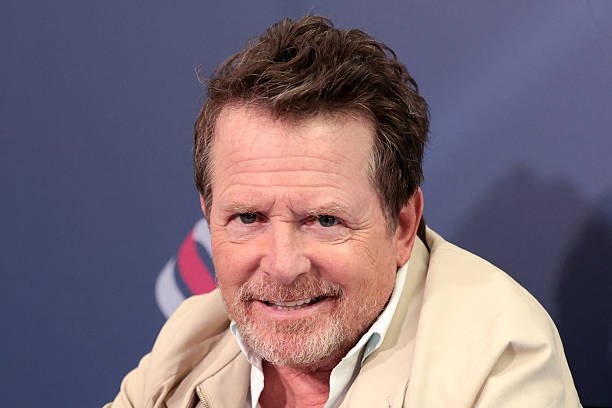
Michael J. Fox has spent decades living with Parkinson’s disease, but the beloved actor and activist continues to approach the future with remarkable determination and optimism.
At 65, Fox acknowledges that the physical challenges associated with Parkinson’s have become more difficult over the years. Tremors, balance problems and other symptoms have changed the way he approaches his everyday life and his career. Yet, despite those challenges, he remains intensely focused on one goal: helping scientists find better treatments and, ultimately, a cure.
Through the Michael J. Fox Foundation, which he established in 2000, the actor has helped transform the public conversation surrounding Parkinson’s disease. The organization has funded more than $3 billion in research, supporting scientists and researchers working to understand the disease and develop new therapies.
Now, Fox is being recognized for that extraordinary commitment with the Lasker-Bloomberg Public Service Award from the Lasker Foundation.
The honor recognizes his long-running efforts to increase awareness of Parkinson’s disease, support scientific research and give patients and families a stronger voice in the search for answers.
For Fox, however, the award is not simply about his own contribution. He sees it as recognition for the much larger community of researchers, doctors, patients and families working toward the same goal.
Michael J. Fox Admits Parkinson’s Has Become More Difficult
Fox has never attempted to hide the realities of living with Parkinson’s.
He first began experiencing symptoms in 1990, when he was only 29 years old. At the time, he was already becoming one of Hollywood’s biggest stars, thanks to his work on television and in major movies.
Being diagnosed with a progressive neurological disease at such a young age could have completely changed the direction of his life.
Instead, Fox eventually decided to make Parkinson’s advocacy one of his central missions.
More than three decades later, he openly acknowledges that living with the disease has become harder.
The symptoms can include tremors and difficulties with balance and movement, and Fox says that things have become more challenging as the years have passed.
But his response has not been to retreat.
Instead, he continues to dedicate his time and energy to finding ways to accelerate Parkinson’s research.
Fox has often emphasized the urgency of finding answers because he understands the disease not only as an advocate but also as a patient.
That personal experience has given his advocacy a unique perspective. He knows the questions patients ask, the uncertainty families face and the importance of developing treatments that can improve people’s quality of life.

The Lasker Award Recognizes Fox’s Parkinson’s Advocacy
Fox’s work is now receiving one of the most significant forms of recognition in the scientific and public-service community.
The Lasker-Bloomberg Public Service Award honors individuals or organizations that have made a major contribution to public health or scientific progress.
Fox joins a distinguished group of previous recipients, including Bill and Melinda Gates, Anthony Fauci and the late Christopher Reeve.
For Fox, being included among such figures is deeply meaningful.
He has described the award as a particularly significant honor because of what it represents about the potential of science.
Rather than viewing the prize as a personal achievement, Fox has emphasized the role played by researchers and clinicians who are working directly on Parkinson’s disease.
He has also credited patients and their families, whose experiences and insights can help researchers understand the practical realities of living with the condition.
The recognition highlights how dramatically Fox’s role has evolved.
He became famous as an actor, but his name is now equally associated with Parkinson’s advocacy and medical research.
From Hollywood Superstar to Parkinson’s Advocate
Michael J. Fox became a household name through some of the biggest entertainment successes of the 1980s and 1990s.
He starred as Alex P. Keaton on Family Ties, winning multiple awards and becoming one of television’s most recognizable young actors.
His film career became even more successful when he played Marty McFly in the Back to the Future trilogy.
The character became one of cinema’s most enduring pop-culture icons, helping establish Fox as a major Hollywood star.
He later found success with Spin City, where he played New York City deputy mayor Mike Flaherty.
However, his Parkinson’s diagnosis eventually changed his professional priorities.
Fox publicly disclosed his diagnosis in 1998 and subsequently became increasingly involved in advocacy and fundraising.
In 2000, he established the Michael J. Fox Foundation, creating an organization specifically focused on accelerating Parkinson’s research.
The foundation has since become one of the most prominent Parkinson’s research organizations in the world.
Michael J. Fox Found Acting Joy Again With Shrinking
Although Fox’s advocacy work remains his biggest priority, he has not completely walked away from acting.
Earlier in his career, he retired from full-time acting after publicly discussing his Parkinson’s diagnosis.
He later made guest appearances in shows such as Scrubs and The Good Wife, demonstrating that he could still find ways to work in front of the camera.
But in 2020, Fox stepped back again.
One of the difficulties he encountered was memorizing lines.
For an actor, that challenge can be particularly frustrating because learning dialogue is such a fundamental part of performing.
Fox eventually recognized that long, demanding workdays were no longer the right fit for him.
Then came Shrinking.
The Apple TV+ series, created by his friend Bill Lawrence, offered Fox an opportunity to return to acting in a way that accommodated his circumstances.
Fox appeared in the show’s third season, playing a character with Parkinson’s opposite Harrison Ford, whose character also has Parkinson’s.
For Fox, the experience was extremely enjoyable.
He has described the opportunity as allowing him to arrive on set more naturally and use how he feels on a particular day as part of the performance.
That flexibility appears to have made a major difference.
Working With Harrison Ford Has Been Special
Fox’s work on Shrinking also gave audiences the opportunity to see him share the screen with another legendary actor.
Harrison Ford has played a central role in the series, and the two actors’ characters have Parkinson’s.
That element creates an unusual connection between the performers and the characters they portray.
Fox has described the experience as enormously enjoyable.
The opportunity also demonstrates how television can provide actors with different ways to work as their circumstances change.
Rather than requiring Fox to perform the kind of 12-hour workdays he once handled earlier in his career, Shrinking offered an environment where his real-life experience could become part of the creative process.
Fox has also indicated that he would be interested in returning to the series for a fourth season.

Why Fox Retired From Acting Again in 2020
Fox’s second retirement illustrates how Parkinson’s can affect a person’s professional life in unexpected ways.
After his initial retirement from a full-time television role, he continued making guest appearances.
However, memorizing dialogue eventually became increasingly difficult.
For an actor, this is more than a minor inconvenience. It can affect confidence, preparation and the ability to work long hours on a production.
Fox recognized that his career needed to change.
Instead of trying to maintain the same workload he had handled when he was younger, he accepted that his circumstances were different.
His experience also highlights an important aspect of Parkinson’s disease: symptoms and challenges can vary over time, and people may need to adapt their routines and expectations.
Fox’s return through Shrinking shows that stepping away from traditional acting does not necessarily mean giving up creativity altogether.
The Search for a Parkinson’s Cure Continues
Despite the personal challenges he faces, Fox remains optimistic about the future of Parkinson’s research.
He does not claim to know exactly when a cure will arrive.
Instead, his message is one of determination.
The Michael J. Fox Foundation is preparing for another major fundraising effort, with a goal of raising approximately $2.5 billion for additional Parkinson’s research.
That enormous target reflects the scale of the scientific challenge.
Developing new treatments is expensive, complicated and time-consuming. Research requires collaboration among scientists, doctors, patients, institutions and pharmaceutical companies.
Fox understands that progress cannot happen overnight.
But he also believes the scientific community is moving in the right direction.
According to Fox, researchers are making breakthroughs more frequently, while new medicines and improved scientific tools are giving patients and researchers additional options.
“We’re Getting Close,” Fox Says
Perhaps the most hopeful part of Fox’s message is his belief that researchers are getting closer to meaningful breakthroughs.
He acknowledges that science is difficult and that medical research requires patience.
But he does not believe the enormous challenges should lead to pessimism.
Instead, he sees every research breakthrough, new treatment and improved scientific tool as another step toward the ultimate goal.
For people living with Parkinson’s, that sense of hope can be particularly powerful.
Fox has spent more than 30 years living with the disease. He understands that progress may not always be immediately visible to individual patients.
Nevertheless, he believes that continued investment in research can eventually change the outlook.
His foundation’s enormous research investment demonstrates how seriously he takes that mission.
Fox Says His Award Belongs to the Entire Parkinson’s Community
The Lasker recognition could easily be presented as a personal achievement.
After all, Fox has devoted decades to raising awareness and billions of dollars toward research.
But his reaction has been characteristically focused on the larger Parkinson’s community.
He has said that he shares the honor with researchers and clinicians working on the front lines, as well as patients and families who contribute valuable perspectives.
That sentiment reflects one of the central themes of his advocacy.
Fox’s celebrity may have opened doors and attracted attention, but scientific progress depends on many people working together.
Researchers need funding.
Patients need better treatments.
Families need support.
And scientists need the freedom and resources to investigate new possibilities.

A Career Built on Optimism and Determination
Michael J. Fox’s story has changed dramatically since he first became famous.
He was once known primarily as the energetic young star of Family Ties and Back to the Future. He later became the Emmy-winning star of Spin City.
Then Parkinson’s disease became a central part of his life.
Rather than allowing the diagnosis to completely define him, Fox turned his public profile into a powerful platform for research and awareness.
Today, his foundation is one of the most recognizable names in Parkinson’s research, while his occasional return to acting demonstrates that he has not abandoned the creative world that made him famous.
His appearance on Shrinking was especially meaningful because it allowed him to rediscover some of the joy of acting while working within the realities of living with Parkinson’s.
The Road Ahead
Fox is realistic about his health and does not pretend that Parkinson’s has become easier.
He openly acknowledges that the disease has become harder over the years.
But his optimism remains intact.
For Fox, the objective is not simply to raise awareness. It is to keep pushing research forward until a world without Parkinson’s becomes possible.
That goal remains ambitious, but he believes the scientific community is making encouraging progress.
The journey may still require years of research, billions of dollars and countless scientific breakthroughs.
Fox, however, appears prepared to keep going.
His message is ultimately one of hope: the disease may be difficult, but progress is happening.
And for a man who has spent decades refusing to waste time, the mission remains clear — support the scientists, help patients and keep moving toward a cure.
Final Thoughts
Michael J. Fox is candid about the reality of living with Parkinson’s disease. The condition has become more challenging over time, but he remains determined to use his platform and resources to accelerate research.
The Lasker-Bloomberg Public Service Award recognizes decades of advocacy, but Fox sees the honor as belonging to an entire community.
His return to acting through Shrinking has also provided a reminder that Parkinson’s has not taken away his creativity or sense of humor.
Most importantly, Fox continues to believe that scientific progress can change the future of Parkinson’s disease.
He does not know exactly when a cure will arrive, but he believes researchers are getting closer.
For millions of people affected by Parkinson’s around the world, that optimism is more than a celebrity statement. It is a message that research, collaboration and persistence can continue moving the field forward.