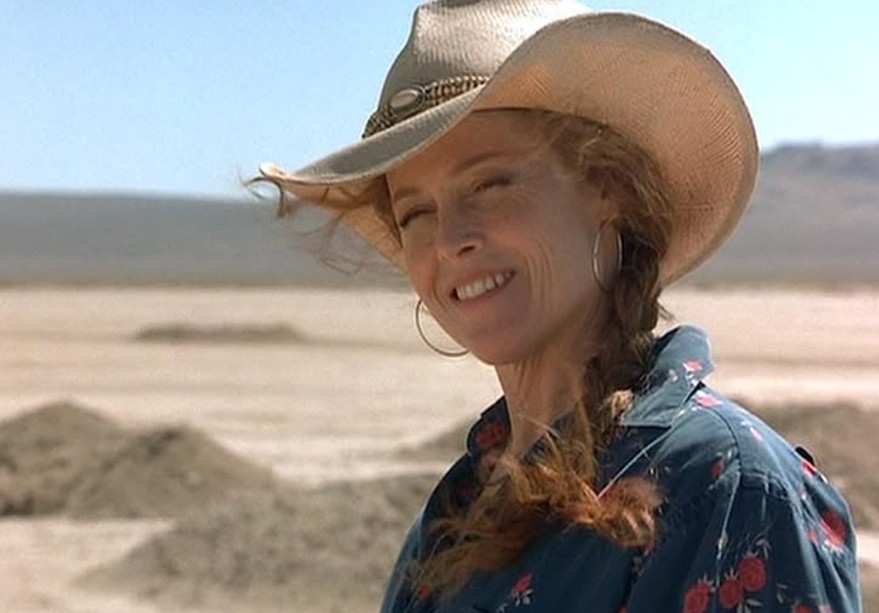
Some of the best career advice comes from the most unexpected places—and for Sigourney Weaver, one of her most iconic roles was sparked by a recommendation from her own child. The legendary actress recently reflected on how her daughter, Shar, played a key role in convincing her to take on the deliciously cruel antagonist in the beloved 2003 family film Holes.
Weaver, best known for her heroic performances in science fiction classics, surprised audiences when she stepped into the role of Warden Louise Walker, a character who terrified young viewers with her cold authority and merciless punishments. As it turns out, the inspiration to play such an “awful woman” came straight from an eight-year-old reader who knew her mother better than anyone else.
A Child’s Honest—and Insightful—Suggestion
At the time, Weaver’s daughter Shar had been assigned Holes as part of her school reading. After immersing herself in the book, she approached her mother with a blunt but surprisingly perceptive suggestion.
According to Weaver, Shar told her, “Mom, there’s this really awful woman in my book—and you should play her.”
Rather than being offended, Weaver was deeply touched by the recommendation. She recalled feeling proud that her daughter could separate her love for the story from her perception of her mother, recognizing that playing a villain could be just as meaningful—and enjoyable—as portraying a hero.
Weaver believes Shar instinctively understood that the role would appeal to her. The complexity, darkness, and psychological depth of the character were qualities Weaver had long gravitated toward in her career.
Creating a Villain Children Would Never Forget
In Holes, Weaver’s Warden Louise Walker runs Camp Green Lake, a juvenile detention facility disguised as a character-building program. Under her command, boys are forced to dig massive holes in the desert heat every day, supposedly to teach discipline. In reality, the warden is obsessed with locating a long-lost treasure tied to her family’s past.
From a child’s perspective, the character is nothing short of terrifying. Her calm cruelty, sharp dialogue, and rigid control over the camp make her one of the most memorable villains in family cinema.
Weaver herself has described the warden as “nightmarish,” particularly through the eyes of the children trapped under her authority. Yet what elevated the performance was Weaver’s refusal to treat the character as a one-dimensional antagonist.

Finding Humanity in a Cruel Character
What drew Weaver deeper into the role was the warden’s backstory—a detail that added emotional weight beneath the surface cruelty. She explained that the character had spent her own childhood endlessly digging for the same treasure, driven by family obsession and unfulfilled promises.
This cycle of trauma resonated with Weaver. Rather than portraying the warden as purely evil, she saw a woman shaped—and damaged—by years of emotional fixation and disappointment.
Weaver has suggested that the character likely suffered from unresolved psychological trauma, possibly even post-traumatic stress, that continued to drive her destructive behavior. Her relentless pursuit of the treasure wasn’t greed alone—it was compulsion, born from a life defined by failure and obsession.
This layered interpretation helped transform the warden into a more tragic figure, making her cruelty understandable, if not forgivable.
Advocating for a Moment of Closure
Weaver’s empathy for the character extended all the way to the film’s final moments. She recalled speaking with the director and suggesting a subtle but meaningful change to the ending.
As the warden is arrested and taken away, Weaver felt it was important that the character at least be allowed to see the treasure she had spent her entire life searching for. That single glimpse, she believed, would give the warden a moment of emotional release—an ending not of triumph, but of rest.
Ultimately, that small detail made it into the film. The warden’s fleeting look at the treasure becomes a quiet acknowledgment of her life’s obsession, offering closure without redemption.
It’s a subtle moment, but one that perfectly encapsulates Weaver’s thoughtful approach to even the most morally troubling characters.
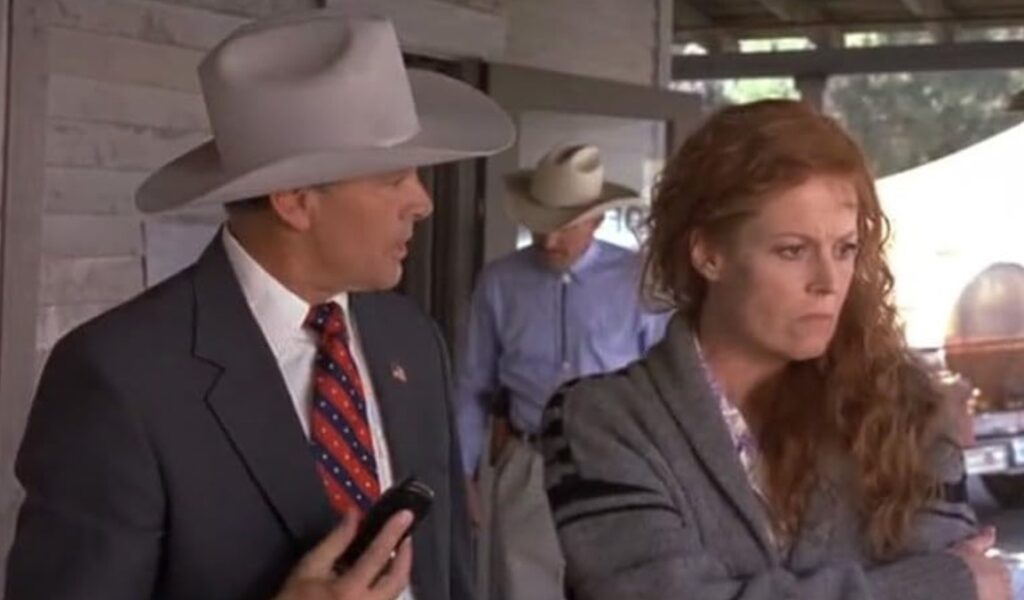
From Villains to Sci-Fi Icons—Still Evolving
More than two decades after Holes, Weaver remains as dynamic as ever. She can currently be seen in Avatar: Fire and Ash, continuing her journey in James Cameron’s expansive sci-fi universe. This time, she portrays Kiri, a teenage Na’vi with a deep spiritual connection to Pandora—despite Weaver being decades older than the character she embodies.
Through performance-capture technology, Weaver brings Kiri to life with remarkable authenticity. Her on-screen relationship with Spider, a human teenager raised among the Na’vi, carries emotional and even romantic undertones that feel entirely natural.
Her co-star has spoken about how effortlessly Weaver inhabits the role, noting that once filming began, her age and the technical aspects of performance capture faded away. What remained was pure acting—instinctive, responsive, and grounded in imagination.
A Career Defined by Fearlessness
Looking back, Weaver’s daughter may have recognized something essential about her mother long before audiences did: that she thrives on challenging roles, especially those that defy easy moral categorization.
From alien-fighting heroes to deeply flawed antagonists, Weaver has built a career on emotional truth rather than likability. Her portrayal of Warden Louise Walker stands as proof that even in family films, villains can be complex, human, and unforgettable.
And perhaps the most charming part of the story is this—sometimes it takes a child’s honest insight to remind an actor where their greatest strengths truly lie.