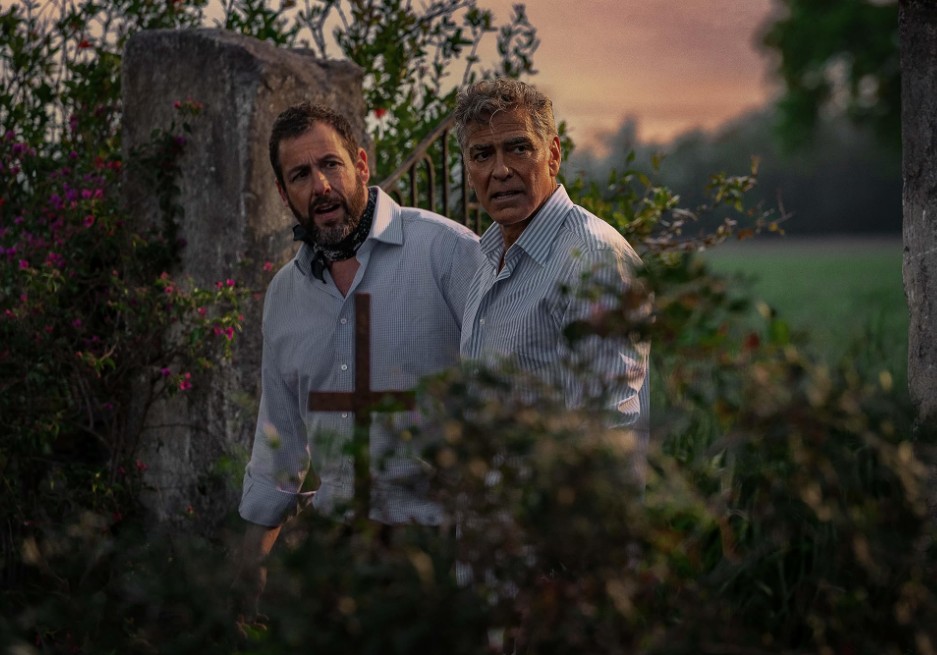
When a film explores fame, ego, and the emotional cost of stardom, it helps to have a real-life superstar at the center. That makes George Clooney the perfect face for Jay Kelly, a reflective and slightly whimsical drama about a celebrated actor who discovers that success may not always bring fulfillment. But while Clooney drives the narrative, it is Adam Sandler who quietly delivers the movie’s most memorable performance, turning what could have been a predictable character arc into something surprisingly heartfelt.

A Famous Actor With Everything—Except Peace
Jay Kelly, played by Clooney, is a global superstar known for decades of hit films. But behind the glamorous façade, he’s wrestling with a deep emotional emptiness. He realizes that while his professional life is stacked with achievements, his personal life has become frighteningly hollow. As he bluntly says in the film, “All my memories are movies.”
Jay’s disconnect is especially evident in his strained relationships with his two daughters. Jessica, played by Riley Keough, carries resentment from years of feeling ignored. Daisy (Grace Edwards), his youngest, is preparing to leave for college, ready to start her life without needing her father’s attention. Despite wanting to reconnect, Jay struggles to break past his own ego and emotional avoidance.
The people closest to Jay are not family, but employees: his loyal manager Ron (Adam Sandler) and his longtime publicist Liz (Laura Dern). While they support him, they also enable his chaotic lifestyle—often at the cost of their own.
A Funeral Sparks a Crisis
The story truly begins when Jay attends the funeral of his mentor Peter Schneider (Jim Broadbent). The event reunites him with his old acting friend Timothy (Billy Crudup), who still resents Jay for allegedly costing him his chance at stardom many years ago. Their tense confrontation shakes Jay and forces him to face his long-ignored insecurities.
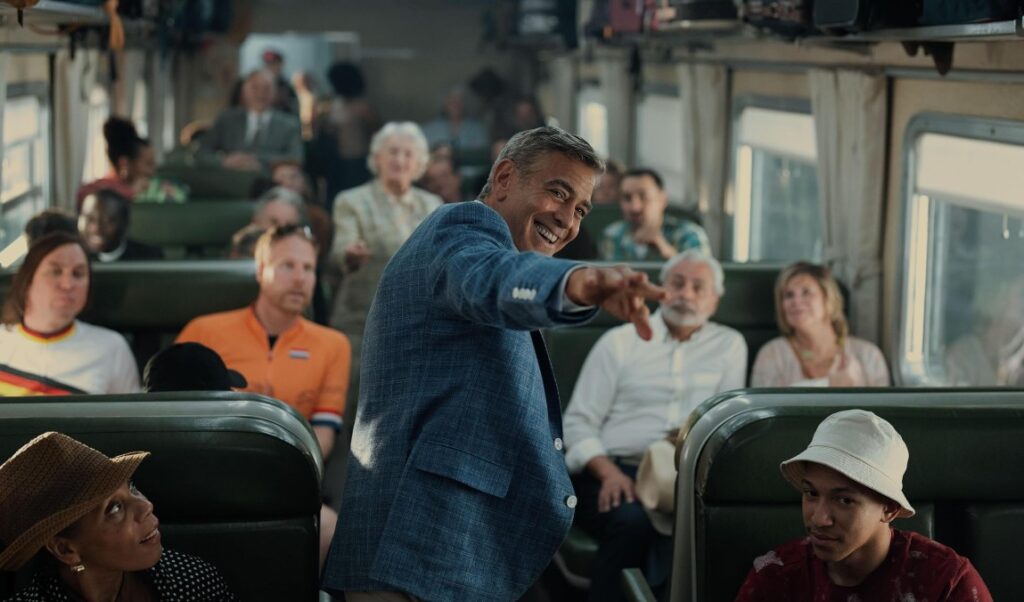
Triggered by guilt and self-doubt, Jay impulsively decides to fly to Italy. His goal? To find Daisy and attend a film festival tribute he previously declined. It’s a rash decision that disrupts his commitments — including a new film he was supposed to shoot, a project arranged by Ron after weeks of effort.
Reluctantly, Ron and Liz follow Jay to Italy to prevent him from creating a media disaster. Naturally, chaos follows anyway.
A Chaotic European Journey
The rest of the film unfolds during Jay’s spontaneous trip across Europe. From adventurous train rides through Tuscany to unexpected public heroics where he stops a robbery, the film balances humor with introspection. There’s even a mysterious, almost surreal detour into the woods where Jay tries to “rediscover himself.”
But despite its ambition, the film doesn’t always land emotionally. Jay’s quest for self-discovery often feels too neat and convenient. Flashbacks show scenes where Jay dismisses his daughter Jessica during a therapy session, helping us understand their broken relationship. But the film seems hesitant to make Jay confront his flaws in a truly raw way.
His sudden desire to make everything right—by flying his daughter to Italy to watch him receive a tribute—highlights how clueless he is about emotional repair. Even his attempts to bond with Daisy feel shallow compared to the depth of her frustration.
But Then Comes Adam Sandler…
What makes the film shine is not Jay’s journey, but Ron’s.
Ron has been Jay’s manager for decades. He schedules, negotiates, protects, and sometimes babysits the star—often while neglecting his own family. Sandler plays Ron not as a standard comedic sidekick, but as a fully realized, exhausted, emotionally worn-down man.
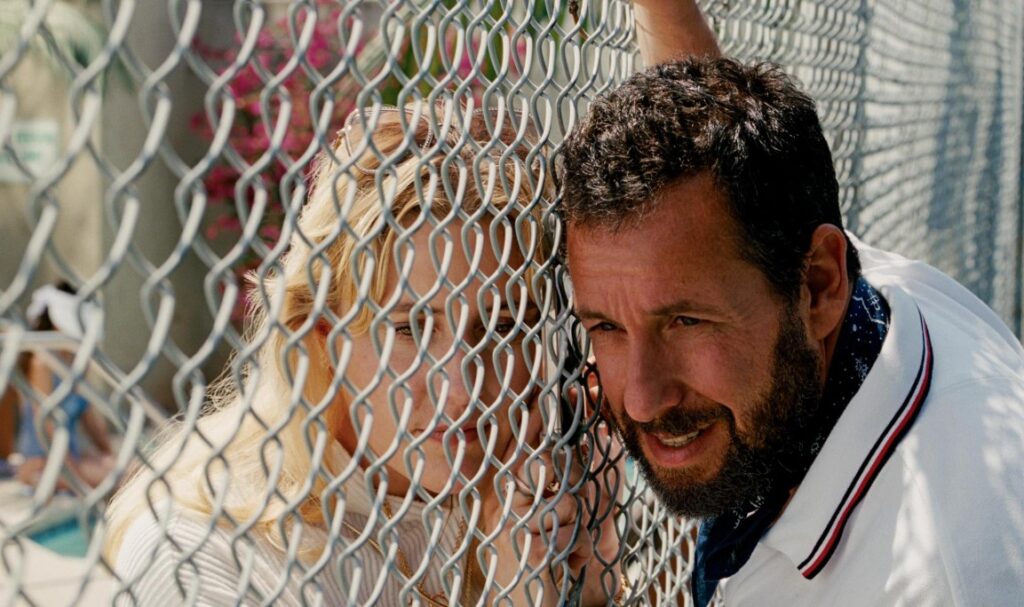
Ron’s calm exterior masks years of suppressed frustration. His unresolved love for Liz adds another emotional thread, revealing that his sacrifices for Jay cost him more than just time. Sandler’s performance is layered, vulnerable, and deeply human—a perfect contrast to Jay’s self-absorbed character.
When Ron finally reaches his breaking point, Sandler delivers one of the most impactful scenes in the movie. His emotional outburst forces Jay to see the damage he has caused—not only to his daughters, but also to the people who’ve carried him for years.
This moment becomes the true turning point of the film.
A Tribute That Brings Everything Together
The climax arrives during the film festival tribute. As Jay watches a montage of his life’s work, something shifts in him. But the real emotional weight lands when he and Ron share a quiet, tearful moment. They watch decades of films they built together—symbolizing the victories, failures, and sacrifices that shaped not just Jay’s career, but Ron’s entire life.
This scene, though slightly sentimental, is powerful enough to elevate the entire movie.
The ending suggests that Jay might finally try to become a better father and friend, though the film intentionally leaves the future uncertain.
Final Verdict
Jay Kelly is not a perfect film. The pacing drifts, the emotional beats sometimes feel too tidy, and Jay’s personal awakening lacks the punch required for a story about a superstar’s identity crisis.
But Adam Sandler transforms the movie. His grounded and heartfelt performance gives the story emotional depth and authenticity. Clooney is charming as ever, but it’s Sandler who leaves the lasting impression.
For viewers who enjoy reflective character dramas with humor, chaos, and heartfelt moments, Jay Kelly is absolutely worth watching.
The movie is now streaming on Netflix.